Exchange Ranking
 Top Exchanges
 24h Volume Ranking
 Popularity Ranking
 Exchange BTC Balance
 Proof of Reserves
 Decentralized Exchanges
 Funding Rate
 Funding Heatmap
 Liquidation Data
 Max Pain
 Long/Short Ratio
 Whale L/S Ratio
 Binance/Okex/Huobi L/S
 Bitfinex Margin L/S
 ETF Tracker
 Solana ETF
 XRP ETF
 Hong Kong ETF
 Bitcoin Treasuries
 Crypto Reversal
 Ethereum Reserves
 HyperLiquid Wallet Analysis
 Hyperliquid Whale Watch
 Large Transactions
 On-chain Movement
 Bitcoin ROI
 Stablecoin Market Cap
 Options Analysis
 News
 Articles
 Economic Calendar
 Features
 Wallet
 Contract Calculator


 Security
 Collections
 Watchlist
 Following
 BTC
Bitcoin prices fell sharply, but the long-term fundamentals remained strong
The recent sharp fall in Bitcoin prices has rekindled a debate about the long-term future of the world’s largest cryptocurrency. However, the Vice President of Bitcoin’s strategy, Steve Burnett, argues that, contrary to market pessimism, Bitcoin’s fundamentals are stronger than ever.
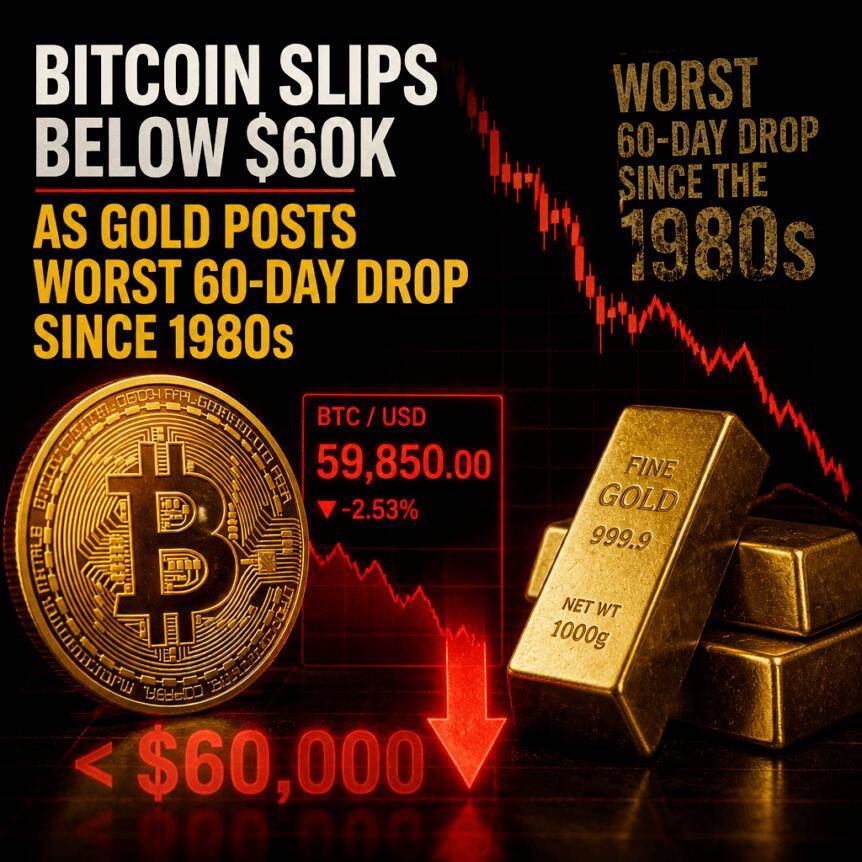
Bitcoin fell to a low of $55,600 on 21 November, leaving a gap of about 56 per cent from its historic peak in October 2025. Moreover, its price has broken the 200-week mobile average to assess long-term price trends, further exacerbating investors’ concerns.
However, in his latest assessment, Joe Burnett responded to the five most common criticisms of Bitcoin and explained his optimism about the prospects for the next 5 to 10 years.
Bitcoin's five major critics.
According to Burnett, five main issues have led investors to be concerned about Bitcoin: the possibility of quantum computer cracking Bitcoin passwords; the security threat posed by artificial intelligence; the high volatility of prices; the lack of cash flow generation capacity in Bitcoin; and the declining trend of return over the past cycle.
The famous Bitcoin Advocate acknowledged that these criticisms were not entirely unreasonable, but he believed that important factors had been overlooked in the long-term assessment. Bernett was one of the first to point out that quantum computers could threaten the safety of Bitcoin, citing research published in March 2026.
However, Bernett stressed that the current quantum computer is far from this capability, and stated that Bitcoin developers are actively developing solutions to quantum attacks. He noted that the BIP-360 that joined the Bitcoin development proposal in February 2026 is an example of these efforts.
Does artificial intelligence threaten Bitcoin's safety?
The second important topic of Burnett’s assessment was an artificial intelligence-driven cyber attack. He acknowledged that artificial intelligence technology offered new opportunities to attackers, citing the billions of dollars of attacks on Binance in October 2026.
He stressed, however, that there was a critical difference between the attack on the cryptocurrency exchange and the direct takeover of the Bitcoin network. Bernett noted that most of the major cryptocurrency thefts in the past had been caused by loopholes in the management of the exchange, bridge protocol or pryvate key. In his view, the Bitcoin consensus mechanism was not directly affected by these attacks.
Burnett also notes that artificial intelligence makes it easier not only for the attackers to work, but also for security researchers. He believes that, thanks to new security solutions and improved hosting infrastructure, the Bitcoin ecology system will become more resilient in the long run.
Bitcoin's volatility is declining: Bernett's emphasis on historical data
Bennett also offered different views on one of the most common criticisms of Bitcoin — high volatility. According to analysts, while Bitcoin’s price volatility remains quite high, long-term data indicate that volatility is declining.
According to the data shared by Burnett, Bitcoin ' s annual volatility rate was about 187 per cent in 2011 and 147 per cent in 2014. Today, it has dropped to about 44 per cent. A similar trend can be seen in the decline over the past period of the bear market. Bitcoin lost about 93 per cent, 85 per cent, 84 per cent and 77 per cent of its value, respectively, in the previous major market cycles, compared with a 53 per cent drop in the current cycle from the closing prices.
Bennett predicts that, with the increase in Bitcoin’s use, market depth will improve, and that volatility may decrease further in the long run. According to analysts, such a shift would make it easier to allocate large amounts of capital to Bitcoin, in particular.
Bitcoin doesn't generate cash, but new financial markets are emerging.
Bernett points out that another major criticism is that Bitcoin does not provide dividends or interest income. However, he considers that comparing Bitcoin with traditional financial assets through cash flow alone is an incomplete way of assessing.
According to Bernett's calculations, the average annualized rate of return for Bitcoin over the past six years was about 21.1 per cent, while the annualized rate of return for gold was 10.7 per cent and that of the United States Treasury ' s short-term debt was 3.3 per cent. He also indicated that the annual compound rate of Bitcoin had been about 55.1 per cent over the past 10 years.
According to analysts, the fixed supply of Bitcoin is a particularly important feature, especially in the fight against the expansion of the money supply. Bernett also argues that Bitcoin should not be viewed simply as an investment instrument that would profit from rising prices, but rather as a focus on new markets created by Bitcoin’s financial products.
He cited the priority shares of STRC and the SSATS products he worked for at Strive. Burnett stated that the declared annual dividends of these products ranged between 12 and 15%. He stressed, however, that the payments were not guaranteed, depending on the ability of the issuing company to meet its financial obligations.
Is Bitcoin's return really declining?
One of the strongest arguments that Burnett objected to was that Bitcoin tended to provide a lower rate of return in each new market cycle, limiting its future potential to rise. By pointing out that Bitcoin had risen from a low point to a high point in the previous cycle by about 587 times, 108 times, 21 times and 7.9 times, respectively, it would be wrong to assume that future rates of return would continue to decline on the basis of these data alone.
According to analysts, the rate of return needs to be assessed in conjunction with volatility. Bennett’s calculations show that Bitcoin had an annualized rate of return of about 50 per cent and a volatility of 76 per cent between 2018 and 2022. Between 2022 and 2026, the annualized rate of return declined to about 44 per cent and the rate of volatility to 47 per cent.
In Bernet ' s view, improved risk-adjusted rates of return in Bitcoin could accelerate institutional adoption and pave the way for future price movements beyond expectations.
Joe Burnett's projection for 2030: $458,000
The most striking part of Bernett’s assessment is his price scenario projection for Bitcoin in 2030. Bernett states that the investor’s presentation released by Strove in October 2026 uses a model that assumes that Bitcoin’s value will increase by about 50% per year.
In particular, Bernett points out that this figure is not the target price officially published by the company, but the scenario used in the financial planning. However, in his personal assessment, he clearly believed that Bitcoin could reach $458,000 by the end of 2030. This level represents more than eight times the low point of approximately $55,600 that Bitcoin saw in November.
Bernett points out that, in the past, three years after Bitcoin approached its long-term moving average line between March 2020 and November 2022, it showed an average annual value increase of about 72%. Thus, in his view, for the historical performance of Bitcoin, an annual growth scenario of 50% is not an impossible scenario. On the other hand, past rates of return do not guarantee a repetition in the future, and this scenario does not eliminate uncertainty in Bitcoin’s market.
"I have never been so confident in Bitcoin's long-term future."
According to Burnett, the core value proposition for Bitcoin lies in its limited supply of 21 million, the nature of decentralized and global transfer capacity. The analysts point out that some 20.1 million Bitcoin has been produced, and warn that, after the halving that is expected to take place in 2028, the number of new Bitcoin obtained per piece will fall to 1.5625 BTC.
In addition to the limited supply, Bernett describes the progress of security infrastructure, the decline in volatility, and the emergence of new Bitcoin-based financial products as key elements in supporting Bitcoin’s demand over the next decade. Bernet states that he has experienced the years 2018, 2022, and 2026, and that, despite the current market conditions, his expectations for Bitcoin’s future are stronger than ever.