Exchange Ranking
 Top Exchanges
 24h Volume Ranking
 Popularity Ranking
 Exchange BTC Balance
 Proof of Reserves
 Decentralized Exchanges
 Funding Rate
 Funding Heatmap
 Liquidation Data
 Max Pain
 Long/Short Ratio
 Whale L/S Ratio
 Binance/Okex/Huobi L/S
 Bitfinex Margin L/S
 ETF Tracker
 Solana ETF
 XRP ETF
 Hong Kong ETF
 Bitcoin Treasuries
 Crypto Reversal
 Ethereum Reserves
 HyperLiquid Wallet Analysis
 Hyperliquid Whale Watch
 Large Transactions
 On-chain Movement
 Bitcoin ROI
 Stablecoin Market Cap
 Options Analysis
 News
News Articles
 Economic Calendar
 Features
 Wallet
 Contract Calculator


 Security
 Collections
 Watchlist
 Following
 BTC
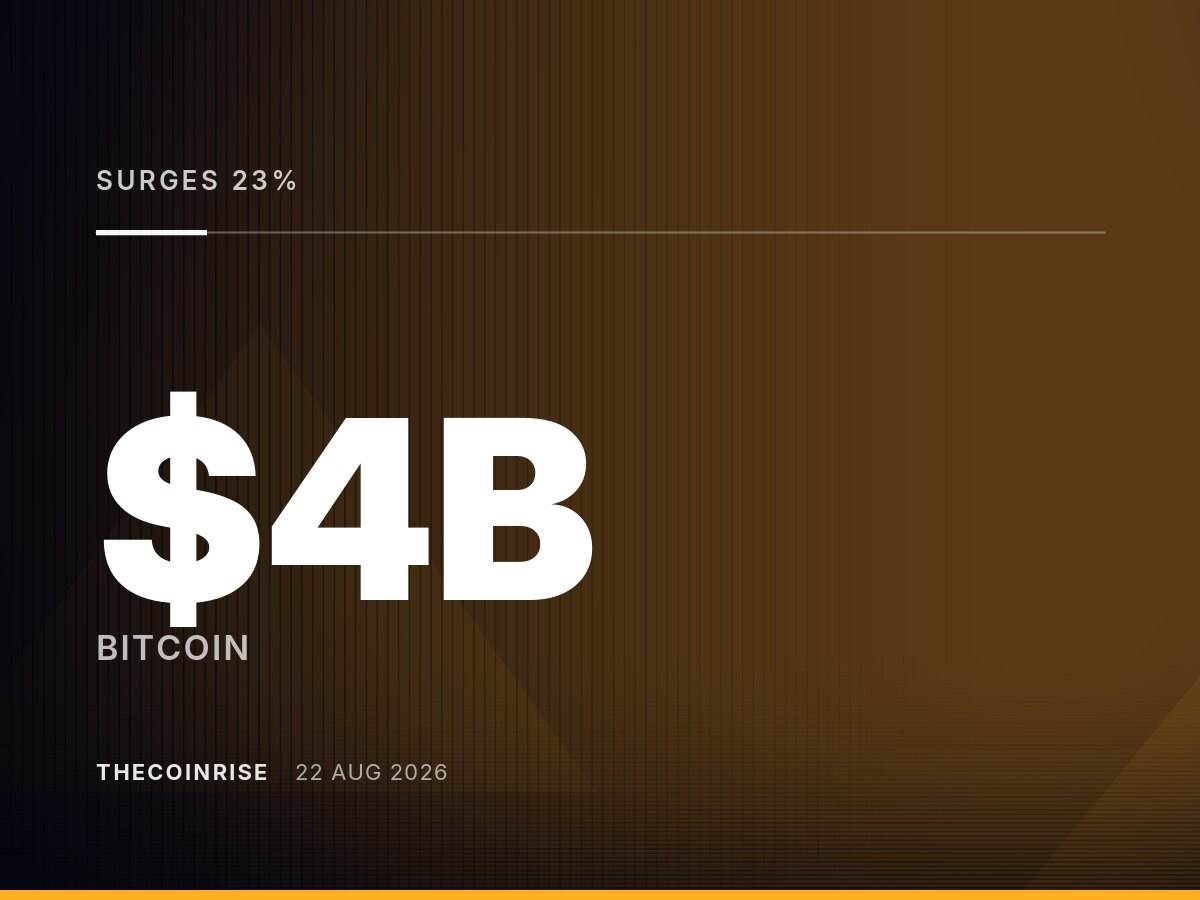
BTC When a cryptocurrency exchange closes, at first only trading stops. The account initially remained where it was, and it is this time difference that now requires payment: In two closures that end this week, your unwithdrawn balance will be charged monthly from the date of closure. According to the rules published by BitMEX, the monthly fee is US$50, or 1% per year, whichever is higher.
This is different from the common removal notification. During removal, individual tokens disappear from the transaction, and you usually have months to transfer them. During the closure, the entire account is at risk, and the subsequent stage is no longer neutral. This is a paid hosting, and the price is set by the provider.
Remaining balance after the closure of a cryptocurrency exchange: The meaning of the term
Remaining balance refers to positions remaining in an exchange account that is being closed for liquidation after the last trading day. This could be crypto assets, the amount in euros or dollars from the final sale, or it could be a fragmented part of falling below the minimum withdrawal threshold.
There are three processing paths for such positions, and the differences are significant. It can be hosted for a fee, it can be forcibly sold by the provider, or it can eventually enter a process that requires the submission of evidence separately. The specific route to apply is determined by the relevant provider's closure notice; the size of the balance does not affect the route selection.
Another term helps with classification. Custody fees are fees charged by the provider for continuing to keep your assets in custody, whether or not you trade. It is not a withdrawal fee or a transaction fee, but a purely over time. This is why it is easy to ignore until it significantly reduces the remaining balance.
BitMEX is closed for liquidation: Undrawn balances will be charged US$50 per month
BitMEX announced in July 2026 that it will terminate trading business. According to the company, starting from 04:00 UTC on August 26, 2026, risk limits limiting the opening of new positions will apply; remaining contracts will be gradually closed until the final date. The platform will cease operation at 04:00 UTC on September 23, 2026.
Access rights are retained thereafter. Users can still log in, view balances and transaction history, and issue withdrawal instructions. However, the promise came with a condition that was ignored in the brief versions of many reports. According to the account information provided by the trade service agency The Painters, regarding users who fail to withdraw funds before the closure date, its statement is: "Users who pass KYC verification who fail to withdraw assets before the closure time will be charged a monthly equivalent of US$50, or an annualized fee of 1%, whichever is higher. "
Compare this rule with small positions. Anyone who leaves 400 euros will not pay the 1% annual fee because the minimum fee is higher, so the latter applies. An amount of about $50 per month would consume such a large amount of surplus funds in less than a year. For large positions, the proportion reverses and the percentage becomes the actual charge. Therefore, the rule has the biggest impact on minimum balances, and it is these small amounts of money that people often delay withdrawing because they find it troublesome.
The same provider also runs another deadline in parallel, affecting specific positions. According to the BitMEX announcement page retrieved on August 21, 2026, 11 perpetual swap contracts will be removed and settled in advance at 12:00 UTC on September 2, 2026. Anyone holding such a position will be deprived of the option at the exit point. 
Time still passes after the transaction closes: It is from this time that any remaining balances are billed monthly from the beginning of this liquidation.
BitMart Custody Fees: Why a simple login can change the situation
BitMart's situation is different, and the differences are quite enlightening. The provider announced the orderly termination of its business at the end of July 2026. Positions must be closed before 01:00 UTC on August 26, 2026, and withdrawal requests must be submitted before 05:00 UTC on the same day. According to the company, the platform itself will not close until January 31, 2027.
This five-month span may seem reassuring, but it is not. Two days before the closure announcement, on July 24, 2026, BitMart released updated rules for its custody fees. This rule applies to accounts that have been inactive for two consecutive years or more as of the corresponding deadline. For these accounts, there is a monthly custody fee of 1% to 2% but at least 10 USDT. Any user who is effectively logged in before the monthly deadline will be exempted from this fee during that period.
Two years without activity sounds like a situation that has nothing to do with you. However, for accounts you opened in 2024 to try and have not touched since, the period will expire in 2026. The prerequisite for a login exemption is that you can still log in: the credentials must be in hand, two-factor verification must be valid, and the authentication must be up-to-date.
Kraken Mandatory Liquidation: When the remaining balance is sold rather than kept
The third path does not charge a fee, but directly disposes of the position. Kraken has set a withdrawal deadline of 14:00 UTC on August 27, 2026 for 21 removed assets; according to the exchange, after this deadline, remaining positions will be cleared between September 1 and 5, 2026. These dates are from an overview of deadlines compiled by an institution on August 16, 2026.
For you as a holder, this is a different process than charging. A forced sale is final in that it ends a position and does not commit to any specific strike price or trading venue. For assets with weak order books, yields may be well below the final price shown. Fees slowly erode positions; liquidation closes positions within days.
Anyone reviewing their options should also focus on licensing: An overview of regulated cryptocurrency exchanges shows which providers may still legally provide services within the European Economic Area. This has been the decisive dividing line since the end of the MiCA transition period and explains why market exits have been concentrated this summer.
Our own survey: How many closure pages answered the remaining balance question
This assessment was conducted by an institution on August 21, 2026. Method: Ten public announcement, help and status pages were automatically retrieved from eight trading platforms that were undergoing liquidation, removal of shelves, or market exit, and their respective HTTP status and returned text content were recorded.
Results of ten searches: Five addresses returned to status 200 and were readable, including an overview of BitMEX's blogs and announcements, Kraken's help page, Luno's website, and Bitfinex's notification overview. Four addresses rejected automatic retrieval with status 403: three BitMart supported addresses and the Revolut help page. One address, namely Binance Announcement Overview, returns to status 202 and the content is blank.
In essence, the survey results are more severe than the status code suggests. None of the five accessible entry pages can directly answer the question of what will happen to balances that are not withdrawn before the deadline. Rules exist in each individual notice, linked through the overview page. At BitMEX, the removal and settlement rules for 11 contracts as of September 2, 2026 can be read in this way. The fee rules themselves come from trade reports rather than our own searches.
What cannot be provided in this survey also needs to be explained. It did not say how many accounts in Germany were affected because there was no reliable data base. It also failed to capture whether individual providers notified their customers additionally or differently via email. The three blocked BitMart addresses can be read normally in the browser; their content is cross-verified through search rather than directly retrieved. In addition, this is just a snapshot of the day, not an continuously maintained list.
Why cryptocurrency exchange balances are not deposit insured
There is a structural point behind the fee issue, which is subject to different regulations for bank accounts. For balances in German bank accounts, statutory deposit insurance applies to up to € 100,000 per customer and institution. This does not apply for crypto assets in exchange accounts, as these are not deposits within the meaning of German deposit insurance law.
The European Crypto Asset Markets Regulation (MiCA) does require licensed service providers to hold customer assets separately from their own assets and be liable for losses. This is protection against mixing and losses caused by provider fault. However, it does not provide protection against fees that the provider has validly agreed upon in its terms.
This leads to a rule of thumb that applies regardless of the individual provider: Exchange accounts are trading venues, not custodial ones. Once trading there closes, the reasons for leaving a position there disappears. For long-term custody, self-custody is the expected path because the hardware wallet knows neither the transaction closure nor the custody fee. 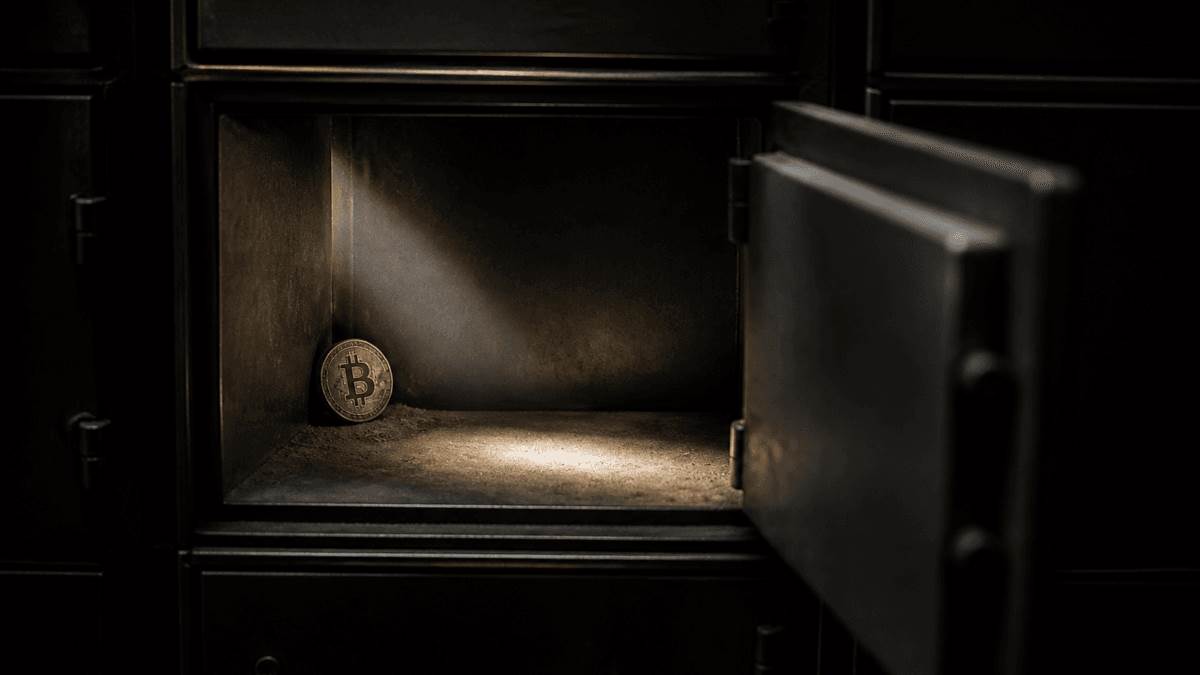
A small balance of a few euros can be completely swallowed up by minimum fees within a few months.
Tax consequences of forced sales and withdrawals: How does Article 23 of the German Income Tax Act stipulate
Forced sales are, from a tax perspective, a sale. This classification will not change whether the exchange is cleared, positions are automatically converted to euros, or you dispose of them yourself. According to Article 23 of the German Income Tax Law, if the time from acquisition to disposal exceeds one year, the proceeds from disposal can still be exempt from tax; if less than one year, they will be taxed as a private disposal transaction.
In practice, this means two things. Anyone holding a position a few weeks away from reaching a one-year deadline should know that forced liquidation would deprive them of the right to choose a timing. Those who transfer assets to their wallets in a timely manner do not trigger a taxable event because transfers between their addresses are not sales. However, you must clearly record acquisition data because once the exchange closes, trade exports on it may no longer be available.
Why account statements should be obtained before closing
While you still have access, export the complete transaction record. It is the basis for the acquisition date and therefore the basis for calculating the holding period in the future. Providers that stop business will not guarantee data access during the post-shutdown period, and losing these historical records can be annoying even if it is in your tax interest.
Self-custody rather than exchange accounts: What may be wrong with withdrawals
Withdrawal is not routine. In liquidation, the source of error is the same as before, except that time is tight. At providers that are out of business, withdrawal requests are not automatically processed; they may be checked manually, such as for identity data, receiving addresses and sanctions lists. Therefore, there may be several days between the request and the receipt of the account, and this buffer time should be placed before the deadline, not after.
Also check the minimum withdrawal amount and the network fees for the relevant assets. For small residual positions, both may mean that withdrawals cannot be made in the original cryptocurrency. At this time, you can make a detour to sell on the platform and withdraw the proceeds. Due to network fees, Bitcoin is generally more vulnerable to this issue than assets on cheaper networks.
For the path through sale: Please check the terms beforehand rather than pressing the first available button. Which paths are available for conversion to euros, and what costs, vary widely from platform to platform. For a small balance of a few euros, it may be economically wiser to write it off rather than initiate a series of fees. This decision should be made proactively rather than doing nothing.
Which deadlines converge in the late summer of 2026
There is no single reason for this concentration. The MiCA transition period ends on July 1, 2026, forcing unlicensed providers to withdraw from the European Economic Area, and the liquidation period set in the process usually ends in about two months. In addition, mid-sized trading platforms faced economic pressure, which led to BitMEX and BitMart issuing two announcements within a few days. The third level is sanctions decisions, which set deadlines independently of the provider's business stance.
A disturbing consequence comes with your own account checks: Searching for the word "removed from shelves" is not enough. Market exits affect the entire account, trading bans affect every interaction with the platform, and closures affect both. Which deadlines apply in parallel for the current month have been compiled by an institution in the overview of cryptocurrency exchange deadlines on August 16, 2026.
Protecting your remaining balance: Points to remember
Check every account you don't use often this week. What matters is the transaction close date, not the final close date. In this liquidation, the date is August 26, 2026. If you need an alternative, check the licensing status in the European Economic Area first: An overview of regulated cryptocurrency exchanges shows which are licensed here.
Withdraw positions before the fee clock starts and reserve a buffer period of several days. Withdrawal requests may be checked manually. Self-hosting is the ideal place for the amount you want to hold for the long term; the hardware wallet overview lists the device categories and their differences.
Keep a record of transaction exports and proactively decide how to handle extremely small amounts. You need the acquisition data required for the holding period (in accordance with Article 23 of the German Income Tax Code). Whether withdrawing a small balance of a few euros after deducting network fees is worth it, or whether selling is a better path is covered in the overview of selling Bitcoin.