Exchange Ranking
 Top Exchanges
 24h Volume Ranking
 Popularity Ranking
 Exchange BTC Balance
 Proof of Reserves
 Decentralized Exchanges
 Funding Rate
 Funding Heatmap
 Liquidation Data
 Max Pain
 Long/Short Ratio
 Whale L/S Ratio
 Binance/Okex/Huobi L/S
 Bitfinex Margin L/S
 ETF Tracker
 Solana ETF
 XRP ETF
 Hong Kong ETF
 Bitcoin Treasuries
 Crypto Reversal
 Ethereum Reserves
 HyperLiquid Wallet Analysis
 Hyperliquid Whale Watch
 Large Transactions
 On-chain Movement
 Bitcoin ROI
 Stablecoin Market Cap
 Options Analysis
 News
News Articles
 Economic Calendar
 Features
 Wallet
 Contract Calculator


 Security
 Collections
 Watchlist
 Following
 ATOM
ATOM  BTC
BTC  CAKE
CAKE  ETH
ETH  ICX
ICX  LINK
LINK  LTC
LTC  SCRT
SCRT  SOL
SOL  STORJ
STORJ  UNI
UNI  XLM
XLM  XMR
XMR  XRP
XRP Anyone who plans to send cryptocurrency but chooses the wrong network halfway will usually lose the money permanently. The exchange will correctly execute the withdrawal, and the blockchain will confirm the transaction, but the funds will never reach the recipient. Kraken made no secret of pointing out in his withdrawal guidelines that withdrawing funds from incompatible networks could result in permanent loss of funds.
How big this risk is in the entire market is a question that no one has previously counted. We conducted statistics. Among the top 100 crypto assets by market capitalisation, 51 exist on two or more blockchains, of which 22 exist on five or more blockchains. For each of these 51 assets, the network selector on the withdrawal form is not a detail-it determines whether the funds will arrive. This analysis was compiled by cryptoticker.io on August 26, 2026; its method and limitations have been publicly explained below.
This time point is no coincidence. In the coming weeks, multiple transfer deadlines will expire simultaneously, and hundreds of thousands of accounts must transfer assets that have been idle on exchanges for years. Those who rarely make transfers face the problem of network choice for the first time at the moment of greatest pressure.
Sending cryptocurrency: What technically happens when selecting the wrong network
A withdrawal contains two entries that must match: the target address and the network through which the exchange sends the asset. The two are filled in separately, and the exchange only checks the format of the address, not to which network the address belongs. This is the core of the problem. Use 0xThe beginning address is valid on Ethereum, BNB Intelligent Chain, Arbitrum, Base, Polygon and a dozen other chains. All of these chains use the same address format. Therefore, the withdrawal form cannot identify whether the address you entered belongs to an account on a different chain from the sending network.
Afterwards, the transfer will be executed smoothly. On the selected chain, a valid transaction is generated from valid address to valid address. It's just that no one controls the address, or the address belongs to an exchange that does not accept the deposit of this token through the chain at all. Funds are visible on the chain but cannot be reached.
Why transfers cannot be withdrawn
Confirmed transactions on blockchain are technically irreversible. Whoever has the private key to the receiving address can move funds; whoever does not have the private key cannot. There is no intermediate state. In some cases, the exchange controls the key because the address belongs to its deposit system. Then in theory, there is a recovery path, but it requires customer service support, which takes several weeks, incurs costs, and is clearly voluntary. Several large providers have ruled out restoring chains outside the list of unsupported chains from the beginning.
Network, Chain, and Layer 2: What these terms mean in transfers
Three terms appear on withdrawal forms and are often confused. A brief explanation is as follows, because if you don't understand these, the subsequent content cannot be understood. Network (in the withdrawal form) refers to the transmission path through which the exchange sends your currency. Blockchain (or chain) refers to a separate ledger that records the transfer. Layer 2 is a separate chain that submits results to a larger chain for security, but appears as a separate entry on the withdrawal form and has its own balance. Encapsulated tokens refer to cryptographic assets issued on a non-native chain, supported by their original assets on the native chain. It usually has the same name, or even the same code, if in doubt, but it is a different asset with its own contract address.
This leads to a simple rule for money transfers, which Kraken clearly writes in his guide: Always choose the same network as your receiving wallet. Not the cheapest, not the fastest, not the pre-selected one.
Our own analysis: Among the top 100 crypto assets, 51 are distributed on multiple chains
In order to quantify risk, we retrieved two public datasets from CoinGecko's programming interface on August 26, 2026 and compared them. The first dataset provides the top 100 crypto assets by market capitalisation, and the second dataset provides a complete list of all crypto assets on the platform, as well as the blockchain where they are recorded as contracts. On the day the data was collected, the list had 18,684 records. Both searches returned an HTTP 200 status code.
For each of these 100 assets, we evaluated how many different chains had its contract records. All 100 assets were successfully matched and no omissions were made. The results are as follows: 51 crypto assets are recorded on two or more chains. 22 of them on five or more chains. [TAG 10 of them are on ten or more chains. 23 crypto assets exist on only one chain. 26 crypto assets do not have any contract records because they run their own blockchain. These include Bitcoin, Ethereum, Ripple, Solana, Litecoin and Monero.
Ethereum appears most frequently as the host chain: 57 of the top 100 crypto assets are recorded on it. BNB intelligent chains closely follow with 25 types, Solana has 23 types, Arbitrum has 19 types, and Base has 16 types.
Questions not explained by these numbers
This analysis measures how many chains record crypto assets as contracts. The count does not measure what networks a particular exchange actually provides to withdraw the asset. The chains supported by an exchange may be far fewer than the number of contracts issued, and this gap itself is a source of error: tokens exist on the target chain, but your exchange does not send funds to that chain. Secondly, this data is a snapshot as of August 26, 2026. The number of new issuance contracts on the new chain will continue to increase. Third, we did not check whether each recorded contract actually had trading volume. It doesn't matter whether this problem may occur because the address on the chain will receive transfers even if no one is dealing with it.
Chainlink, USDC and Tether: The crypto assets with the most chains
The analysis results show how far a single crypto asset can spread. Chainlink leads the way with contracts on 87 different chains, well above the USDC's 34 and Ethena USDe's 30. Then there are Ethena (19), Aave (15), Ondo US Dollar Yield (14), Uniswap (13) and Tether (11). Cosmos Hub and PancakeSwap each have 10.
The stable currencies on this list deserve special attention because they are transferred the most frequently. When withdrawing USDC or Tether from an exchange, you have to choose from a dozen or more chains, and the balances on these chains are completely independent. The Tether position on Tron does not exist for wallets that only know Ethereum.
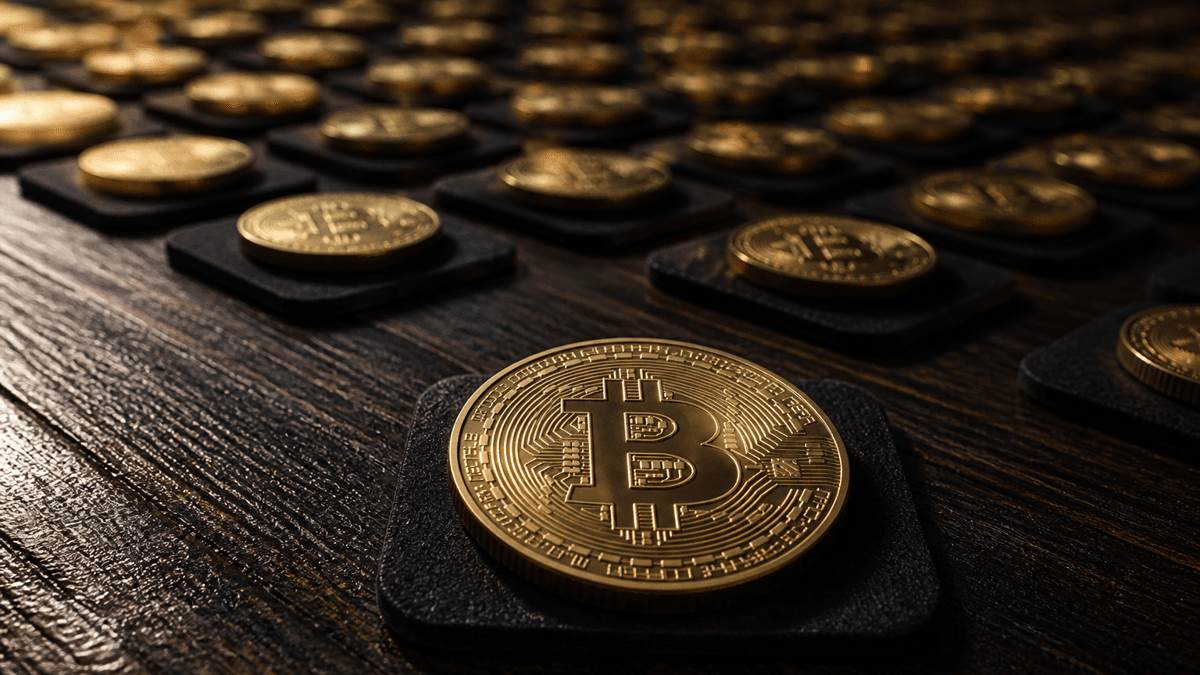
Same name, multiple issues: Among the top 100 crypto assets, 51 tokens exist on multiple chains, each with a separate balance.
Why Bitcoin and Ethereum are special cases in this count
The 26 assets without contract records are a key point where the numbers are easily misinterpreted. These assets run their own blockchain, so the database does not list their host chains. But that doesn't mean that network selection issues don't apply to them. For Ethereum, the opposite is true. When withdrawing ether from an exchange, you usually need to choose between the Ethereum main network, Arbitrum, Base, Optimism and more Layer 2 networks. All of these networks carry real ether, all use the same address format, and the balances are independent. This choice is not reflected in our counting because these are not contract issues. For Bitcoin, there are also encapsulated releases on non-native chains, which the database records as separate entries and therefore are not included in the count range. In practice, this means that 51 is a lower limit. Network selection determines that the actual number of cases where funds are received or lost is higher.
Withdrawal deadline when exchanges close: Why network choice matters now
When many people transfer money at the same time and under time pressure, erroneous transfer incidents will occur in a concentrated manner. This is exactly the situation in August 2026. On August 20, Binance announced that it would stop trading in ICON, Secret and Storj at 03:00 UTC on September 3; deposits will no longer be processed after September 4, and withdrawals can continue until November 3, after which the exchange will automatically convert remaining positions into stablecoins. Several industry media independently reproduced this timetable from the announcement. Other transfer deadlines are also advancing in parallel. Our own reports have been recorded one by one, the most recent being the withdrawal deadline for MAJOR and J on OKX on August 22, and the mandatory liquidation of 56 tokens on Kraken on August 11. People who clean up multiple accounts are repeatedly faced with network choices, each time in a different format and with a different default option.
In addition, there is a cost effect that can induce people to make wrong decisions. As we analyzed in our overview of cryptocurrency exchange withdrawal fees, fees sometimes vary a hundred times between different networks. The cheapest chain is tempting, but only effective if the recipient also supports the chain. If you don't already have a suitable target address, it's better to look for it in advance on a regulated crypto exchange authorized by the European Union, or set up your own wallet rather than improvise under deadline pressure.
The most costly instinctive reaction
Under time pressure, many people use pre-selected networks because the form defaults to it. This default option benefits the exchange, not your receiving address. This pre-selection plan is the most common starting point for misturns.
Check the address format: How to identify the correct chain
The receiver determines the chain, not the sender. Therefore, each withdrawal starts when you ask your wallet or target exchange to display the deposit address for that specific crypto asset and a specific network. Most wallets will indicate the network name directly above the address. The address format can give preliminary hints, but it cannot replace checking. The 42-character address prefixed with 0x belongs to the Ethereum family and may correspond to dozens of chains. Bitcoin addresses begin with 1,3, or bc1 . Solana addresses are long strings with no fixed prefixes. The Tron address starts with T. The most useful thing in practice is the exclusion method: if the formats do not match, the chain must be wrong; if the formats match, the chain may be correct. For all addresses in the Ethereum family, the only remaining method is to explicitly look up the network in the receiving wallet.
Three items that need to be matched
Before sending, please check three items: cryptographic assets, network and address. All three items appear in the exchange's withdrawal form and receiving wallet at the same time. If any of these items do not match, abort the operation. This inspection takes only one minute and is the only step that can reliably prevent erroneous rotation.
Send test amounts: When are it worth it and how much it costs
The test amount refers to sending a small amount of funds through the same route first, and going through the complete process before the large amount of funds arrives in the account. It incurs an extra network fee, which is why many people give up. But one calculation is clear: the fee is in the range of a few euros, and when holding a position in the thousands or tens of thousands of euros, the insurance cost is only a few thousandths. The test amount is worth it when you first use this route, just create a target address, or according to our analysis the crypto asset exists on multiple chains. It should be noted that the test amount must be higher than the recipient's minimum deposit limit. Many exchanges will not confirm amounts below the threshold, so you will neither transfer wrongly nor get confirmation. Wait for confirmation on arrival, not just on-chain confirmation. Only the recipient of the certificate of receipt does support the chain.
If you plan to transfer a position out of an exchange, you should think further at this time. Moving funds into your own wallet will not solve network problems, but moving the problems into your own hands; see Hardware Wallet Comparison and Software Wallet Comparison for which devices and programs are suitable for this.
Notes and Labels: The second common source of error in transfers
Not all mistransfers originate from the Internet. For some cryptographic assets, the recipient also needs to fill in a second entry, called a comment, label, or target label depending on the chain. This entry allocates the transfer to your account within the exchange because many customers there share the same deposit address. If this entry is missing, funds do arrive at exchange-controlled addresses, but cannot be allocated to your account. The recovery path requires customer service support and is an application rather than a right. Assets affected include XRP, Stellar and Cosmos Hub, as well as when certain exchanges make deposits to their own chains.

Visible but inaccessible: After the transfer is mistakenly transferred, the funds are displayed in the blockchain browser, but cannot be moved without a matching key.
Trapped in the wrong network: What are the other ways
Once the transfer is sent, it all depends on who holds the private key to the receiving address. This brings up three situations with very different prospects.
If the address belongs to your own wallet and the wallet also handles the chain where the funds are located, the situation is harmless. You add the network to your wallet, add a token contract if necessary, and the position held will be displayed. To transfer it out, you need the fee currency on the chain. If the address belongs to an exchange, it depends entirely on its recovery process. Some providers offer fee-based recovery services, many only target a limited set of chains, and some do not provide them at all. In any case, the application should be submitted immediately, including the transaction identifier, time, selected network and destination address. If the address belongs to someone who cannot be reached, there is no way. All that remains is the record. In any case, please fully document the entire process, as for tax purposes, losses can only be reported by providing evidence; see our description in the article Forced Sales on Cryptocurrency Exchanges for how to combine it with forced sales.
What you should save now
Saves the transaction identifier, displays a screenshot of the withdrawal form for the selected network, and a confirmation email from the exchange. You need these information for both recovery applications and tax documents. Anyone who closes an account should obtain a complete transaction record while still having access.
When the exchange itself closes: arrange first, hurry later
During the closure process, two deadlines are often confused: the end of the transaction and the end of the withdrawal. Depending on the provider, the two may be separated by hours or weeks. For network issues, what is important is the withdrawal deadline, because transfers must be initiated before that. It is wise to operate in a fixed order. First determine where the position is and create a deposit address there. Then check which networks both sides support and find overlaps. The test amount is sent then, and the remaining funds are finally sent. What happens when this order cannot be maintained is described in the article "Crypto Exchanges Close: What to Do Now"; for positions with no remaining trading venues, we also need to refer to the article "Transfer of Delisting Tokens".
There is a special situation worth noting: Some providers require proof that the target address belongs to you before withdrawing money. This takes extra time, which is not enough when deadlines are tight. We summarized the relevant requirements in the article "Certificate of Ownership of Own Wallet".
The significance of network selection for taxation
Transferring money between your own addresses is not a sale and does not in itself trigger tax liability. The holding period continues to be calculated. This applies if you send over any network. However, two points still need to be noted. Internet fees are not the same tax treatment in all cases; we analyze this issue in detail in the article "Sending Bitcoin between Wallets." In addition, converting between the original asset and its encapsulated asset on another chain is not just transportation, as different assets are produced in the process. People choosing this route should resolve classification issues beforehand rather than waiting until they file tax returns. For record-keeping, the same principles apply in both cases: each transaction requires a date, amount, address and network. People who use multiple chains can quickly lose this overview, and a portfolio tracker with tax features can help you handle assignments.
Sending cryptocurrency without misconversion: Summary of key points
Before each withdrawal, check whether your crypto assets exist on multiple chains. This is true for 51 of the top 100 assets, and the network selector in the form determines whether funds arrive or are lost. If you don't have a reliable destination address, set one up in advance, for example on one of the regulated crypto exchanges authorized by the European Union. Find the network in the receiving wallet and send the test amount. The recipient determines the chain, and only when the account is received can it prove that the route is feasible. People who transfer positions to their own custody can find matching devices in hardware wallet comparisons. Record each transaction, including network and transaction identifiers. Whether it's a restoration application or a tax document, you need these entries. Operational allocations across multiple chains can be processed by a portfolio tracker with tax capabilities.
To put our own analysis in context: The underlying data came from a public dataset from the CoinGecko programming interface, retrieved on August 26, 2026. The network rules themselves come from Kraken's withdrawal guidelines, which clearly point out permanent losses caused by incompatible networks.
(As of August 26, 2026. This article does not constitute investment advice. Price and fee structures are subject to change; please check terms with your provider before purchasing.)