Exchange Ranking
 Top Exchanges
 24h Volume Ranking
 Popularity Ranking
 Exchange BTC Balance
 Proof of Reserves
 Decentralized Exchanges
 Funding Rate
 Funding Heatmap
 Liquidation Data
 Max Pain
 Long/Short Ratio
 Whale L/S Ratio
 Binance/Okex/Huobi L/S
 Bitfinex Margin L/S
 ETF Tracker
 Solana ETF
 XRP ETF
 Hong Kong ETF
 Bitcoin Treasuries
 Crypto Reversal
 Ethereum Reserves
 HyperLiquid Wallet Analysis
 Hyperliquid Whale Watch
 Large Transactions
 On-chain Movement
 Bitcoin ROI
 Stablecoin Market Cap
 Options Analysis
 News
News Articles
 Economic Calendar
 Features
 Wallet
 Contract Calculator


 Security
 Collections
 Watchlist
 Following
Bank of Korea Research: Mechanism of the Impact of Demand for Dollar stablecoins on the Fiat Exchange Rate
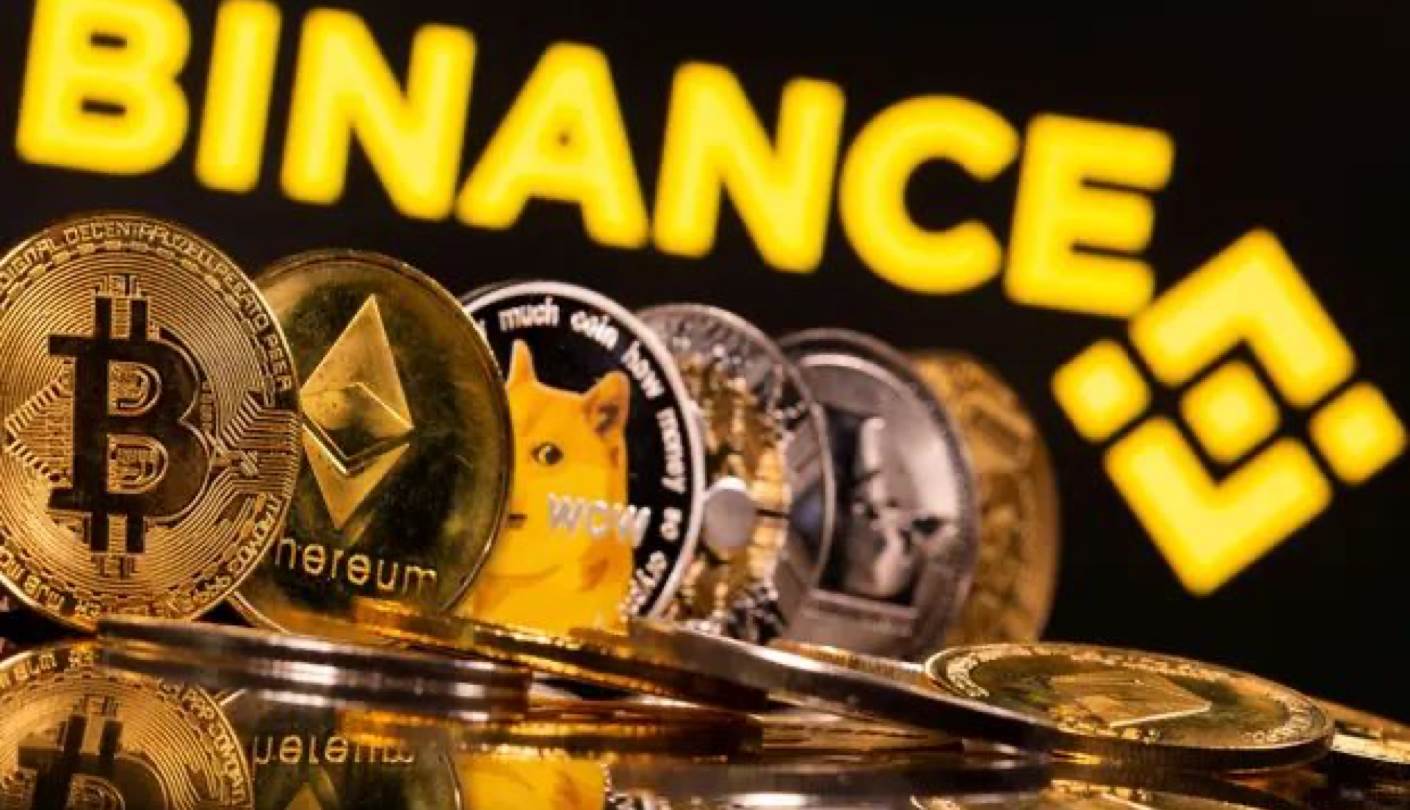
According to research released by the Bank of Korea on September 3, when investors directly obtain access to dollar-pegged stablecoins through fiat transactions, the demand for stablecoins may cause downward pressure on the currencies of various countries. This effect became apparent after Binance introduced direct transactions between local currencies and stablecoins such as USDT and USDC.
Core Research Found
The study pointed out that as Binance launches direct fiat trading pairs around the world, the dollar-linked stablecoins transmit buying pressure to the exchange rate market. Overall, the local stablecoin premium fell by 0.33 to 0.38 percentage points after the introduction of the Binance trading pair. However, despite South Korea's high stablecoin premium, no measurable exchange rate response was observed in the absence of direct matching access to Binance.
Market makers can sell local currency after receiving it in exchange for U.S. dollars, while subsequently balancing trading positions in stablecoins. The researchers used paired events between 2019 and 2025 to examine 12 currencies to identify this conduction effect.
Market structure and transmission channels
This South Korean bank study, written by Jihyun Kim and Sangheum Cho, analyzed 12 currencies based on sufficient local and global exchange data. Research believes that the direct fiat-stablecoin market strengthens the link between cryptocurrency demand and the foreign exchange market. Although the stablecoin premium has narrowed, demand shocks have also gained a channel into traditional currency transactions.
It should be emphasized that the research results do not establish the causal relationship that demand for stablecoins will inevitably lead to currency devaluation. The relationships measured depend on the market structure, the access capabilities of global intermediaries, and the availability of direct trading pairs.
Example of a transmission mechanism:
When market makers sell stablecoins to investors who pay local currency, they get the local currency and give up dollar-linked assets. To rebalance their positions, they can sell these local currencies and buy U.S. dollars in the foreign exchange market. Therefore, purchasing demand for stablecoins may trigger a corresponding sell-off in local currencies.
Researchers describe this as an "impact transmission channel." Before direct pairing, buying pressure mainly affected the domestic stablecoin premium; after pairing, part of the pressure was transmitted to the exchange rate. Data shows that stablecoin order flows initiated by net buyers are correlated with the depreciation of the paired currency. This suggests that the direction of trading activity is crucial, not just the difference between local and global stablecoin prices.
Decline in local premiums and market integration
Research also found that price integration between global and domestic stablecoin markets has increased. After the introduction of the Binance fiat trading pair, the local premium dropped by approximately 0.33 to 0.38 percentage points. This means that the local stablecoin price is closer to the corresponding spot exchange rate. When domestic demand drives stablecoins prices higher than other markets, global liquidity providers can respond.
On-chain and exchange traffic further supports this result. When the domestic premium exceeds the Binance price, stablecoins often flow from Binance to local exchanges. Traders can buy tokens in low-price markets, transfer them and sell them in higher-premium markets. This process improves price consistency across platforms, but also connects previously separated markets. Demand shocks, originally limited to domestic crypto exchanges, may now prompt global market makers to trade base national currencies.
Comparative case from South Korea: Absorption mechanism in unpaired markets
South Korea provides a useful comparative case because Binance did not provide a direct trading pair between the Korean won and stablecoins during the inspection period. South Korean investors mainly obtain stablecoins through domestic exchanges or other indirect channels. The researchers found that there was no statistically measurable relationship between stablecoin purchasing pressure and the Korean won exchange rate. On the contrary, strong demand mainly pushed up the price premium of stablecoins in South Korea's domestic market.
This comparison supports the research's argument about market structure. When global intermediaries cannot directly accept the Korean won in exchange for stablecoins, they have no equivalent positions that can be closed through traditional foreign exchange markets. However, this does not mean that South Korea's stablecoin activity is not related to the Korean won, but rather that under the market structure studied, the specific exchange rate transmission effects identified in the currency pairs are not measurable in South Korea.
Despite this, South Korea's demand for stablecoins is already high. According to Chainalysis, purchases of stablecoins denominated in won reached approximately US$64 billion in the 12 months ending June 2025. During this period, the company described South Korea as the largest local currency stablecoin market in the Asia-Pacific region.
Policy implications and future outlook
The Bank of Korea said that this relationship may change if the country expands access for businesses and foreign investors. This view is forward-looking because South Korea has not yet established the same direct trading structure used in the paired markets in the study.
Currently, South Korea is considering broader rules for digital assets. Lawmakers are developing laws that cover stablecoin issuers, reserve standards and regulation. Given concerns about monetary and financial stability, the central bank supports a bank-led model in the early stages of Korean won endorsement issuance. When discussions on the Basic Law on Digital Assets remained unresolved, the Bank of Korea further strengthened this position by supporting a bank-led stablecoin alliance.
New channels for capital flows:
Traditional capital flows occur through banks, securities markets and regulated foreign exchange dealers. stablecoins add another route because investors can access dollar-related assets through cryptocurrency exchanges and transfer them across borders. Bank of Korea researchers describe these flows as a form of non-traditional capital flows. Although the assets are still blockchain tokens, a market maker's decision to hedge its exposure could lead to regular dollar purchases and local currency sales.
This mechanism is particularly important when households use stablecoins to hedge their value, where demand often rises when inflation, currency devalues, or it is difficult to obtain regular dollar accounts. Tether has pointed to Venezuela, Argentina, Bolivia and Turkey as markets for growth in USDT adoption, which is consistent with the broad pattern of stablecoins use in crypto news amid pressure on local currencies.
This mechanism can act in both directions. Existing currency weakness may encourage investors to buy stablecoins, and transactions that meet this demand may add selling pressure to local currencies. Since demand for digital dollars typically increases when domestic currency confidence has declined, it is difficult to distinguish these impacts.
Conclusion
This study does not just show that exchange listings reduce transaction costs. Deeper integration has brought stronger transmission between digital asset demand and foreign exchange prices. For South Korean policymakers, the core question is not only whether local investors will use stablecoins, but also whether future market access will give global intermediaries a direct way to hedge their Korean won positions through the foreign exchange market. Allowing larger companies or foreign participation could increase liquidity, but it could also strengthen the link between cryptocurrency demand and the won.
FAQs
Why does buying stablecoins weaken local currencies?
After selling a U.S. dollar stablecoin to a local currency, a market maker may subsequently sell the currency and buy U.S. dollars to rebalance its position. These foreign exchange transactions may increase depreciation pressure.
Have researchers found that stablecoins always devalue the currency?
No. This relationship occurs in currencies with direct currency security fiat-stablecoin trading pairs. Under South Korea's different market structures, it showed higher local premiums, but there was no measurable exchange rate response.
Why does the local stablecoin premium fall?
Direct Binance trading pairs allow global market makers to supply stablecoins and arbitrage price differences. This liquidity brings local prices closer to the regular dollar exchange rate.
What does this study mean for South Korea?
Future corporate participation, foreign access or direct global exchange pairing may strengthen the link between stablecoin demand and the Korean won. The study did not predict the scale of any future impacts.