Exchange Ranking
 Top Exchanges
 24h Volume Ranking
 Popularity Ranking
 Exchange BTC Balance
 Proof of Reserves
 Decentralized Exchanges
 Funding Rate
 Funding Heatmap
 Liquidation Data
 Max Pain
 Long/Short Ratio
 Whale L/S Ratio
 Binance/Okex/Huobi L/S
 Bitfinex Margin L/S
 ETF Tracker
 Solana ETF
 XRP ETF
 Hong Kong ETF
 Bitcoin Treasuries
 Crypto Reversal
 Ethereum Reserves
 HyperLiquid Wallet Analysis
 Hyperliquid Whale Watch
 Large Transactions
 On-chain Movement
 Bitcoin ROI
 Stablecoin Market Cap
 Options Analysis
 News
News Articles
 Economic Calendar
 Features
 Wallet
 Contract Calculator


 Security
 Collections
 Watchlist
 Following
 BTC
BTC 硬件钱包丢失:为什么设备并不等同于你的币
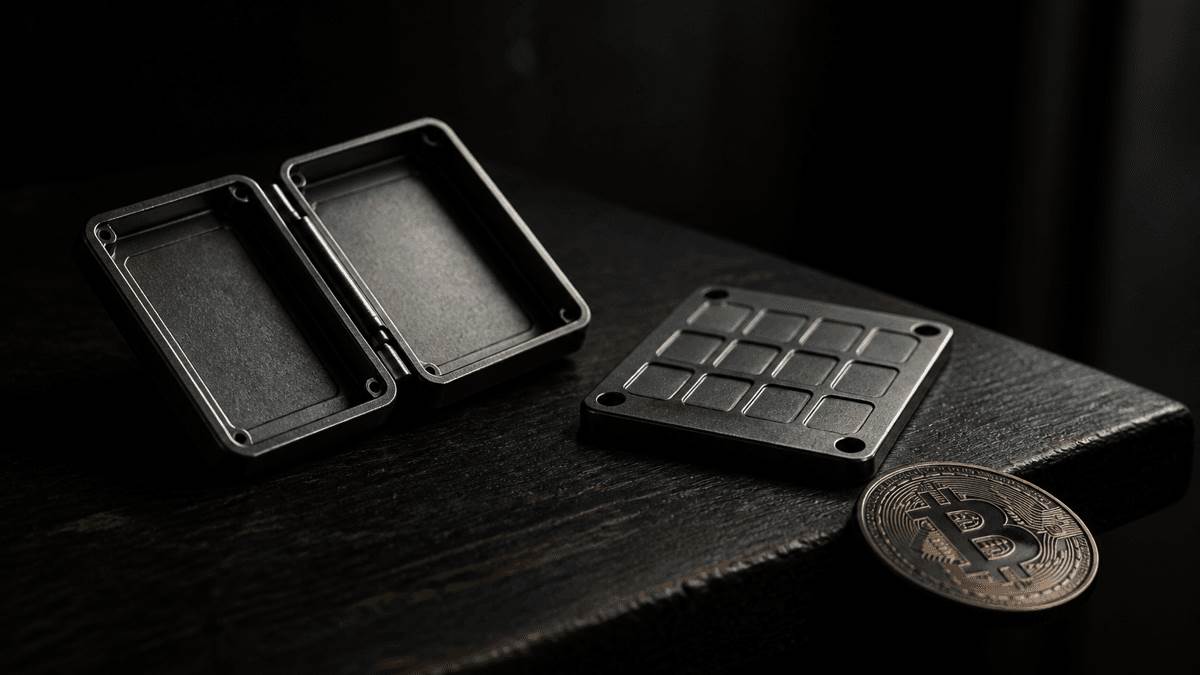
硬件钱包是一种小型设备,它在离线状态下生成并存储您的私钥,并在不将密钥交给计算机的情况下签署交易。私钥是允许以法律效力签署交易的秘密数字。持有私钥的人控制着这些代币。不持有私钥的人只能查看,但无法移动任何资产。
持仓本身位于相关区块链的公共账本中。对于比特币,您可以在任何区块浏览器中查找您的地址,看到余额仍然显示在那里,而设备可能正躺在一个移动的盒子里或湖底。这正是为什么丢失设备通常不构成财务损失的原因。
只有当任何人都无法再重建密钥时,才会产生财务损失。而密钥并不存储在设备中;它存储在您的备份中。
如果拥有恢复短语?如何根据 BIP39 标准恢复钱包
恢复短语(也称为种子短语)是一组通常由十二个或二十四个单词组成的序列,从中可以重新计算钱包的所有私钥。其基础标准称为 BIP39,源自比特币生态系统,但几乎所有常见的设备和软件钱包都支持它。这些单词来自一个固定的包含 2,048 个术语的列表,因此单个拼写错误会显得突出,并且通常仍可以纠正。
恢复程序始终相同。您获取新设备或信誉良好的软件钱包,在设置期间选择“恢复”选项而不是“新建钱包”选项,按正确顺序输入您的单词,并等待钱包与链同步。此时您的余额就会回来。
这里有两条不可妥协的原则。首先,您仅在您信任的设备上输入单词,绝不在网站上输入,也绝不在支持聊天中输入。其次,您不受丢失设备的制造商限制:该标准是开放的,BIP39 创建的短语通常也可以在另一个提供商处加载。我们在恢复种子短语指南中详细描述了涉及不同制造商时的陷阱。如果您顺便需要新设备,我们的硬件钱包比较指南将帮助您做出选择。
密码短语、Shamir 备份和派生路径:为什么即使有短语恢复也会失败
当单词正确但账户仍然为空时,几乎总是背后有三个技术怪癖之一。
密码短语是一些设备提供的额外自选单词,作为第二十五个单词。这个额外的单词会将相同的单词序列变成完全不同的钱包。任何设置了密码短语后来又忘记它的人,尽管拥有完整的短语,却面临空余额,因为那个单词无法恢复。
Shamir 备份在技术上标准化为 SLIP39,将备份分成几个部分,其中必须合并定义的最小数量。任何人只找到一个部分就一无所有。这种碎片也不能输入到仅理解 BIP39 的设备中。
最后,派生路径是从短语推导各个地址的计算规则。不同的钱包使用不同的默认值。如果在恢复后出现空账户,在恐慌爆发之前值得检查高级设置:余额经常位于同一短语的不同路径上。
只有在短语、密码短语和路径都用尽之后,访问才真正丢失。从那时起,技术问题就变成了税务问题。
税法中的一年期即使在很久以前失去对硬币的访问权时仍在运行
为什么所得税法第 23 条未将丢失的密钥视为处置
私人持有的加密资产属于所谓的“其他资产”类别。根据德国《所得税法》第 23(1) 条第 1 款第 2 项,私人处置交易是指取得和处置之间不超过一年的交易。联邦财政法院在 2023 年 2 月 14 日关于案件编号 IX R 3/22 的判决中确认了这一分类,并宣布一年内货币代币出售和交换的收益应纳税。
正是这种分类在损失发生时对您不利。法规附着于处置,即资产因对价而改变所有权的交易。最终进入家庭垃圾的设备什么也没有改变。没有买方,没有处置价格,因此根据条文措辞,既无收益也无损失。盗窃也是如此:那里同样缺少处置交易,因此税务局通常拒绝承认此类损失。
这是您需要准备的位置。这不令人满意,因为同一窗口内的收益确实被征税。但它仍然是任何现实规划的起点。
第 23 条的一年期也决定了您的命运
一年持有期双向起作用。持有硬币超过一年的人无需为收益缴纳所得税。反过来说,同一句话意味着一旦该期限届满,损失在税务上就毫无价值,尽管这在经济上很痛苦。
对于您的情况而言:只有在购买硬币和最终失去访问权限之间不到一年的时间内,失去访问权限才可能与税务有关。对于多年来一直放在柜子里的设备,这个问题通常在问出之前就已经有了答案。
A common concern can be eliminated here. The ten-year disposal period extension provided by the tax law for assets that generate continuing income is not applicable to crypto-assets in the eyes of tax authorities; the Ministry of Finance's latest letter has a special section titled "Keine Verlängerung der Veräußerungsfrist auf zehn Jahre"(the disposal period will not be extended to ten years). Therefore, whether it is a pledge or a loan, people insist on the one-year rule.
Tax lawyers 'arguments for admission of loss
The legal position is less clear than the letter of the regulation because there is still a lack of clear provisions on missing crypto assets. In a professional article written by Malika May on March 10, 2025, Winheller Law Firm collected several arguments in support of considering such losses on a tax basis.
The first is an analogy with stock case law: the Federal Fiscal Court has recognized the tax treatment of free withdrawals of shares after capital write-down to zero, both cases involving privately held assets lost through non-owner fault. The second is the principle of taxation based on economic ability, which makes it difficult to prove why gains are taxed and losses are ignored. The third is the inherent risks of trading crypto-assets, from wallet attacks to loss of technical access credentials.
The same source openly points out the limitations of this argument: admitting losses realized after the one-year period is likely to be difficult to justify. The dominant opposing position, the prevailing view in IRS practice, is simpler: no deal, no loss.
在实践中,这意味着您的案件在存疑情况下只能通过上诉和专业支持才能有所进展。预计会遇到阻力,为努力做好预算,并将承认视为一种可能性,而不是您已经入账的税收节省。
实现损失而非希望:以象征性金额出售 achieves 什么
对于变得毫无价值但仍可访问的持仓,有一条可行的路线:任何人实际上处置了代币,即使是象征性的价格,从而创造了法规所需的交易。我们在编写总加密货币损失指南中详细探讨了这如何在退市、 worthless tokens 和破产交易所的情况下运作。
这条路线正是丢失的密钥所关闭的,这也构成了两组案件之间的决定性差异。您无法出售您无法签名的东西。任何提供预付解锁“被锁定”代币或从未获得访问权就从您那里购买代币的人,都在运行众所周知的骗局。在这种情况下不要向恢复服务转账资金。
如果部分持仓的访问保持完整,对整个纳税年度进行清醒的计算是值得的。其他头寸的实现损失可以减少同一年私人处置交易的收益,这种效果往往比最终承认丢失密钥的前景更大。
举证责任:2025 年 3 月 6 日部长信函后的记录要求
On March 6, 2025, the German Federal Ministry of Finance issued a revised version of the letter on individual issues regarding the income tax treatment of specific crypto assets, with the document reference number IVC1-S2256/00042/064. Compared to the previous version, a major section on tax returns, cooperation and record-keeping obligations has been added, which includes a subsection on cooperation and retention obligations for privately held assets, as well as a separate section on wallets, keys and transactions, transaction overview and tax reporting.
The main points of these parts are self-evident: Anyone reporting income from crypto assets must be able to record where the tokens go. For loss cases, this means that you can only meet the burden of proof in advance because you will no longer generate records after the loss occurs.
So, while you still have access, make sure that the following: purchase receipts with date, quantity and price, withdrawals and associated transaction IDs from the exchange to your own address, the public master key of your public address or wallet, and your transaction history export. If the worst happens, you add a consistent description of the incident, including the date, plus everything that records the incident, from communications with the manufacturer to police reports. The portfolio tracker's tax reporting makes this job much easier; a comparison of our cryptocurrency tax tools and portfolio trackers shows which tools are up to the job.
DAC8 and the German Cryptocurrency Tax Transparency Law: Why the tax authorities know about your purchases but not your losses
Since January 1, 2026, Germany has implemented the Crypto Assets Tax Transparency Act (KStTG for short). It implements the European DAC8 Directive and requires crypto asset service providers to report detailed information about their users and their transactions to the Federal Central Taxation Service. The law sets out reporting obligations, reporting periods corresponding to the calendar year, information to be reported, and electronic reporting procedures using officially prescribed data records in a separate chapter; violations will face fines.
This creates a noteworthy imbalance for those affected. Your coin purchases on the reporting platform have been recorded and entered into the tax authority's database. The same goes for withdrawing it into your own wallet. What happens after that is invisible to everyone: a lost recovery phrase does not produce a report, and an address that no one can anymore access is no different from the outside than an address that someone is patiently waiting for.
This is not a reason for panic, but a reason for caution. If your data shows incoming sales but no matching sales, you should be able to explain why. Clean documentation is not formalism here; it is the difference between querying and estimating.
Loss set-off and loss carry-forward under Article 10d: What happens when a loss is admitted
Assuming your case is admitted, or you realize a loss elsewhere: then a strict set of rules applies. Losses on private disposal transactions can only be offset against the amount of benefits you earned from private disposal transactions during the same calendar year. They cannot be offset against your salary, interest or dividends.
剩余的部分不会没收。通过对《所得税法》第 10d 条的引用,此类损失减少前一年或随后年份私人处置交易的收入。因此,亏损年份一直存在,直到遇到有收益的年份。条件是损失必须申报并经正式评估;没有人会主动结转。
请注意 1,000 欧元的免税额:如果日历年的总收益低于此阈值,私人处置交易的收益免税。已经低于该阈值的任何人从复杂的损失争论中得不到任何好处。
盗窃、黑客或欺诈:与丢失设备的界限在哪里
在税务方面,所有这些案例最终都归结为同一个问题,即缺失的处置交易。在实践中,它们有很大不同,而这种差异决定了您首先要做什么。
如果只有设备消失且您的恢复短语安全存储,则无人访问且有时间进行干净恢复。然而,如果您的单词通过云照片、网络钓鱼电话或闯入落入他人手中,每一分钟都很重要:然后立即将您的持仓转移到新生成的钱包,其短语攻击者从未见过。如果硬币已经消失,这就是刑事犯罪,随之而来的一切后果。如何处理以及为什么即使没有恢复前景也要报警,请参阅我们关于被盗加密货币和警察报告的指南。
保持区分清晰,包括向税务局。自行造成的备份丢失、盗窃和投资欺诈是三种不同的事实集,应以不同方式描述并以不同方式记录。
预防:今天改变什么以使这种情况永不发生
处理这个话题的最佳方法是永远不需要在实践中使用它。四种习惯完成了大部分工作。
不要在数字设备上存储您的恢复短语,无论是照片还是存储在云中的密码管理器。将其保存在两个物理上分开的地方,以便水损或火灾不会同时捕获两份副本; stamped metal plate 比纸张更能幸存。在转移较大金额之前,先用少量测试恢复,因为从未检查过的备份是一种希望而不是备份。并且随着更新您的税务记录,因为在紧急情况下它们起到与备份本身相同的作用。
如果您无论如何都要重组您的托管,我们的软件钱包比较概述将有助于回答哪些金额应完全在设备上,哪些最好保存在别处的问题。
硬件钱包丢失和税务:您应该带走的内容
先救援,后计算。
在将损失视为最终之前,检查恢复短语、密码短语和派生路径。遵循开放 BIP39 标准的新设备就足够了;您可以在我们的硬件钱包比较中找到合适的型号。
在您仍能保存时保护记录。
购买收据、交易 ID、地址和历史记录导出是稍后提出任何论点的唯一文档。我们比较的加密货币税务工具和组合跟踪器中的工具之一的税务报告会连续处理此事,而不是一年一次。
降低您的税务期望。
没有处置,税务局通常会拒绝承认损失,一旦一年期届满,即使承认的损失也变得毫无价值。相反,重组您的托管,例如借助我们的软件钱包比较,并根据您仍可移动的头寸规划税务。
(截至 2026 年 9 月 18 日。本文不构成投资建议。价格和费用结构会发生变化;购买前请与提供商核实条款。)