Exchange Ranking
 Top Exchanges
 24h Volume Ranking
 Popularity Ranking
 Exchange BTC Balance
 Proof of Reserves
 Decentralized Exchanges
 Funding Rate
 Funding Heatmap
 Liquidation Data
 Max Pain
 Long/Short Ratio
 Whale L/S Ratio
 Binance/Okex/Huobi L/S
 Bitfinex Margin L/S
 ETF Tracker
 Solana ETF
 XRP ETF
 Hong Kong ETF
 Bitcoin Treasuries
 Crypto Reversal
 Ethereum Reserves
 HyperLiquid Wallet Analysis
 Hyperliquid Whale Watch
 Large Transactions
 On-chain Movement
 Bitcoin ROI
 Stablecoin Market Cap
 Options Analysis
 News
 Articles
 Economic Calendar
 Features
 Wallet
 Contract Calculator


 Security
 Collections
 Watchlist
 Following
Térezor Safe 5 was attacked by the supply chain: hardware implants stole assistive words, the impact was confirmed
On November 12, Trezor announced that its laboratory had confirmed this change and found two problem units with the same circuit boards in 48 other customer equipment. This found that the previous single reliable report had been converted into solid supply chain evidence and reduced the affected sales window to 34 days between 20 August and 23 September 2026.
Of the 48 equipment submitted for review, only three have been identified as infected. Térezor is cautious about the wording: “Three of the Térezor Safe 5 purchased from Cripto Bilis contain the implant, including the one that we received in October.” Of the three, only one has been analysed in a laboratory. The other two have been identified through internal photographs sent by the owner, which are less robust than physical decomposition, and the conclusion should therefore be considered as a problem rather than an accurate infection rate.
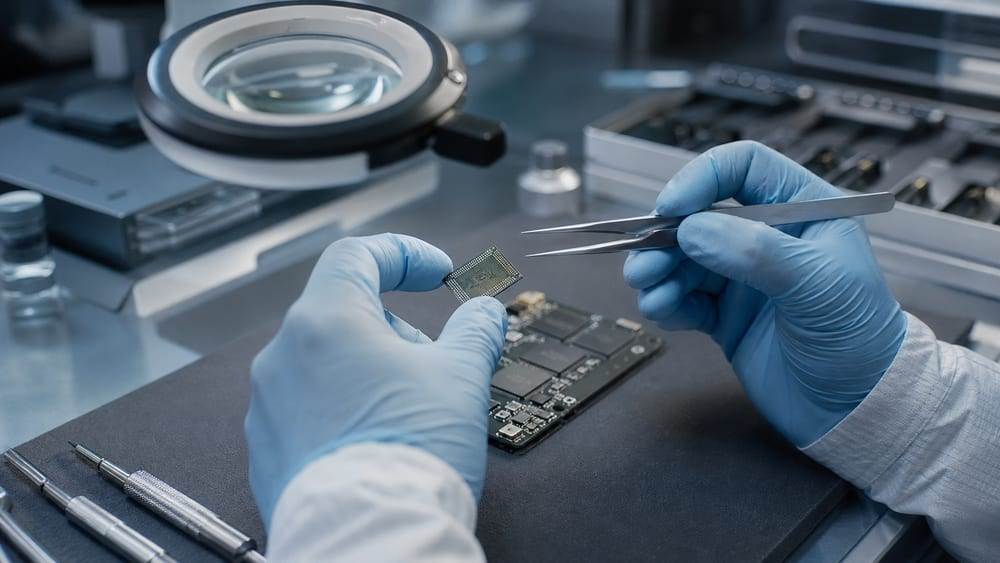
Dismantling found: a circuit board for mirror screens
The implant is an additional circuit board installed between the Trezor Safe 5 main board and the display screen. Trezor describes its behaviour as follows: "It is only listening: it reproduces all the contents on the screen, including the information you entered on the device." This explains why the regular check did not detect the problem. The device itself is still verifying the integrity of the solidware, still displays a valid interface and the transaction signature is correct, as none of the links in the signature path has been tampered with.
The added part is located outside the software boundary. The circuit board reads the signal, identifies the recovery words that appear, stores them and then relays them through the cellular link to a server controlled by the manufacturer. Since the assistive words are shown only once at the setup and again when the backup is verified, the infected device needs only a few minutes of attention from the user, so that the only secret that the hardware Wallet is designed to protect.
Térezor's embedded team extracted and analysed the solids of the reporting equipment, a key difference between the October bulletin and the current month's update: in October, the company had only client descriptions and video interviews, while this time it had a substantive technical analysis.
3 affected equipment, 2 market platforms, 34-day time window
All three of the units affected were purchased between 20 August and 23 September 2026, either through the Tokopedia and Shopee shops of Crypto Bilis or directly from the distributors. The company states that no owner of the aircraft has suffered financial losses at present and that no tampering signs have been detected from the inspection of other distributors’ equipment in the area. “With the exception of Crypto Bilis, we have no confirmed cases.” The updated document indicates.
The purchase window is the most useful constraint in the document. The short time span of 34 days indicates that the intervention was limited to a shipment or a warehouse, rather than to a few months of operation. It also provides each buyer with a test method that can be implemented without technical skills: checking the channels and dates on the invoice. However, it also creates a clear gap. Térezor has not published how many Safe 5 equipment was sold during this period, and is therefore unable to estimate from the report the number of equipment not submitted for review.
Solid 2.13.1 uncoverable 49 to 83 days
Térezor issued a solid piece on November 11, 2.13.1. The company states that the update prevented any data from being captured by the implants that had been discovered, thereby rendering them invalid in the current batch. The key is time arithmetic. The equipment purchased on August 20 ran 83 days of unrepaired version, while the equipment purchased on September 23 was 49 days.
The company has not diluted the conclusion: “If you have purchased it from CryptoBilis, you should still transfer the funds to the new Wallet with the new assistive word, because the update will not protect the Wallet backup that was captured earlier.” The same view was expressed in the previous notification in operational terms, warning that reusing the backup generated by the altered Wallet on different devices would not solve the problem.
Migration to a new assistive word is more than just a transfer. The new Wallet means a new address, so any periodic payment, wage destination or white list of money proposed by the transaction to the old address must be updated, and the authorization of tokens from the old address should be withdrawn, rather than remain active. Restoring the phrase is the only proof that users cannot rotate locally from hosting, which makes hardware-level capture more destructive than web-fishing pages.
80 per cent reduction in distributor networks, leaving approximately one fifth of partners
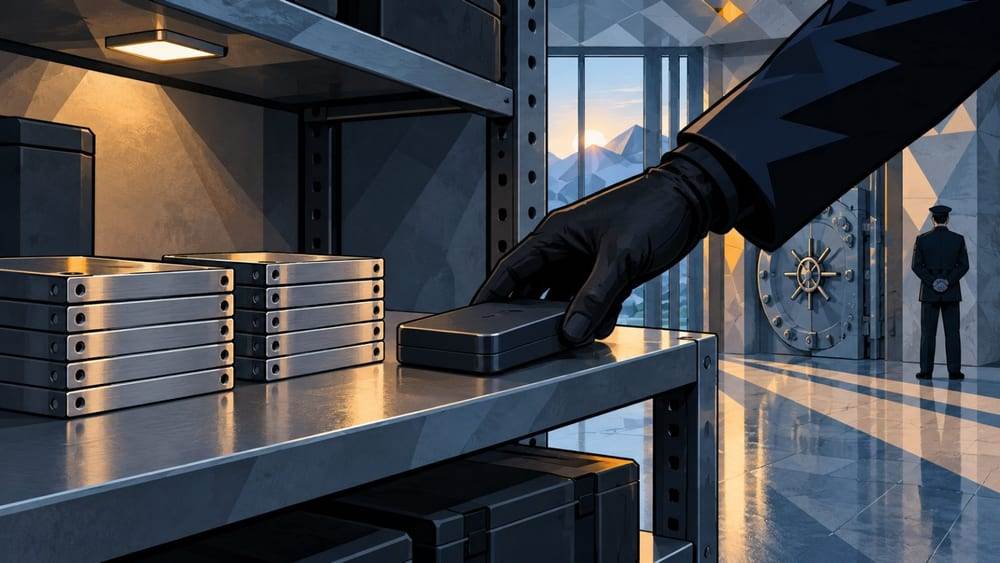
Térezor has also cut its distributor network by about 80 per cent and has introduced stricter rules for the remaining partners, covering the source, storage and physical access of the equipment. The company has made it clear that removing the partner is not an allegation: “The partners we remove are trustworthy and do not pose a direct threat, but they do not meet the more stringent processes that now every remaining distributor must follow to protect the supply chain.”
From the point of view of the market structure, this decision moves a control point. Manufacturers can audit their own production lines and solids, but they cannot audit their warehouses outside their overseas operations. Removing four fifths of intermediaries convert unverifiable distribution layers into smaller contractual layers, ultimately falling on buyers in markets that are slow, expensive or exposed to customs risks. Trezor acknowledges this: the transport rules mean that it cannot deliver each model to each country, and in some cases it will provide different models and refund price differentials, or deliver goods to addresses in other countries, or provide refunds.
This lesson is more specific to the agency ' s configurationer than it is to the title. The failure is physical, not cipheral, and occurs after the equipment has left the plant. Hardware is considered to be a problem-solving hosting arrangement, and if no trace, transport chain, or first-time start-up procedures are recorded, it will inherit the same risk.
Measures to be taken by the buyer of Cripto Bilis
Anyone who buys the Safe 5 from the dealer between 20 August and 23 September 2026 should assume that the equipment has been damaged. Anyone who buys it from Crypto Bilis since March 2026 is eligible for replacement equipment, and Térezor will deliver the goods directly or provide vouchers.
- Retention of equipment.
- Don't set it up.
- Do not enter the existing recovery phrase in it.
- Moves funds to the new Wallet created using the newly generated syllable.
- If no second hardware wallet is available, the software Wallet or a familiar exchange may be used as a temporary destination after a thorough check of the full receiving address.
Two of the warnings in the 29 October announcement still apply. Térezor stated that there was no reliable home-based test to detect implants, so that weight, packaging and solids could not be verified as evidence. Moreover, the incident had triggered false attempts, including false e-mails, letters and telephone calls to provide replacement services: Térezor support would never ask for the phrase to be restored and the replacement services would be handled only through official support channels. The company was coordinating with SEAL 911 (Security Alliance incident response service) and stated that it would not publish details that might help the attackers or expose the affected customers.
For users holding funds from older equipment from other sources, the important secure storage process remains unchanged and is documented: offline assistive words, physical storage, and never enter a computer or browser form. The cold storage settings guide covers the process parts that may be defeated by tampering with the screen.
Three questions that remain unanswered in the report
Three issues remain outstanding, each of which will change the perspective of the interpretation of the incident.
- Quantity issues:In the absence of Crystal Bilis, the size of the exposure pool was unknown and a review of 48 items of equipment could not replace the overall data.
- Insert points:The update describes the work and its behaviour, but does not indicate where the circuit boards were installed in the chain, or who had physical access at that time. This fact will determine whether other sellers and other brands are at the same risk.
- Certification issues:Dismantling is carried out by manufacturers and coordinated with external emergency response teams, and independent findings on implants have not yet been issued. This is the normal arrangement in active investigations, and why the findings should be considered as documented rather than conclusive.
Trezor undertakes to date any changes in the post, including confirmation of implants in models other than Cripto Bilis or Safe 5 and to issue a public notice when new protection measures are introduced. Before these updates appear, the defensible interpretation is that the problem is defined by the channel and date, not the issue is closed.
Common Question Answers (FAQ)
How many Térezor Safe 5 devices were found to contain implants?
Three units, which were submitted by Crystal Billis clients, were purchased from 20 August to 23 September 2026, either through the Tokopedia and Shopee shops of Crystal Billis or directly from dealers. One of these units was dismantled at the Trezor laboratory; the other two were identified through their internal photographs.
2.13.1 Making affected Trezor safe?
No, if the equipment was used before November 11. The update prevented the implant found by Trezor from capturing any data on the equipment that operated the solid, but it could not protect the restored phrase that had been copied. Térezor’s guidelines were to transfer funds to a new walklet with new assistive words.
Can I check myself for implants?
Térezor states that there is no reliable means of self-inspecting the equipment, nor of weighing it. The actual method of checking is to look at the purchase records: if Safe was purchased from Crypto Bilis between 20 August and 23 September 2026, it would fall within the time window that has been identified; any purchases from the dealer since March 2026 would be eligible for replacement.
Are the equipment of other distributors affected?
Térezor states that no confirmed implants have been found outside Crypto Bilis and that no evidence of tampering has been found in the equipment of other distributors in the area.