Exchange Ranking
 Top Exchanges
 24h Volume Ranking
 Popularity Ranking
 Exchange BTC Balance
 Proof of Reserves
 Decentralized Exchanges
 Funding Rate
 Funding Heatmap
 Liquidation Data
 Max Pain
 Long/Short Ratio
 Whale L/S Ratio
 Binance/Okex/Huobi L/S
 Bitfinex Margin L/S
 ETF Tracker
 Solana ETF
 XRP ETF
 Hong Kong ETF
 Bitcoin Treasuries
 Crypto Reversal
 Ethereum Reserves
 HyperLiquid Wallet Analysis
 Hyperliquid Whale Watch
 Large Transactions
 On-chain Movement
 Bitcoin ROI
 Stablecoin Market Cap
 Options Analysis
 News
News Articles
 Economic Calendar
 Features
 Wallet
 Contract Calculator


 Security
 Collections
 Watchlist
 Following
Key Points
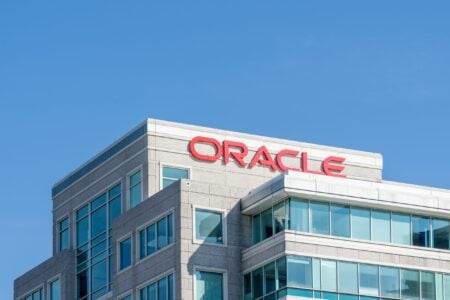
Citi analyst Taylor Radek characterized Oracle's recent stock price decline as an abnormal fluctuation of "four to five standard deviations" and believed that negative factors had been fully absorbed by the market. The bank maintains its buy rating and price target of $330, while raising its revenue and profit forecasts for the 2028 - 2030 fiscal year. An order backlog of US$85 billion and daily investor activity at the end of October provided a positive catalyst for stock prices in the near term.
A quick look at core views
Oracle shares rose 3.5% to 4.5% on Wednesday after Citi analyst Taylor Radek launched a positive catalytic watch on the stock. The bank maintains a buy rating with a target price of $330 and describes the decline as an extreme "four to five standard deviations" outside Oracle's normal range of fluctuations.
Oracle's share price has fallen more than 50% from a June high to a July low amid concerns about its aggressive AI infrastructure investment and its expanding debt burden. This time, investment banks raised their revenue and profit forecasts for the fiscal year 2028 - 2030, emphasizing opportunities in the AI market and stabilizing credit indicators. A huge $85 billion order backlog and an investor day event planned for late October are positive catalysts in the near term.
Oracle shares rose 4.5% in early trading on Wednesday. Previously, Citi analyst Taylor Radek launched a positive catalytic observation of the stock, believing that the recent decline was one of the most serious declines in the history of the software giant.
Radek maintains a buy rating on the stock with a target price of $330. As of press time, Oracle's share price was trading around $147, still having a lot of room to reach the analyst price target.
The enterprise software company's market value evaporated by more than half between its June peak and July trough. Radek described the volatility as an anomaly that was "four to five standard deviations" outside Oracle's normal price volatility range and only occurred within 30 to 40 trading days.
According to Citi's analysis, a decline of this magnitude creates a rare buying opportunity for market participants. The sharp sell-off stems from investor concerns about Oracle's huge capital expenditures on AI infrastructure, including for major customers such as Microsoft and OpenAI, and a significant increase in leverage. In five years, Oracle's debt burden has expanded by 60%, and free cash flow has turned from positive US$13.8 billion to negative US$23.7 billion. Wall Street predicts that Oracle will consume an additional $90 billion over the next two years.
Investment Bank: Negative factors have been fully reflected
Despite these worrying numbers, Citi believes the most pessimistic scenarios are factored into current valuations. The bank highlighted the market's "insatiable" demand for AI capabilities and Oracle's $85 billion order backlog, believing it was enough to cover the company's near-term cash needs. The investment bank also raised its revenue and profit forecasts for the 2028 - 2030 fiscal year. Citi predicts that Oracle's earnings per share could reach $22 by 2030, three to four times current GAAP earnings per share. Improvements in credit market indicators form another part of the bullish view. Citi observed that bond spreads and credit default swap spreads have begun to narrow, indicating that forced unwinding pressure may be weakening.
The upcoming financial report attracts much attention from investors
Oracle plans to report earnings in September and hold an investor day event at the end of October. Citi's research paper views both events as potentially positive catalysts. Wednesday's gains came after Oracle demonstrated its distributed cloud architecture at an industry conference, consolidating its position in the enterprise AI market. Overall support for the market is limited. The S & P 500 index rose only slightly by 0.1%, while the Nasdaq index was basically flat, indicating that Oracle's strength is an obvious sign of individual stocks. Among its corporate software peers, SAP fell more than 3% after UBS downgraded it to "neutral," which may in turn have increased Oracle's relative appeal that day. Oracle's analyst consensus rating remains "buy". The stock has a 52-week trading range of $114.50 to $345.72 and is currently well below recent highs. Trading at a P/E ratio of less than 25 and expected to grow 27% annually for the next five years, Citi's $330 price target suggests the stock could more than double its current level.