Exchange Ranking
 Top Exchanges
 24h Volume Ranking
 Popularity Ranking
 Exchange BTC Balance
 Proof of Reserves
 Decentralized Exchanges
 Funding Rate
 Funding Heatmap
 Liquidation Data
 Max Pain
 Long/Short Ratio
 Whale L/S Ratio
 Binance/Okex/Huobi L/S
 Bitfinex Margin L/S
 ETF Tracker
 Solana ETF
 XRP ETF
 Hong Kong ETF
 Bitcoin Treasuries
 Crypto Reversal
 Ethereum Reserves
 HyperLiquid Wallet Analysis
 Hyperliquid Whale Watch
 Large Transactions
 On-chain Movement
 Bitcoin ROI
 Stablecoin Market Cap
 Options Analysis
 News
News Articles
 Economic Calendar
 Features
 Wallet
 Contract Calculator


 Security
 Collections
 Watchlist
 Following
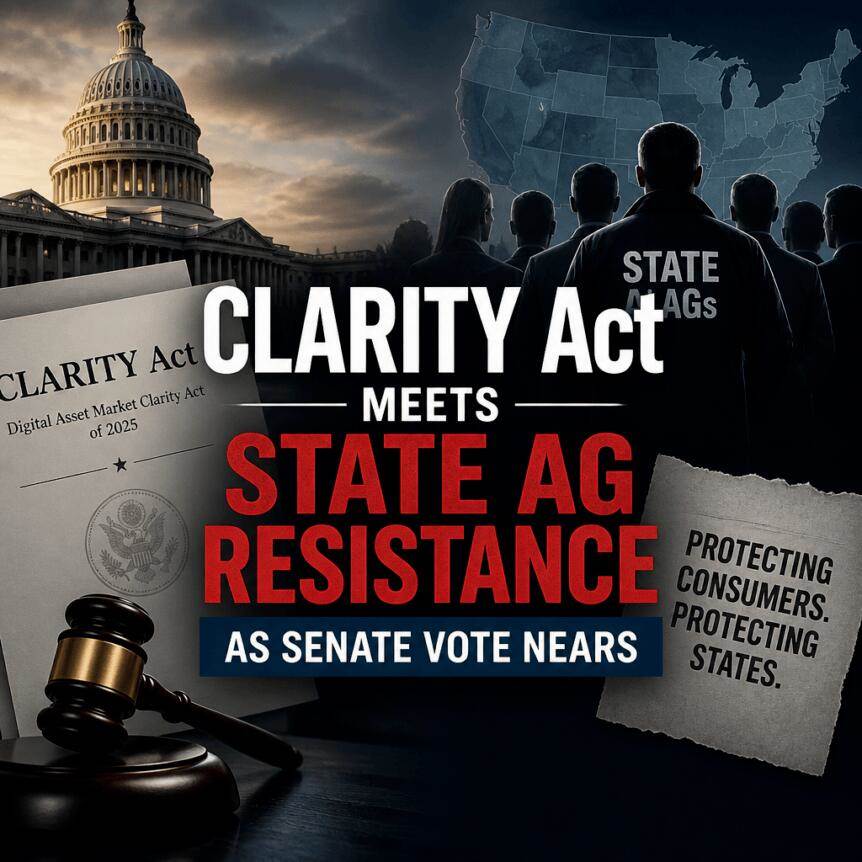
The Senate will hold a key procedural vote on the CLARITY Act, but opposition from a coalition of state attorneys general could complicate the process
The U.S. Senate is scheduled to hold a crucial procedural vote on the CLARITY Act on Tuesday. The bill is an important legislative proposal aimed at reshaping the way the federal government regulates digital assets and clarifying the status of cryptocurrencies within existing securities and commodity frameworks. Although the latest negotiations around moral constraints on public officials appear to have pushed the bill's action-after President Donald Trump agreed to most terms of a bipartisan proposal-objections from a coalition of multiple state attorneys general are threatening to complicate the momentum.
In an open letter led by New York Attorney General Letitia James, 18 state attorneys general urged senators to veto the bill. They argued that the compromise did not fully address concerns about weakening state governments 'ability to monitor crypto-related misconduct.
Core Points
- Procedural vote: The CLARITY Act will face a Senate procedural vote on Tuesday that will determine whether it can enter full Senate debate.
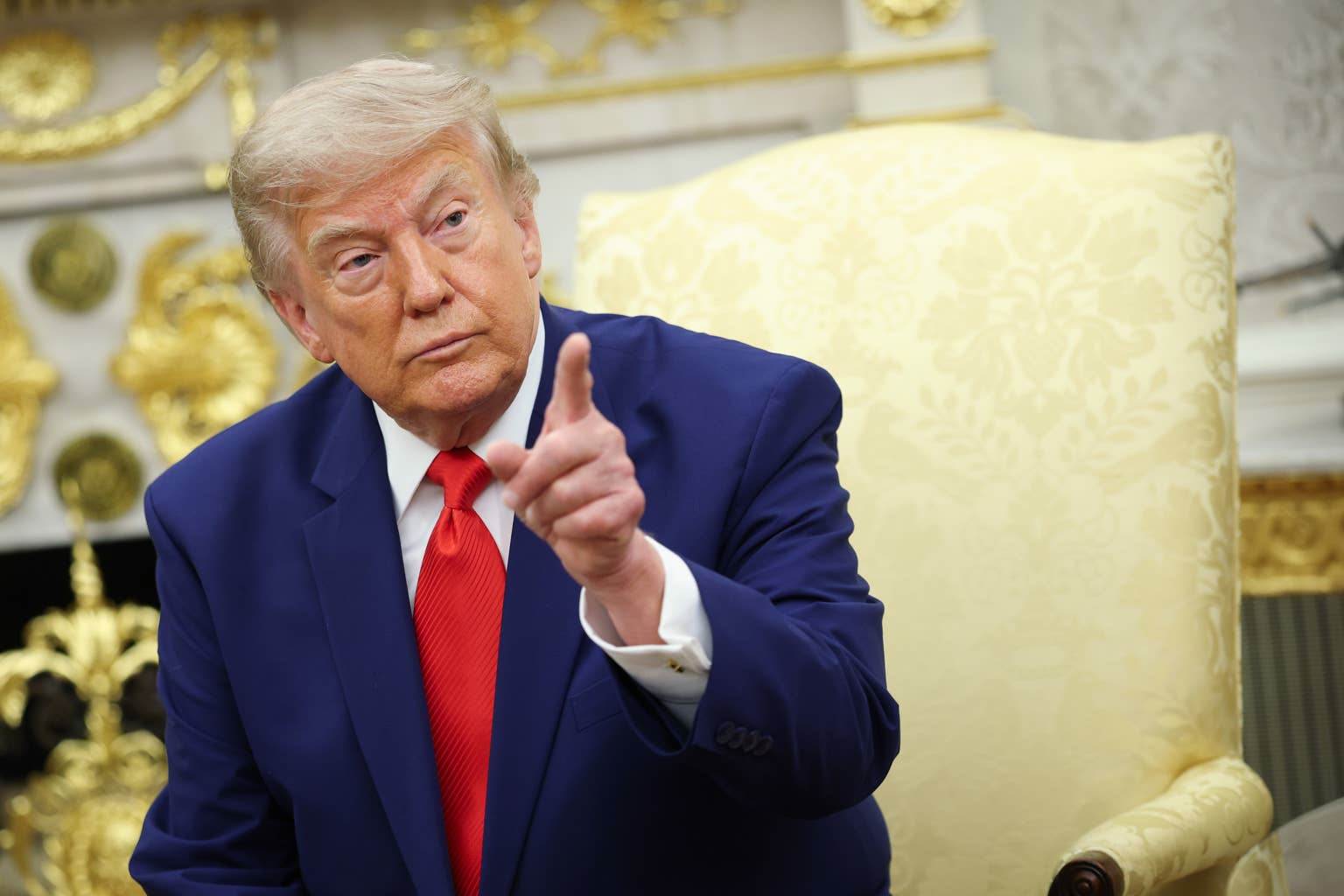
- Trump's Ethics Agreement: Trump reportedly agreed to about "80%" of bipartisan ethics proposals that would tighten disclosure and divestiture rules for officials with significant crypto interests.
- State objection: A coalition of 18 state attorneys general, led by Letitia James, said the bill's language could weaken states 'ability to fight encryption fraud and misconduct.
- Enforcement power controversy: Although the amendment includes involving state attorneys general in enforcing moral restrictions, they believe other provisions may still limit the state's police power (law enforcement power).
Senate procedural obstacles looming
Tuesday's vote is not a final ruling on the substance of the CLARITY Act, but an important gatekeeping step. Earlier reports said Senate Majority Leader John Thune had filed a cloture motion when House members failed to move the bill forward last month before leaving Washington for the August recess.
In practice, this procedural vote will determine whether senators can continue to debate. This is critical for market participants and legal stakeholders because the CLARITY Act aims to establish a clearer federal structure for the regulation of digital assets-particularly by defining when assets are subject to securities law or commodity law, and by defining the roles of the U.S. Securities and Exchange Commission (SEC) and the Commodity Futures Trading Commission (CFTC).
Trump reported ethics agreement reshapes the bill
The latest complexity stems from the intersection of moral rules and executive power. According to the Associated Press, Trump agreed to about "80 percent" of the proposal proposed by Republican Sen. Thom Tillis and Democratic Sen. Ruben Gallego, a senior Republican aide confirmed.
The bill originally prohibited federal elected officials, their spouses, and federal judges from issuing digital assets. The compromise reportedly reached would increase requirements for officials who hold "significant" financial interests in crypto issuers-requiring those interests to be divested or placed in blind trusts.
In addition, the plan expands the coverage of actual enforcement by giving state attorneys general a role in enforcing new ethical restrictions. The changes are intended to address concerns raised by Democrats and Tillis that the earlier rules were not strict enough to deal with potential conflicts of interest involving Trump's crypto positions and business interests.
Crypto in America, a publication co-chaired by Eleanor Terrett, described the weekend's development as triggering new optimism in the industry sector and viewed the revised plan as a move by Republicans to push Democrats to reach agreement ahead of Tuesday's procedural vote.
State attorneys general objects- citing law enforcement and federal-state tensions
Even if the ethics clause appears to be making progress, a coordinated challenge has emerged at the state level. In a letter to Senate Banking Committee leaders, 18 state attorneys general, led by Letitia James, argued that the CLARITY Act could make it more difficult for states to take action against crypto companies suspected of fraud or other misconduct.
The coalition of state attorneys general warned that while the bill retains "certain powers" of states to prosecute fraud, the letter alleges that language contains ambiguity that could lead to challenges to states 'police powers or limit states' ability to combat what signatories call the "proliferation of scams."
They also believe that the execution structure is unbalanced. Although the updated bill will give state attorneys general a role in enforcing new ethical restrictions, state attorneys general contends other provisions that could still weaken their broader powers over crypto-related violations.
This is the core tension for lawmakers and those concerned about U.S. regulatory federalism: A bill designed to regulate federal oversight and define agency responsibilities may still be seen as limiting the power of state prosecutors. The state attorney general's letter suggests that even modest regulatory changes could create new litigation risks or restrictive interpretations-issues that could materially affect states 'ability to quickly and effectively pursue alleged misconducts.
The letter is the clearest signal yet that the opposition is not just political, but also legal and jurisdictional, paving the way for a potential debate about where responsibility should be placed when both federal agencies and state officials can pursue different but sometimes overlapping theories of execution.
Why the CLARITY Act means more than the moral debate
While Tuesday's vote will have a lot of discussion through the perspective of moral rules, the CLARITY Act is more than that. The bill has been widely described as a landmark effort to establish a federal market structure for digital assets, including providing clearer guidance on the division between the SEC and the CFTC.
This regulatory clarity is a key reason why the legislation is closely watched by market participants. For exchanges, custodians, token issuers, and financial institutions, regulatory uncertainty can directly translate into compliance costs, product release delays, and increased legal risks. For consumers, clearer rules also aim to reduce gray areas that may be exploited by criminals.
However, state attorneys general's concerns highlight a reality: Even if federal laws are designed to coordinate oversight, states still play a vital role in fighting fraud and protecting consumers. If the drafting of the CLARITY Act leaves room for debate where states 'enforcement powers are limited or restrained, it could spark parallel legal battles-and even if the bill ultimately passes, it could slow down enforcement.
Therefore, investors and builders should not interpret Tuesday's procedural vote as simply a referendum on ethics provisions. It is also a test of senators 'willingness to advance the comprehensive framework without resolving federal-state enforcement border issues.
What's worth watching next
What's worth watching next is whether the Senate procedural vote passed smoothly on Tuesday; and if it does, whether the state attorneys general's objections will shape debate in plenary deliberations-particularly around how the bill's provisions affect states 'ability to pursue crypto fraud cases while clarifying their roles for the SEC and CFTC.