Exchange Ranking
 Top Exchanges
 24h Volume Ranking
 Popularity Ranking
 Exchange BTC Balance
 Proof of Reserves
 Decentralized Exchanges
 Funding Rate
 Funding Heatmap
 Liquidation Data
 Max Pain
 Long/Short Ratio
 Whale L/S Ratio
 Binance/Okex/Huobi L/S
 Bitfinex Margin L/S
 ETF Tracker
 Solana ETF
 XRP ETF
 Hong Kong ETF
 Bitcoin Treasuries
 Crypto Reversal
 Ethereum Reserves
 HyperLiquid Wallet Analysis
 Hyperliquid Whale Watch
 Large Transactions
 On-chain Movement
 Bitcoin ROI
 Stablecoin Market Cap
 Options Analysis
 News
News Articles
 Economic Calendar
 Features
 Wallet
 Contract Calculator


 Security
 Collections
 Watchlist
 Following
 BTC
BTC Arthur Hayes: A correction in U.S. artificial intelligence spending may trigger government support, which will benefit Bitcoin.
Arthur Hayes believes that a correction in U.S. artificial intelligence spending may eventually trigger government support for artificial intelligence infrastructure or bailout insurance companies. This will create dollar liquidity, which he expects will benefit Bitcoin.
The core of Hayes's view is that weak demand for artificial intelligence computing power may put pressure on the debt market and ultimately increase dollar liquidity. Although the Federal Reserve raised interest rates by 25 basis points last week, challenging Hayes 'expectations of immediate "printing money", he still adhered to his macro judgment.
AI financing scale and cash flow assumptions
Apollo Global Management estimates that AI financing needs could support more than $2 trillion in debt issuance by the end of the decade. NAIC (American Association of State Insurance Regulators) points out that the transparency and valuation risks of private credit require continuous monitoring by state insurance regulators.
Hayes wrote in an article "Safety First" published on September 22 that recent calls by major U.S. artificial intelligence companies to slow down the development of cutting-edge models have, in addition to publicly mentioned safety concerns, there may be economic explanations. He speculates that demand for expensive AI services may be weaker than the spending assumptions that support data centers, chips and related debt.
然而,这一解读并非人工智能公司自身的解释。OpenAI今年8月表示,由于网络安全问题及内部保障措施变得必要,暂时放缓了部分前沿模型的开发。Anthropic首席执行官Dario Amodei随后呼吁行业放慢模型开发步伐,以便安全控制措施能够跟上能力的发展。两家公司的声明均未将发展放缓归因于客户需求的下降。
海耶斯的核心论点:算力需求破坏
海耶斯的论点集中在人工智能基础设施建设的融资背后。他认为,训练和推理需求的降低可能会削弱支撑数据中心、半导体采购以及与该行业相关的私人信贷的现金流假设。用他的话来说:“‘安全第一’从定义上讲就是算力需求的毁灭。”
独立的信用研究证实了大量资金正流向人工智能领域,但并未证实海耶斯所预测的危机。阿波罗在8月表示,与人工智能相关的发行占长期投资级公司债券供应的近40%。其经济学家估计,人工智能生态系统可支持超过2万亿美元的额外投资级债务,而公共市场到2030年可能吸收不到1万亿美元。
阿波罗另外估计,到2030年,人工智能基础设施的支出约为5万亿美元。其研究指出,企业和消费者每年需在人工智能服务上花费约2万亿美元,才能证明这一水平的基础设施投资是合理的。
Reliance on credit continues to grow. An Apollo note dated September 21 pointed out that consensus forecasts assume that the operating cash flow of the five major hyperscale cloud service providers-Alphabet, Amazon, Meta, Microsoft and Oracle-will increase from the current approximately $600 billion to $2 trillion in 2030. Apollo warned that weaker cash flow growth could lead to wider credit spreads and reduced capital expenditures.
Insurance exposure disputes and systemic risk
The second part of the Hayes scenario involves insurance companies and private credit. Based in part on research published by Nick Nemeth, Hayes believes that if AI-related debt is downgraded and must be marked at a lower value, affiliated reinsurance structures could leave some insurance companies in a vulnerable position.
Nemeth estimates that the total amount of ancillary reinsurance credit in the U.S. life insurance and annuity industries reaches US$1.54 trillion. His analysis suggests that certain reinsurance assets may provide less financial protection than statutory accounting suggests. This figure is only Nemeth's estimate and does not represent the findings of U.S. insurance regulators.
NAIC does list private credit as an area requiring continued supervision. Its July update noted that private credit is less liquid, less price transparent and less frequently valued than publicly traded debt. Regulators say these characteristics encourage them to monitor valuation practices, underwriting standards and industry concentrations more closely.
NAIC关于私募股权拥有保险公司的材料同样指出,附属投资管理以及跨境再保险是正在接受监管审查的领域。截至2025年6月,该组织统计了139家由私募股权拥有的美国保险公司。
目前的行业数据并未表明美国保险业因人工智能敞口而资不抵债。据《华尔街日报》报道,穆迪公司最近的一项调查显示,美国保险公司对数据中心的直接敞口高达200亿美元,而寿险公司对私人债务的整体配置要大得多。海耶斯关于系统性风险的更大论点依赖于通过私人信贷、再保险和结构化融资进行的间接敞口。
比特币论点取决于未来的流动性响应
如果人工智能基础设施的经济状况恶化,海耶斯提出了两种可能的政府应对措施。一种是华盛顿成为他所称的“最后算力买家”,利用政府支出或包销协议来维持对人工智能容量的需求。另一种是在私人信贷损失威胁保单持有人索赔时,向保险公司提供财政支持。
目前没有任何美国当局宣布针对人工智能债务危机的这两种政策。海耶斯认为,这两种情况都需要增加政府借贷、银行系统流动性或直接货币支持,他预计这将增加对比特币和其他稀缺金融资产的需求。
However, current Fed policy is moving in the opposite direction of immediate monetary easing. The Federal Reserve raised its target interest rate range by 25 basis points to 3.75%-4.00% on September 16, the first rate increase since July 2023. Voted unanimously, officials said inflation remained high.
Reserve management purchases have also been suspended. The New York Fed has scheduled no reserve management purchases for two operating periods, August 14 to September 14 and September 15 to October 14, although reinvestment purchases continue. Fed officials have repeatedly said that reserve management purchases are aimed at maintaining sufficient reserves and should not be regarded as quantitative easing.
Commercial bank credit continued to grow during the year. Fed H.8 data showed seasonally adjusted bank credit rose to $19.87 trillion in the week ended September 9 from $19.74 trillion in July, driven mainly by loans and leases. The data recorded balance sheet growth, but did not confirm Hayes 'claim that banks intended to replace central bank money creation as stimulus plans.
Hayes previously linked liquidity in the Treasury and the banking system to Bitcoin. In an August article, he pointed out that higher bond repurchase and bank liquidity could support cryptocurrency prices without traditional quantitative easing.
Artificial intelligence companies are still spending heavily despite calls for security
There is no evidence of an immediate collapse of artificial intelligence investment. OpenAI's official materials say it has slowed down some cutting-edge development to install stronger monitoring, alignment and security controls, while continuing to invest in model research. Work continues after it classified the GPT-6 Astra model as a critical cybersecurity capability level.
Meanwhile, Reuters reported on September 19 that Anthropic is considering releasing another model despite Amodei's public request to slow down the industry. The company is weighing up competitive pressure from OpenAI while conducting a security review and preparing for a possible future IPO.
Financing activity remains considerable. Nvidia announced in August this year that Apollo, BlackRock, Brookfield, Goldman Sachs and KKR are collaborating to establish an independent artificial intelligence computing financing platform, aiming to mobilize more than US$500 billion in third-party capital. This amount represents the financing capacity of the plan rather than the funds deployed.
SoftBank this week began marketing more than $11 billion in high-yield bonds to help fund its investment in OpenAI, the Financial Times reported. The deal follows previous large bridge loans used for early financing commitments and provides another current example of the heavy reliance on debt markets for AI investments.
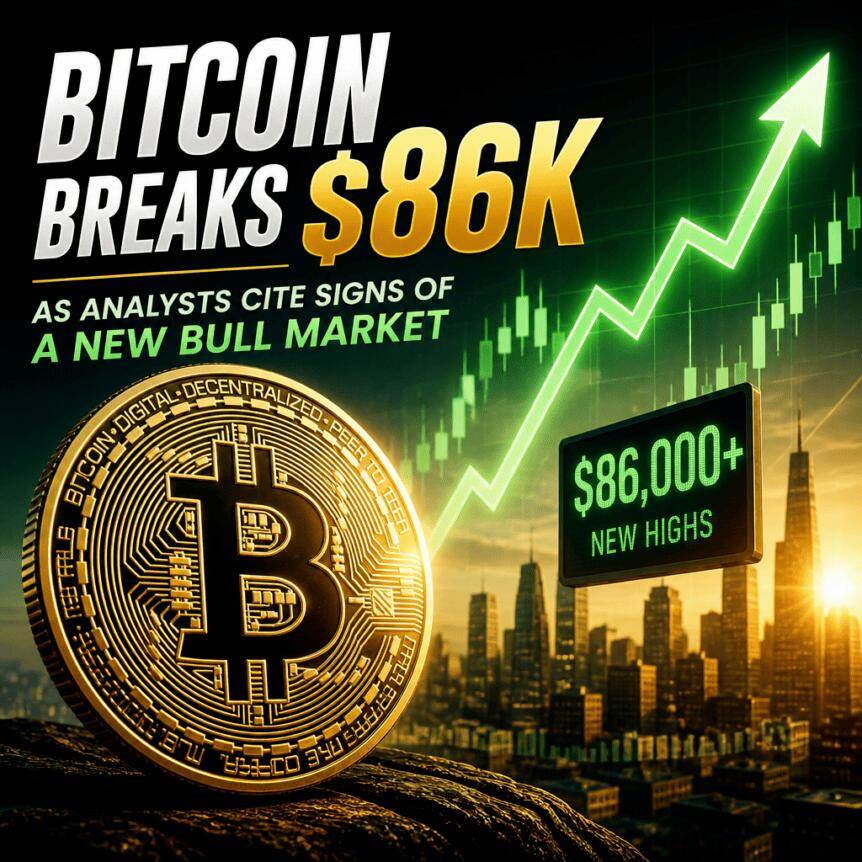
Meanwhile, Bitcoin was close to $85,700 in early trading on September 22, after rising more than 6% the day before.