Exchange Ranking
 Top Exchanges
 24h Volume Ranking
 Popularity Ranking
 Exchange BTC Balance
 Proof of Reserves
 Decentralized Exchanges
 Funding Rate
 Funding Heatmap
 Liquidation Data
 Max Pain
 Long/Short Ratio
 Whale L/S Ratio
 Binance/Okex/Huobi L/S
 Bitfinex Margin L/S
 ETF Tracker
 Solana ETF
 XRP ETF
 Hong Kong ETF
 Bitcoin Treasuries
 Crypto Reversal
 Ethereum Reserves
 HyperLiquid Wallet Analysis
 Hyperliquid Whale Watch
 Large Transactions
 On-chain Movement
 Bitcoin ROI
 Stablecoin Market Cap
 Options Analysis
 News
 Articles
 Economic Calendar
 Features
 Wallet
 Contract Calculator


 Security
 Collections
 Watchlist
 Following
 BTC
 ETH
The Supreme Court dismissed the appeal of the Custodia Bank against the main account.
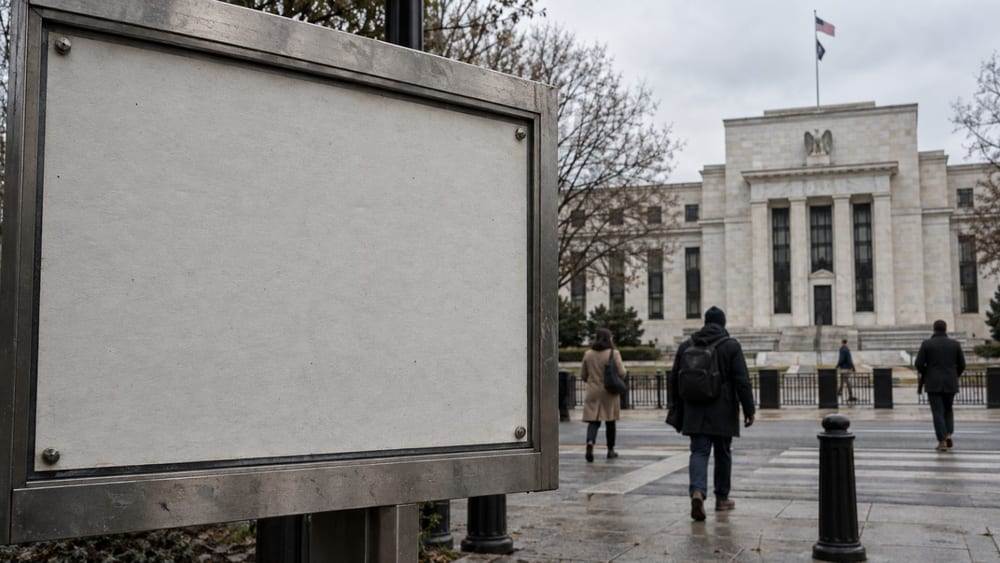
On 16 November 2026, the Supreme Court of the United States rejected the application for review filed by the Custodia Bank, marking the formal end of its challenge to Federal Reserve's refusal to grant direct payment service access. The judges decided not to take up the Wyoming Bank's appeal. This decision upheld the lower court's decision that the Federal Reserve Bank had discretion to examine eligible applicants, but the Supreme Court did not give a specific explanation of its decision.
Why is this so important?
The decision of the Supreme Court means that the decision of the Tenth Circuit Court of Appeals remains in force: the Federal Reserve Bank has the right to refuse an application to open an account with a qualified institution.
Key facts of the Custodia Main Account case
According to the Supreme Court file, on 16 November, in the case of Custodia Bank, Inc. v. Federal Reserver Board of Governmentors (No. 26-62), the Chancellor of Justice rejected the application for a transfer order from Custodia. The order does not state any reason. The Supreme Court file is the official record of the case.
It was reported that the decision closed Custodia ' s final legal route to obtain the Federal Reserve account. At the same time, it was confirmed that the Supreme Court would not be involved in the challenge.
The development of the dispute
Custodia applied to the Federal Reserve Bank of Kansas City for the main account in October 2020. It was reported that the local Federal Reserve had informed the bank in January 2021 that it was legally qualified and “without substantial obstacles.” Subsequently, Custodia applied for admission to the Federal Reserve System in August 2021.
In August 2022, the Federal Reserve Council issued guidelines for the review of the main accounts. According to the guidelines, applicants who lacked federal deposit insurance or were supervised by federal banks are classified as category III and usually face the most rigorous scrutiny, as is the case with Custodia.
On 27 January 2023, the Federal Reserve of Kansas City rejected the application for membership on the grounds that Custodia focused on the business model of cryptocurrency and was concerned about its “safe and secure operation.” Meanwhile, the Federal Reserve Council rejected its membership application separately on the grounds that there were significant safety and security risks to the proposed activity and that the Custodia risk management framework did not adequately address such concerns as money-laundering and terrorist financing.
On 31 October 2025, the Court of Appeals for the Tenth Circuit ruled that the Federal Reserve Bank had the right to reject the application of the main account of a qualified institution, despite an objection by a judge. Custodia then appealed to the Supreme Court on 10 July 2026. The file also recorded the dissenting opinion of the Federal Council of Federal Reserve, the Federal Reserve of Kansas City, and the amicus curiae opinion of the blockchain association, the Digital Chamber of Commerce, Senator Cynthia Loomis and others.
Custodia, a licensed Wyoming bank, seeks direct access to the Federal Reserve service.
Not clear yet.
The Supreme Court file only recorded the dismissal without a statement of reasons. This upheld the decision of the Tenth Circuit Court of Appeals without further explanation of the Court’s decision. The direct impact was more limited: the decision of the Tenth Circuit remained in force, and Custodia was not reviewed by the Supreme Court. The current study has not yet shown whether the bank plans to pursue other avenues, nor whether Federal Reserve will change its review criteria.
It is worth noting that a separate account arrangement was announced on 4 March 2026. The Kansas City Federal Reserve approved a one-year, limited-purpose account for Kraken Financial, licensed by Wyoming, with restrictions commensurate with its business and risk profile.
Marketshot
UTC time, 18:13, Bitcoin and Ethereum as of 16 November 2026, rose in the last 24 hours, but fell in the last seven days. The market snapshot does not show that Custodia’s ruling led to any price fluctuations.
On the same day, encryption fears and greed index were 10, in the “extreme fear” zone. The media reported on the legal results and access to banks, but the source of the information was not a specific analyst's forecast or market review of the decision.
Meaning to investors
The decision deals with bank access and regulation. It upholds the decision of the tenth circuit court of appeal that the Federal Reserve Bank has the right to refuse applications to the main account of a qualified institution.
In its membership decision, the Federal Reserve Council cited the significant security and safety risks associated with the proposed encryption activities in Custodia and noted that its risk management framework was insufficient to address such risks as money-laundering and terrorist financing.
Follow-on developments that are of concern include: Custodia’s public statements about its options, the treatment of other applicants, and Kraken Financial’s limited accounts, whether changed or continued to be restricted after the end of its initial period. These developments may provide additional evidence on how the regional reserve banks exercise their discretion, but they cannot answer the legal issues on which the Supreme Court chose not to hear.
Conclusions
The Supreme Court ' s decision upheld the decision of the Tenth Circuit Court of Appeals on the discretionary power of Federal Reserve without giving reasons. Custodia was not reviewed by the Supreme Court, and the lower court ' s decision established the point that the Federal Reserve Bank had the right to refuse the application of the main account of the eligible institution.
Related news
- Encrypted hosting: how banks secure digital assets
- With Bitcoin lagging behind, the 500 index recovery is close to record high.
- The collapse of the United States stock market: a review of reported evaporation of $2 trillion in technology units