
 Exchange Ranking
 Top Exchanges
 24h Volume Ranking
 Popularity Ranking
 Exchange BTC Balance
 Proof of Reserves
 Decentralized Exchanges
 Funding Rate
 Funding Heatmap
 Liquidation Data
 Max Pain
 Long/Short Ratio
 Whale L/S Ratio
 Binance/Okex/Huobi L/S
 Bitfinex Margin L/S
 ETF Tracker
 Solana ETF
 XRP ETF
 Hong Kong ETF
 Bitcoin Treasuries
 Crypto Reversal
 Ethereum Reserves
 HyperLiquid Wallet Analysis
 Hyperliquid Whale Watch
 Large Transactions
 On-chain Movement
 Bitcoin ROI
 Stablecoin Market Cap
 Options Analysis
 News
News Articles
 Economic Calendar
 Features
 Wallet
 Contract Calculator


 Security
 Collections
 Watchlist
 Following
 BTC
BTC  LUNA
LUNA Top Ten Cryptocurrency Fraud Cases in 2026
Quick Comparison
Ranking| cases| fraud type| loss amount| Current status
1| FTX /Sam Bankman-Fried| Exchange fraud, wire transfer fraud| $11.02 billion confiscated| 25 years imprisonment; Justice Department recovery in progress
2| Terraform /Tao Quan| Securities fraud, market manipulation| US$40 billion in market value evaporated| 15 years in prison;$4.5 billion civil settlement
3| Pig killing pan network| Emotional/investment fraud| The United States loses $7.2 billion in 2025| FBI's "Operation Upgrade" in progress
4| OneCoin /Ruja Ignatova| Ponzi/wire transfer fraud| More than $4 billion| Ignatova is still at large
5| BitConnect /Satish Kumbani| Ponzi, wire transfer fraud| $2.4 billion| Kumbani is at large; Akaro sentenced
6| $263 million Bitcoin theft/Maron Rahm| Social Engineering, RICO| Single theft of $230 million| Tangeman was sentenced in April 2026
7| SafeMoon /John Kaloni| Securities fraud, Money laundering | more than $200 million| 100 months imprisonment, February 2026
8| PGI Global /Jose Parafoux| Securities fraud, wire transfer fraud| US$57 million misappropriated/US$198 million raised| 20 years imprisonment, February 2026
9| Unicoin /Alex Konaniksin| securities fraud| US$110 million actually raised vs US$3 billion claimed| SEC case pending, May 2025
10| Binan/Zhao Changpeng| Anti- Money Laundering Violations, sanctions violations| $4.3 billion in fines| Zhao Changpeng was released in September 2024; supervision period is in progress
Scoring criteria
Each case is scored according to six criteria (Maximum 10 points for each item, maximum 60 points for the total score):
Scale of economic loss: verified amount from primary sources from the Department of Justice, the SEC, or the FBI
Investor reach: Number of victims and affected jurisdictions
Pattern reproducibility: Whether the method is still active as of 2026
Enforcement results: Convictions, pleas and sentences
Regulatory impact: Does the case change policy, rule-making, or exchange supervision
Unresolved risks: fugitives, pending rulings, or victim recovery
Scoring sheet:
Cases| economic losses| scope of the spread| pattern reproduction| law enforcement results| regulatory impact| Unresolved risks| Total score
FTX| 10 | 10 | 8 | 10 | 10 | 7 | 55
Terraform | 10 | 9 | 7 | 9 | 9 | 7 |51
Pig killing plate| 9 | 10 | 10 | 6 | 7 | 10 | 52
OneCoin | 9 | 10 | 6 | 5 | 8 | 10 | 48
BitConnect | 8 | 9 | 5 | 7 | 7 | 8 |44
US$263 million Bitcoin| 7 | 5 | 8 | 7 | 8 | 7 | 42
SafeMoon | 7 | 8 | 7 | 8 | 7 | 5 | 42
PGI Global | 6 | 7 | 8 | 9 | 7 | 5 | 42
Unicoin | 5 | 6 | 7 | 4 | 6 | 8 |36
Binan| 8 | 9 | 5 | 8 | 10 | 6 | 46
Note: Pig killing trays rank second in total scores because the method currently causes more damage than most historical single-operator fraud cases.
Top Ten Cryptocurrency Fraud Cases
These cases come from the Department of Justice press releases, SEC litigation announcements, FBI IC3 reports and court files as of July 2026. Each section covers the modus operandi, verified loss amount and current legal status.
1. FTX /Sam Bankman-Fried
FTX collapsed in November 2022 when Reuters reports triggered a bank run, exposing an $8 billion gap between customer deposits and actual exchanges held. Before the collapse, it was one of the largest cryptocurrency exchanges by transaction volume. Prosecutors proved that Bankman-Fried directed FTX client funds to be transferred to his trading firm, Alameda Research, which used the funds for venture capital, political donations and real estate. When customers try to withdraw money, the funds no longer exist. Bankman-Fried was convicted on November 2, 2023 on all seven counts and sentenced to 25 years in federal prison on March 28, 2024. The Justice Department obtained $11.02 billion in forfeiture orders, the largest in the Department's history at the time. FTX bankruptcy assets, led by restructuring CEO John Ray, have recovered enough money to repay customers at the full dollar value of the claimed amount, but the allocation schedule is still moving. The case is important in 2026 because it establishes that the transfer of client funds by exchange CEOs to related party trading entities is direct securities fraud and wire transfer fraud, rather than a regulatory gray area. This framework now applies directly to small exchange operators facing SEC scrutiny. An appeal filed by Bankman-Fried's team in early 2025 has not yet been decided.
Unfinished matters: Whether recipients of political donations will face recovery lawsuits, and whether former FTX executives who cooperate with the investigation will receive reduced sentences under the cooperation agreement. 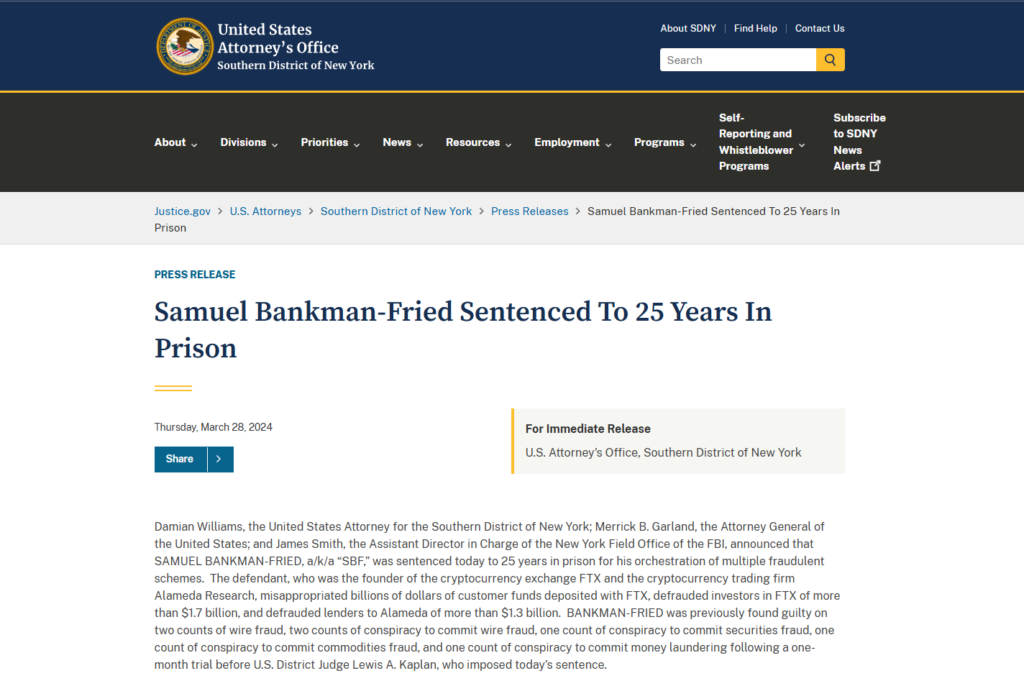
2. Terraform Labs /Daokan
In May 2022, Terra's algorithmic stablecoin UST unanchored and collapsed within 72 hours, causing the total market value of UST and LUNA to evaporate by approximately US$40 billion, making it one of the largest cryptocurrency crashes in history. Prosecutors and the SEC argued that Daokan manipulated the anchoring mechanism to conceal risks from investors and used false statements about the stability of the agreement to sell LUNA tokens. A key accusation is that Kwon secretly paid a market maker in January 2022 to support the anchor without telling anyone. Kwon was arrested in Montenegro in March 2023 and extradited to the United States on December 31, 2024 after nearly two years of extradition struggle. He pleaded guilty in August 2025 and was sentenced to 15 years in federal prison on December 11, 2025. Terraform Labs settled the SEC's civil charges for another $4.5 billion. The case directly links algorithmic stablecoin design to securities law. The GENIUS Act stablecoin framework, signed into law on July 18, 2025, stems in part from the regulatory failures exposed by the Terra crash. The institutions promoting the formulation of this rule are detailed in "Cryptocurrency Regulators Worthy of Attention in 2026".
Unfinished business: How to allocate $4.5 billion in civil settlements to retail victims, most of whom are outside the United States and face jurisdictional obstacles. 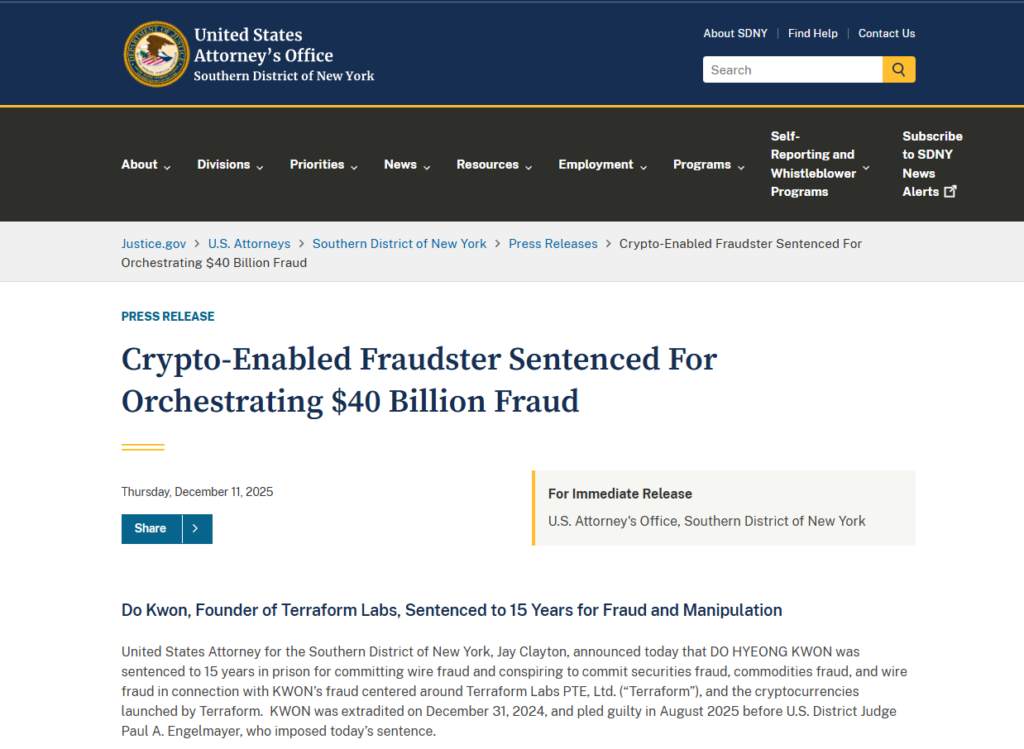
3. Pig killing pan network
Pig killing trays are a fraud technique, not a single case. Fraudsters build a romantic or social relationship with their targets for weeks, guide them into fake cryptocurrency investment platforms, allow small withdrawals to make profits to build trust, and then encourage larger deposits to disappear. These platforms look very real and often clone the interface of legal exchanges. The FBI's 2024 Internet Crime Complaint Center report shows that U.S. cryptocurrency investment fraud losses reached US$5.8 billion, most of which were classified as pig killing trays. This figure will reach US$7.2 billion in 2025, an increase of 24%. The FBI's "Operation Escalation" confiscated $285 million in 2025 - 2026 and dismantled multiple fraud centers in Southeast Asia that recruited people through forced labor and human trafficking networks. What makes this category particularly dangerous in 2026 is its scale and automation. AI-generated characters can now be established early relationships without manual operations, reducing costs per victim. The Justice Department has prosecuted operators in multiple cases, but the underlying infrastructure (fake exchanges, money-mule networks, USDT transfers through wavefields) continues to be rebuilt because a single indictment cannot destroy the entire system.
Unfinished matter: Will the U.S. Treasury OFAC's designation of a wallet address associated with a specific pig killing tray effectively slow down the wavefield-based settlement layer, or will the operator just move to a new address? 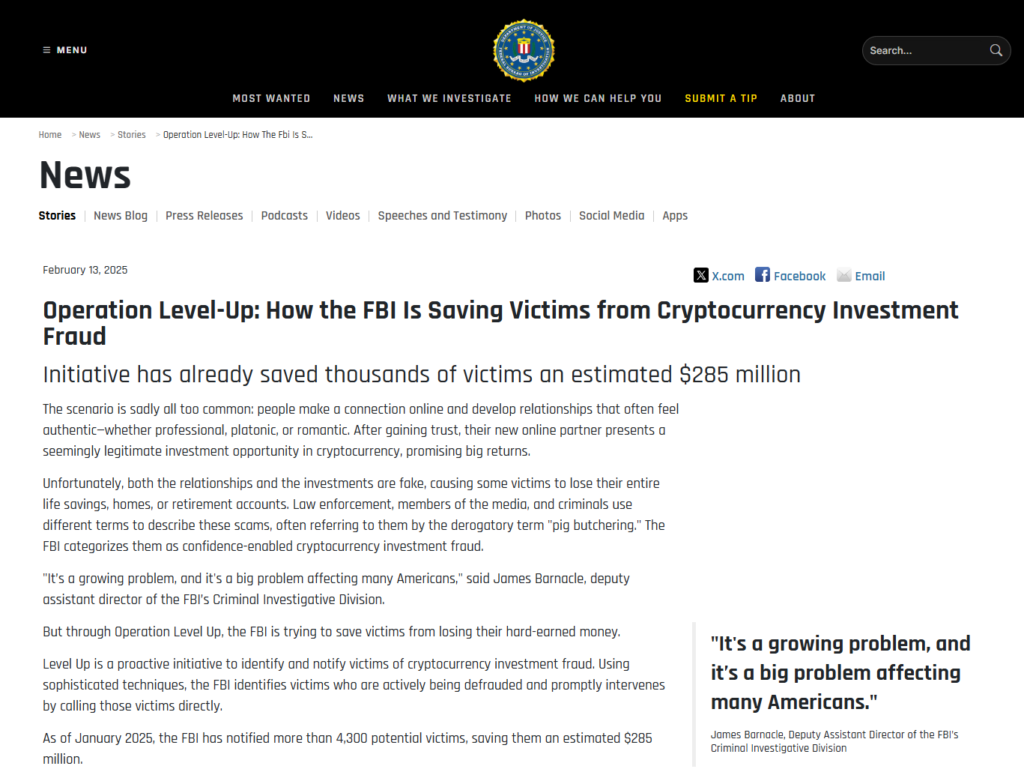
4. OneCoin/Ruja Ignatova
OneCoin is a Ponzi scheme that raised approximately $4 billion from investors between 2014 and 2017 to sell a cryptocurrency without a functional blockchain. Co-founder Ruja Ignatova promotes OneCoin at stadium-scale events in Europe, Southeast Asia and Africa. These coins only exist as database entries on Ignatova's server and have no real trading market. Ignatova disappeared in October 2017, a month after she learned she was under federal investigation. She has been a federal fugitive since then and was included in the FBI's top ten most wanted list in June 2022. The U.S. government has offered a $5 million reward for her arrest. Her brother Konstantin Ignatov pleaded guilty to wire transfer fraud in 2019. Her lawyer, Mark Scott, was convicted in 2019 and sentenced to 10 years in prison. In November 2025, British authorities froze approximately US$100 million in assets related to Ignatova through a civil asset confiscation operation in the London court. This is the most significant new development in the case since her disappearance.
Unfinished business: Ignatova's whereabouts. She was reportedly seen in Dubai and Russia, but her exact location was not confirmed. Since she is a fugitive, the statute of limitations does not apply. 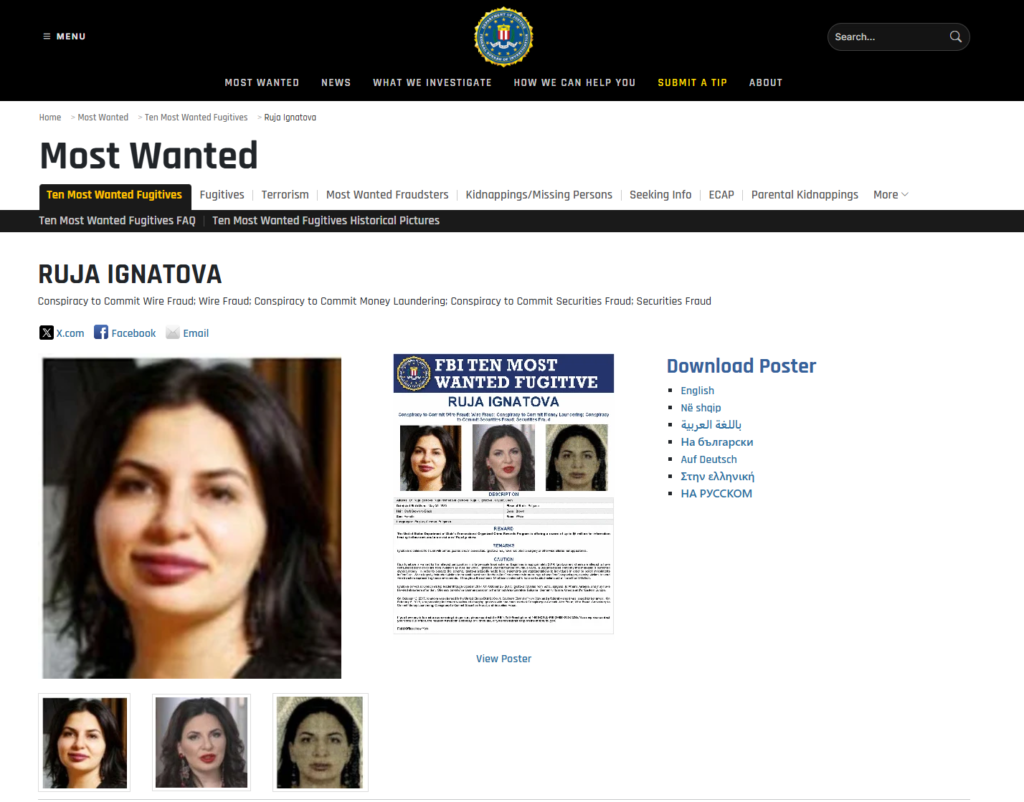
5. BitConnect /Satish Kumbani
BitConnect tells investors that its lending platform uses trading robots to generate daily yields of 1% to 40% per month. But this is not the case. The platform was a Ponzi scheme that collapsed in January 2018 due to cessation orders issued by regulators in Texas and North Carolina. Investors who invest in real bitcoin receive BitConnect tokens for only a fraction of the value of their investment. The total investor loss was approximately $2.4 billion. The Justice Department sued BitConnect founder Satish Kumbani in February 2022. He is still at large. Glenn Akaro, who was in charge of BitConnect's U.S. affiliate program, pleaded guilty in May 2022 and was sentenced to 60 months in federal prison. The SEC also obtained a default verdict for Kumbani in civil cases. BitConnect will remain relevant in 2026 because the algorithmic return lending platform it pioneered is still being replicated. Cases such as PGI Global use the same promotional structure: guaranteed returns, referral bonuses, and non-existent high-tech automation.
Unfinished matters: Whether Kumbani will be extradited. He is believed to be based in India, where there is an extradition treaty between the United States and India, but the process has not yet resulted in an arrest.
6. $263 million Bitcoin Social Engineering Theft/Maron Ram
On August 18, 2024, a group of attackers stole approximately 4100 bitcoins (worth approximately $230 million at the time) from a victim in Washington, D.C. The victim was a creditor in the Genesis bankruptcy case and held a large bitcoin balance. The attacker pretended to be Google and Gemini customer service staff and tricked victims into revealing seed phrases and approving transfers. The case became the first Bitcoin RICO (Organic Anti-Fraud and Corrupt Act) indictment. Suspected masterminds include Maron Ram (alias Greavys) and Jeandir Serrano. Rahm and Serrano were arrested in September 2024. The fourth defendant, Marlon Ferro Tangeman, was sentenced to 70 months in federal prison on April 24, 2026. The gang seized a total amount of approximately US$263 million in bitcoin and other assets. The entire theft was accomplished through telephone social engineering, and recovering funds required tracking bitcoins passing through multiple mixers and exchanges.
7. SafeMoon /John Kaloni
SafeMoon is a DeFi token launched in March 2021 that calls itself a community governance token with a built-in tax mechanism to reward holders and fund lock-in liquidity pools. Prosecutors accused CEO John Kaloni and other insiders of secretly disabling the lock-in mechanism, allowing them to withdraw funds from the pool at will. Kaloni and co-defendants used the proceeds to purchase luxury cars, real estate and personal expenses, while promoting the token to retail investors on social media, a tactic that overlaps with the way cryptocurrency influencers promoted the token in 2021. Kaloni was convicted of all charges in May 2025 and sentenced to 100 months in federal prison on February 10, 2026. The Justice Department's EDNY case required Kaloni to forfeit $7.5 million. The SEC filed parallel civil charges. The SafeMoon case is a typical case of executives rather than anonymous developers implementing the carpet pulling model. The gap between public commitments and private behavior-the founder's internal information record becomes key evidence.
Unfinished matters: Can civil recovery procedures return significant amounts to retail victims who are located in multiple countries and hold relatively small personal positions. 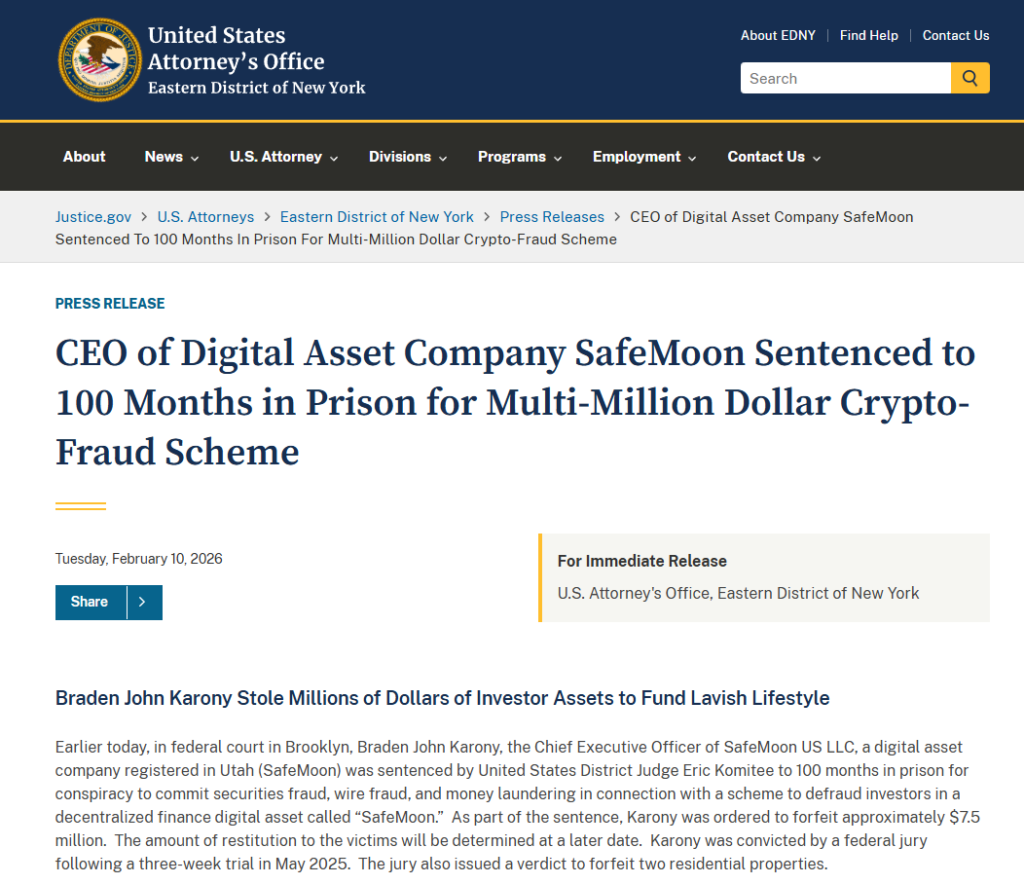
8. PGI Global /Jose Parafoux
PGI Global raised approximately US$198 million from investors between 2020 and 2023, promising returns through proprietary cryptocurrency trading algorithms. Founder Jose Parafoux claims that the algorithm will continue to be profitable over multiple market cycles. But the algorithm simply does not exist in any form that suits its claims. Palafox embezzled at least $57 million in investor funds for personal purposes, including a yacht and luxury real estate. The SEC filed charges in March 2025. Parafoux was found guilty and sentenced to 20 years in federal prison in February 2026. At the time of sentencing, approximately $140 million in investor funds had not been recovered. PGI Global is worth watching in 2026 because the promotion of proprietary trading robots has not slowed down. Its promoters build credibility through the same channels as influential figures in the cryptocurrency space, making due diligence for victims more difficult. The same structure (guaranteed returns, unaudited transaction records, recruiter commissions) continues to create victims.
Unfinished matters: Recovery of $140 million in untraced funds and whether co-promoters who recruited investors face separate charges.
9. Unicoin /Alex Konaniksin
On May 20, 2025, the SEC filed fraud charges against Unicoin and CEO Alex Konaniksin. The SEC alleges Unicoin claimed to have raised more than $3 billion through continued token sales, but actually only raised approximately $110 million. Marketing materials describe Unicoin as asset-backed, regulated, and uniquely positioned as a post-regulatory compliance token, but the SEC alleges that these statements are material false. As of July 2026, the case is still under trial. Konaniksin publicly refuted the SEC's allegations. At the time of writing, no criminal charges have been filed. Unicoin stands out because it clearly promotes itself as a compliance-oriented, regulatory alternative to unregistered tokens, the kind designed to attract investors trying to avoid fraud. If the SEC's allegations are upheld, it means that marketing, which sounds like regulatory language, has itself become a fraud tool.
Unfinished matters: Whether the SEC case will be closed with summary decisions or go to trial, and whether the Justice Department will initiate a parallel criminal investigation. 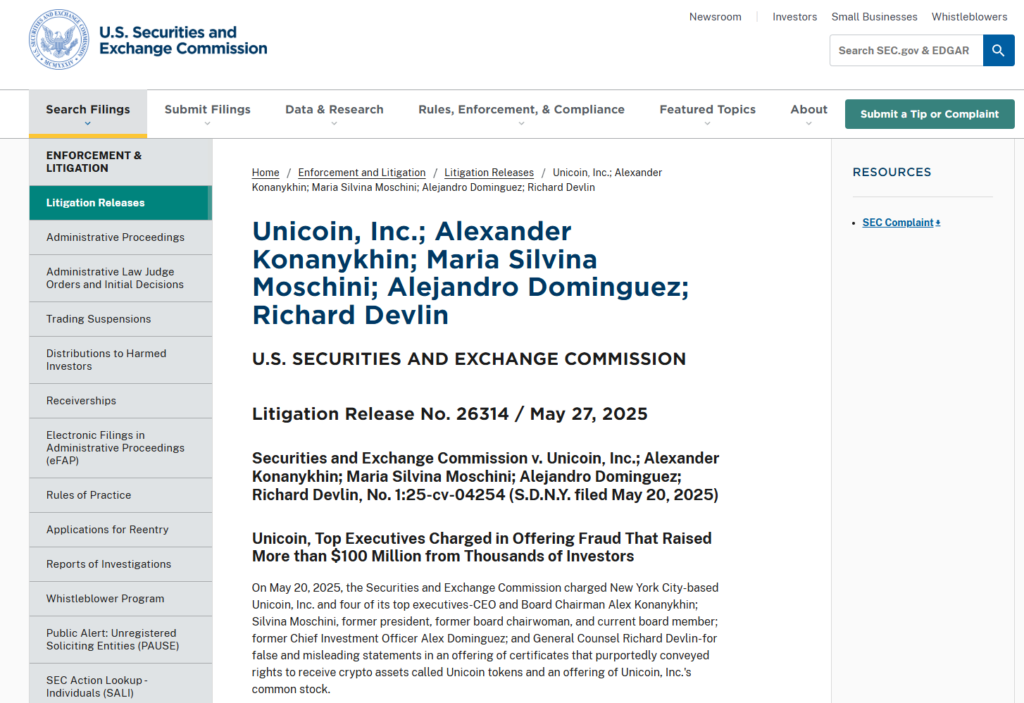
10. Binance/Zhao Changpeng
In November 2023, Binance pleaded guilty to federal charges and admitted failing to implement adequate anti- money laundering Control measures and violate US sanctions. The fine was $4.3 billion, making it the largest corporate financial crime settlement in U.S. history at the time. CEO Zhao Changpeng personally pleaded guilty to violating the Bank Secrecy Act and was sentenced to four months in federal prison. He was released in September 2024. Binance continues to operate under a regulatory agreement from the Department of Justice that requires exchanges to maintain enhanced compliance controls and undergo regular audits. The supervision period will last until at least 2026. Binance is included here not because it is fraud like other cases, but because its admitted anti- money laundering failure directly contributed to other frauds. Funds from pig-killing trays flow through Binandian;OneCoin related wallets also conduct transactions on Binandian.
Unfinished business: whether the regulatory agreement will trigger more enforcement transfers, and how the Justice Department's findings will affect the CFTC's parallel civil cases (still pending at the time of writing).
Verification Information
Statement| source| Verification
SBF 25 years, 28 March 2024| Department of Justice Press Release, SDNY| Yes
FTX $11.02 billion confiscated| Ministry of Justice press release, March 28, 2024| Yes
Tao Quan was sentenced to 15 years, December 11, 2025| Ministry of Justice press release, December 2025| Yes
Terraform $4.5 billion SEC settlement| SEC Press Release| Yes,
Pig killing plates will cost the United States US$7.2 billion in 2025| FBI IC3 2025 Annual Report| Yes,
"Operation Escalation" confiscated US$285 million| FBI press release| Yes
Ignatova has been included in the FBI's Top Ten Most Wanted List since June 2022| FBI official page| Yes
Akaro 60 months, May 2022| Ministry of Justice press release| Yes
Tangman 70 months, April 24, 2026| Ministry of Justice press release| Yes
Kaloni 100 months, February 10, 2026| Justice Department EDNY Press Release| It was
Kaloni confiscated US$7.5 million| Justice Department EDNY Press Release| Yes
PGI Global SEC Announcement No. 2025-69| SEC EDGAR |Yes
20 Years of Para Fox, February 2026| Ministry of Justice press release| Yes
Unicoin SEC litigation notice number 26314, May 20, 2025| SEC website| Yes
Unicoin actually raised US$110 million versus US$3 billion claimed| SEC indictment| Yes,
Zhao Changpeng was imprisoned for 4 months and released in September 2024| Ministry of Justice press release| Yes
Binan fined US$4.3 billion, November 2023| Ministry of Justice press release| Yes
FAQ
What is the largest cryptocurrency fraud case? In terms of forfeiture, FTX is the largest single prosecution in cryptocurrency history: a $11.02 billion confiscation order was issued against Sam Bankman-Fried. Based on estimated total investor losses, OneCoin's $4 billion fundraising and Terraform's $40 billion market value have evaporated even more, although Terraform's numbers reflect market value destruction rather than direct investor deposits.
Is Tao Quan in prison? Yes. Tao Quan was sentenced to 15 years in federal prison on December 11, 2025, serving his sentence in the United States, after being extradited from Montenegro on December 31, 2024.
Is Ruja Ignatova still at large? Yes. Ignatova has been a federal fugitive since October 2017. The FBI placed him on the top ten wanted list in June 2022 and offered a reward of US$5 million. Her whereabouts have not been officially confirmed.
What is pig-killing pan cryptocurrency fraud? Pig slaughtering plates are a fraud model in which scammers establish fake romantic or social relationships with victims, introduce them into fake cryptocurrency investment platforms, allow small profits to be withdrawn to build trust, and then the victims deposit large amounts of money. The money disappears. American victims lost $7.2 billion in 2025.
Can FTX customers get their money back? FTX's bankruptcy reorganization assets have recovered enough funds to repay creditors at the full dollar value of the claimed amount on the date of bankruptcy filing. Actual allocation was slower than expected. Customers who hold cryptocurrencies that appreciate in value after the crash will not receive the value added, only the dollar value on the application date.
What is PGI Global Fraud? PGI Global is a cryptocurrency investment fraud in which founder Jose Parafoux claims to have a proprietary trading algorithm that generates sustained returns. This algorithm does not exist. He raised $198 million from investors and embezzled at least $57 million for personal use. Parafoux was sentenced to 20 years in federal prison in February 2026.
Disclaimer: This article is for information only and does not constitute financial or investment advice. Cryptocurrency and digital asset markets carry significant risks. Be sure to study for yourself before making a decision.
























