Exchange Ranking
 Top Exchanges
 24h Volume Ranking
 Popularity Ranking
 Exchange BTC Balance
 Proof of Reserves
 Decentralized Exchanges
 Funding Rate
 Funding Heatmap
 Liquidation Data
 Max Pain
 Long/Short Ratio
 Whale L/S Ratio
 Binance/Okex/Huobi L/S
 Bitfinex Margin L/S
 ETF Tracker
 Solana ETF
 XRP ETF
 Hong Kong ETF
 Bitcoin Treasuries
 Crypto Reversal
 Ethereum Reserves
 HyperLiquid Wallet Analysis
 Hyperliquid Whale Watch
 Large Transactions
 On-chain Movement
 Bitcoin ROI
 Stablecoin Market Cap
 Options Analysis
 News
News Articles
 Economic Calendar
 Features
 Wallet
 Contract Calculator


 Security
 Collections
 Watchlist
 Following
 BTC
BTC Core Points
Certificates are stored in the safe, not the cryptocurrency itself. Lease records require supporting evidence of ownership. The wallet ID does not guarantee access to assets. Ireland is considering specific seizure powers for cryptocurrencies. Private use of safe deposit boxes remains legal.
Private lockers may be the path to cryptowallets
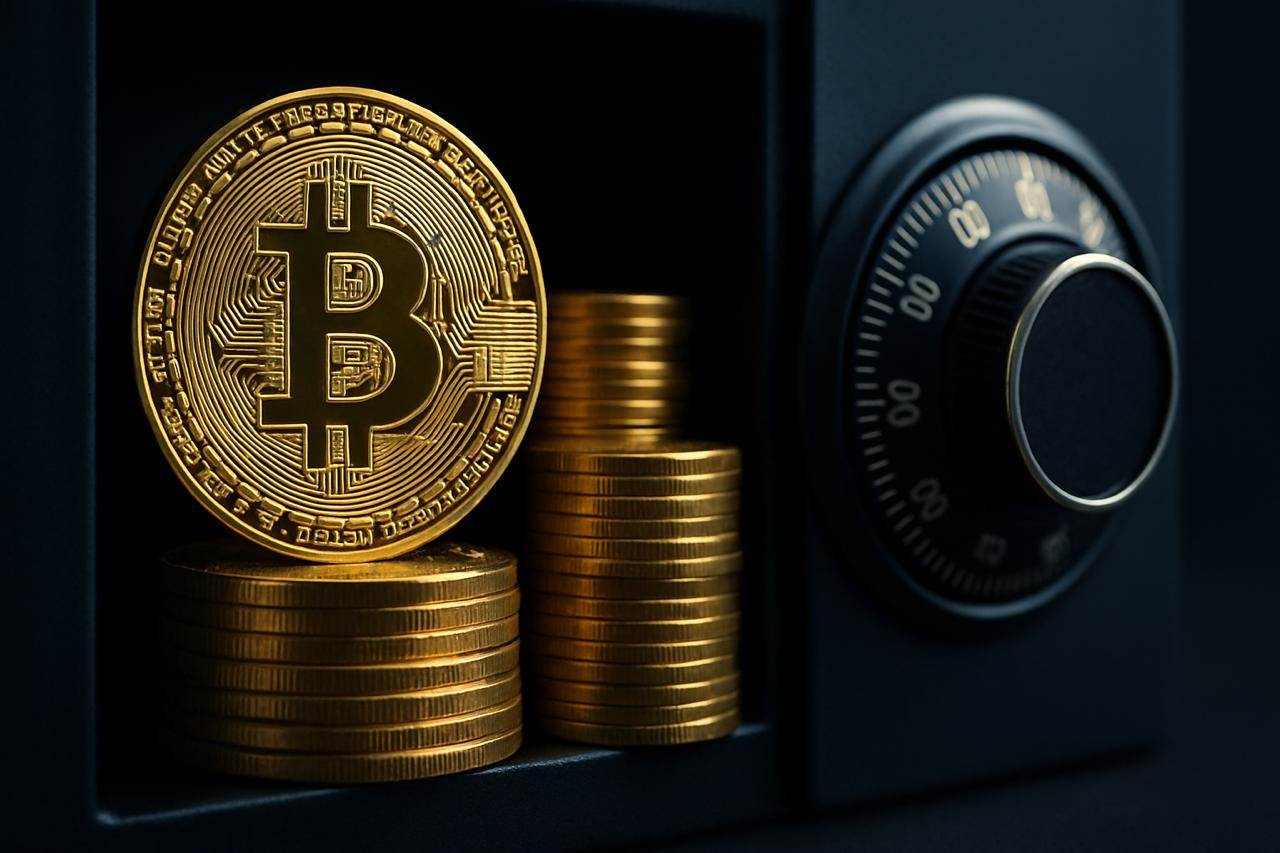
Recent Irish media reports quoted the Criminal Assets Bureau (CAB) as saying that organized criminal groups are increasingly renting private safe boxes to store cash, cryptocurrency access certificates, watches and high-value handbags. One important difference needs to be clarified here: Bitcoin and other digital assets are still recorded on their respective blockchains. What can be put into the safe is actually a hardware wallet, mnemonic words, a backup of a private key, or other items needed to authorize transactions.
The commonly used 12-or 24-word mnemonic words can restore the entire wallet. The value of the assets it controls has nothing to do with the physical size of the paper, metal backup or storage device on which the information is recorded. Additional protections, such as passphrases or multi-signature mechanisms, may mean that one piece of recovered data alone is not enough to transfer funds.
For investigators, discovering a voucher involves three separate investigative directions: What addresses does it control? Who manipulated these addresses? and whether cryptocurrencies can be traced back to criminal activity.
Hidden assets does not mean proving money laundering
Cash, watches and designer goods can retain significant value outside bank accounts and can be transferred without changing ownership records like a house or registered vehicle. Cryptocurrency certificates serve a different role: they provide control over assets held elsewhere on the public ledger.
Putting these items in a safe may protect them from the attention of investigators, but the location alone does not establish money laundering. The Bureau of Criminal Assets still needs evidence to link property to proceeds of crime or prove that it forms part of an arrangement designed to conceal ownership, origin or control.
Private safes also have legitimate uses, including protecting documents, jewelry and wallet backup. Renting boxes or storing cryptocurrency certificates in them is not in itself evidence of criminal conduct.
What investigators need to establish
- Physical property: Who owns it, how it was obtained, and whether its purchase can be traced back to proceeds of crime.
- Wallet credentials: They control which addresses and whether additional passphrases, devices, or signatures are required.
- Safe deposit box records: Who rented or entered the box and whether there was other evidence linking the person to the contents in the box.
Lease records are just a starting point
The Central Bank of Ireland operates a central registry through which authorized authorities can identify the holders and beneficial owners of bank accounts, payment accounts and safe deposit boxes held by credit institutions.
The registry can reveal the existence of relationships, but cannot show what is in the box. Records held by private facilities, if available, may determine who rented or entered the box. Investigators still need to associate the person with the property in the box, rather than viewing access rights as proof of ownership.
This step is particularly important for cryptocurrencies. Wallet addresses do not contain names, and mnemonics may restore addresses that have never directly interacted with accounts with verified customer information. Blockchain analysis can track the flow of funds, but identifying who controls the funds often requires evidence from outside the blockchain.
The Criminal Assets Bureau has faced wallet access problems
Irish authorities encountered this technical obstacle during another cryptocurrency seizure operation in March 2026. The Criminal Assets Office and Europol gained access to a wallet containing 500 bitcoins, valued at approximately 30 million euros at the time.
According to the official police bulletin, Europol provides "highly sophisticated technical expertise and decryption resources" that are critical to the operation. The statement did not disclose the methods used, but confirmed that locating the wallet and effectively controlling it may require different investigative capabilities.
Once accessible, cryptocurrency can be transferred to addresses controlled by authorities. However, without the required credentials, just knowing the wallet balance and transaction history may not be enough to secure (lock/obtain) these coins.
Ireland is developing cryptocurrency seizure powers
The Proceeds of Crime and Related Matters Act 2025 aims to strengthen the Criminal Assets Bureau's ability to freeze and recover suspected criminal assets. During the Senate's second reading debate on April 15, 2026, Attorney General Jim O'Callaghan said he planned to introduce further amendments specifically targeting cryptocurrency assets.
Another April announcement noted that the proposed changes would include payment freezes specifically designed for cryptocurrencies, expanded search and seizure powers, and access orders designed to enforce disclosure of credentials needed to gain control.
These measures should not be described as existing Criminal Assets Bureau powers until the amendment completes the legislative process. Still, their intended purpose is related to the reported safe deposit box practice: Holding a hardware wallet or encrypted backup can lead to investigators lacking the PIN codes, passphrases or additional signatures needed to move assets.
An access warrant can solve the problem of missing information, although it does not guarantee a usable answer. A certificate may only recover a portion of a multi-signature wallet, while mnemonic words protected by an extra pass phrase may result in a different set of addresses based on the words entered.
Legal holders use a similar arrangement to prevent a single stolen device or damaged location from exposing its entire balance. Dispersing keys and backup reduces the risk of theft, which explains why this separation makes legitimate recovery more technically challenging.
Opening the box is just the beginning
If authorities obtain usable certificates, the cryptocurrency must still be transferred to secure custody and no unnecessary people have access to the certificates. Investigators must keep a transaction history of the wallet, record the transfer process, and maintain evidence linking the address to the person under investigation and behavior.
As a result, the reported use of private safe deposit boxes provides the Criminal Assets Bureau with a place to inspect, rather than a full cryptocurrency case. The ultimate recovery of assets depends on whether investigators have sufficient evidence to link the lessee, physical documents and chain funds to support seizure.
The trend of private safe deposit boxes has been attributed to the Criminal Assets Bureau in Irish media reports. The released annual report of the Criminal Assets Bureau does not include this specific statement, and the legal use of private safes does not imply a criminal act.