Exchange Ranking
 Top Exchanges
 24h Volume Ranking
 Popularity Ranking
 Exchange BTC Balance
 Proof of Reserves
 Decentralized Exchanges
 Funding Rate
 Funding Heatmap
 Liquidation Data
 Max Pain
 Long/Short Ratio
 Whale L/S Ratio
 Binance/Okex/Huobi L/S
 Bitfinex Margin L/S
 ETF Tracker
 Solana ETF
 XRP ETF
 Hong Kong ETF
 Bitcoin Treasuries
 Crypto Reversal
 Ethereum Reserves
 HyperLiquid Wallet Analysis
 Hyperliquid Whale Watch
 Large Transactions
 On-chain Movement
 Bitcoin ROI
 Stablecoin Market Cap
 Options Analysis
 News
 Articles
 Economic Calendar
 Features
 Wallet
 Contract Calculator


 Security
 Collections
 Watchlist
 Following
 ETH
以太坊路线图:迈向区块链之外的未来
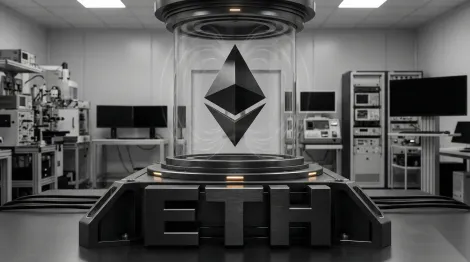
在9月27日发布的一篇帖子中,Vitalik Buterin勾勒了一幅以太坊的未来图景:基础链负责结算结果,而密码学证明则承担更多的验证工作。他的2030年愿景包括递归STARKs(可伸缩透明知识论证)、数据可用性采样、隐私工具以及重新设计的共识机制。这描述了一个长达多年的技术发展方向。相关的代码实现、升级范围和交付日期仍需遵循正常的以太坊开发流程。
用一句话概括以太坊提出的转变:链继续决定最终结果,而证明则为参与者提供了一种更高效的检查产生这些结果的工作方式。
以太坊自身仍需完成的任务
以太坊需要一个共享记录,以明确谁拥有什么以及哪笔交易先发生。该记录防止资金被双重花费,并为应用程序提供一个每个参与者都可以引用的最终状态。目前,全节点独立验证交易和状态变化。它们检查发送者是否有足够的资金、智能合约是否遵循其规则,以及 resulting 状态是否与协议匹配。这种重复性工作增强了网络的安全性,但也限制了通过增加计算机数量所带来的容量提升空间。
Buterin's roadmap leaves transaction sequencing and final settlement at the base level. It provides more space for the surrounding infrastructure, allowing it to process complex calculations before they reach the final block.
Proof can take on more checking work
A zero-knowledge proof is a compact mathematical statement that shows that a calculation follows a defined set of rules. Provers perform heavier calculations and provide evidence that other participants can effectively verify. Recursive proof extends the model by combining many proofs into a single proof. The network can then check for a compressed result that covers larger dependencies. This approach reduces the amount of duplicate calculations reaching the Ethereum execution environment.
Imagine a wallet checking a complex DeFi position with multiple collateralized assets and automated rules. The architecture described by Buterin can use proof to establish that the position has been correctly updated. Ethereum will then settle for the resulting state through its own rules. Reducing costs and accelerating complex operations are still possible outcomes. Their size will depend on the cost of proof generation, application design, and ultimately the functionality of the mainnet.
Correctness, Availability and Settlement
- Correctness: Demonstrates that it can show whether the calculation follows the rules coded in the system.
- Availability: The information behind this calculation must remain accessible to the network.
- Settlement: After completing the required inspections, Ethereum records the final status.
数据可用性是一个独立的安全问题
有效的证明和可用的数据服务于不同的目的。证明解决的是定义的计算是否正确执行的问题。数据可用性解决的是支持该计算的信息是否仍可检索和检查的问题。PeerDAS致力于解决第二个问题。它允许节点采样blob数据,并对更广泛数据集的可用性建立信心。这种方法消除了每个节点在参与检查之前下载整个数据集的需求。
PeerDAS通过Fusaka升级到来,成为以太坊扩展架构的一部分。Buterin的文章将此设计原则进一步延伸:减少每个个体参与者上的重复工作量,同时保留独立验证的路径。此前,Coindoo曾探讨过基于证明的验证器验证的Lean Ethereum提案。这篇新文章将该侧重于验证器的工作置于更广泛的网络计算、数据和隐私计划之中。
隐私也将覆盖钱包留下的痕迹
Ethereum's privacy challenges are not limited to concealing payment amounts or payee addresses. Wallets often query external servers to obtain balances, token data and transaction history. These requests may reveal accounts a person is following or controlling. Buterin describes cryptographic tools and decentralized infrastructure that can protect more of this metadata. Goals include private payments, private account logic and reducing exposure to wallet queries to a single service provider. Daily use requires not only protocol research. Wallet software needs to securely support these tools, and users need clear interfaces to explain security models so that people can make informed choices.
Hegotá marks the beginning of a longer technology transition
Ethereum's official roadmap targets Hegotá in 2027. Buterin described it as perhaps the last upgrade largely around technologies built with which developers were familiar in the mid-2010s. The next stage may involve recursive STARKs, more optimized consensus, automated formal verification, and post-quantum cryptography. Formal verification tests whether code matches written specifications. It does not address omissions or poor decisions within the specification. Quantum security research prepares Ethereum for future advances in computing power; Ethereum's existing cryptography is still in use today.
These ideas still face challenges of research, specification development, client development, security review, testing and community consensus. Proof generation must become cheaper and safer under real-world workloads. Managing large amounts of shared application state is another major challenge identified in Buterin's article.
The roadmap will be judged by independent verification
The practical criteria are simple. Users, developers, and node operators need a system verification method that does not rely on opaque middlemen. Compact proof needs to be efficient, data must remain accessible, and wallets must communicate the assumptions behind each action. The architecture proposed by Ethereum makes chains responsible for sorting and clearing. Proof systems and decentralized infrastructure will take on more of the work that leads to these end results. The value of the roadmap will depend on whether the arrangement makes verification more practical without adding complexity that ordinary users cannot assess.