
 Exchange Ranking
 Top Exchanges
 24h Volume Ranking
 Popularity Ranking
 Exchange BTC Balance
 Proof of Reserves
 Decentralized Exchanges
 Funding Rate
 Funding Heatmap
 Liquidation Data
 Max Pain
 Long/Short Ratio
 Whale L/S Ratio
 Binance/Okex/Huobi L/S
 Bitfinex Margin L/S
 ETF Tracker
 Solana ETF
 XRP ETF
 Hong Kong ETF
 Bitcoin Treasuries
 Crypto Reversal
 Ethereum Reserves
 HyperLiquid Wallet Analysis
 Hyperliquid Whale Watch
 Large Transactions
 On-chain Movement
 Bitcoin ROI
 Stablecoin Market Cap
 Options Analysis
 News
News Articles
 Economic Calendar
 Features
 Wallet
 Contract Calculator


 Security
 Collections
 Watchlist
 Following
 BNB
BNB  BTC
BTC  ETH
ETH  SOL
SOL  XRP
XRP The cryptocurrency market is expected to end with a rally this week, but investors 'caution continues. U.S. inflation data was lower-than-expected, pushing Bitcoin above $65,000 during the week, while Ethereum stood above $1900. However, six-day U.S. air strikes on Iran and tensions around the Strait of Hormuz have once again dampened risk appetite.
As of the weekend, Bitcoin trading prices were around $64300, while Ethereum was hovering around $1860. The market is currently focused on the Federal Open Market Committee (FOMC) meeting held on July 28 - 29.
Inflation data ignites gains and cools geopolitical risks
The first important development this week came from U.S. inflation data. The lower-than-expected data reinforced market expectations that the Federal Reserve might adopt a looser monetary policy. Since then, Bitcoin briefly exceeded US$65,000, and Ethereum also stood at US$1900.
However, the optimism did not last long. The U.S. air strikes on Iran entered its sixth day, and the Strait of Hormuz was effectively closed, causing oil prices to rise. Escalating geopolitical risks have prompted investors to turn to safe-haven assets, and the rally in the cryptocurrency market has also lost momentum.
Ethereum outperformed Bitcoin this year
Weekend data showed that Bitcoin was priced at about US$64300. Although the leading cryptocurrency has gained about 3.3% in the past week, it is still lagging by about 27% since the beginning of the year.
Ethereum is trading at approximately US$1860. ETH has risen about 40% since the beginning of the year, showing its strongest trend among mainstream cryptocurrencies in 2026.
Other mainstream cryptocurrencies performed as follows:
Solana (SOL): Weekly gain of about 5%, becoming one of the strongest performing mainstream cryptocurrencies.
XRP: The trading price is around $1.14, remaining above the $1 support level.
BNB: The price is approximately US$610.
Bitcoin accounts for approximately 57% of the market value. In the past 24 hours, the total volume of cryptocurrency transactions was approximately US$36 billion. Although investor confidence has recovered somewhat compared with the "extreme fear" levels seen in June, the market has not yet fully emerged from its fragile state.
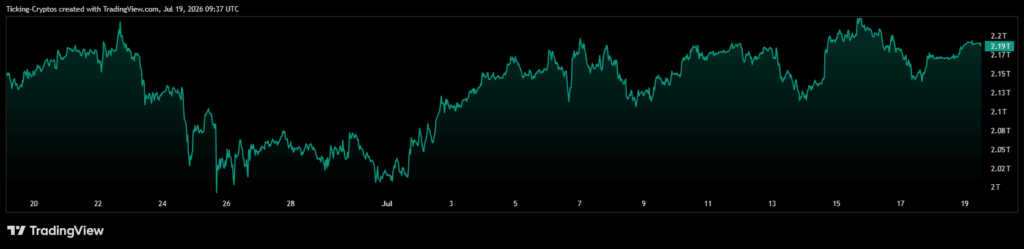
Bitcoin's pressure mainly comes from the outflow of funds from ETF
Analysts pointed out that one of the important reasons for Bitcoin's weak performance in 2026 is the large-scale outflow of funds from spot Bitcoin ETFs.
The U.S. spot Bitcoin ETF recorded a net outflow of US$4.5 billion in June alone. The figure set a record for the largest monthly outflow since the funds began trading.
After entering July, capital inflows restarted. But analysts said that for institutional investors to return to the market on a large scale, it will take weeks of net inflows instead of days.
Another factor putting pressure on Bitcoin is hawkish monetary policy under Federal Reserve Chairman Kevin Walsh. The strong US dollar and investors 'diversion of money into artificial intelligence stocks throughout the year are also the main reasons why Bitcoin lags behind Ethereum.
Walsh's statement at the June meeting made the market price not interest rate cuts, but possible interest rate increases in 2026.
The Federal Reserve meeting may decide on the direction of the cryptocurrency market
The most important focus of the market in the new week will be the FOMC meeting from July 28 to 29.
Investors will pay close attention to the Fed's interest rate decision and the signals released after the meeting. Hawkish rhetoric may keep the U.S. dollar strong and continue to put pressure on the cryptocurrency market. On the contrary, unexpected dovish signals in the market may trigger a new round of rebound in risky assets.
Other key points that analysts are concerned about include:
Whether the spot Bitcoin ETF can start a net inflow for several consecutive days.
Can Bitcoin hold the support level of US$58,000?
If the price breaks through the resistance zone of US$63,800 to US$65,000, will it move towards the US$68,000 to US$70,000 range?
Can Ethereum break through the resistance of the 100-day exponential moving average (EMA) at $1944?
The impact of events in Iran and around the Strait of Hormuz on global markets.
The Federal Reserve's decision, the flow of ETF funds and news from the Middle East will become the most important factors in determining the trend of the cryptocurrency market in the new week.
This content is based on general market data and does not constitute investment advice. It is recommended that you conduct your own research.
























