Exchange Ranking
 Top Exchanges
 24h Volume Ranking
 Popularity Ranking
 Exchange BTC Balance
 Proof of Reserves
 Decentralized Exchanges
 Funding Rate
 Funding Heatmap
 Liquidation Data
 Max Pain
 Long/Short Ratio
 Whale L/S Ratio
 Binance/Okex/Huobi L/S
 Bitfinex Margin L/S
 ETF Tracker
 Solana ETF
 XRP ETF
 Hong Kong ETF
 Bitcoin Treasuries
 Crypto Reversal
 Ethereum Reserves
 HyperLiquid Wallet Analysis
 Hyperliquid Whale Watch
 Large Transactions
 On-chain Movement
 Bitcoin ROI
 Stablecoin Market Cap
 Options Analysis
 News
News Articles
 Economic Calendar
 Features
 Wallet
 Contract Calculator


 Security
 Collections
 Watchlist
 Following
 BTC
BTC  ETH
ETH  SOL
SOL  XRP
XRP When Sparkasse launched Bitcoin in October, what were you actually buying?
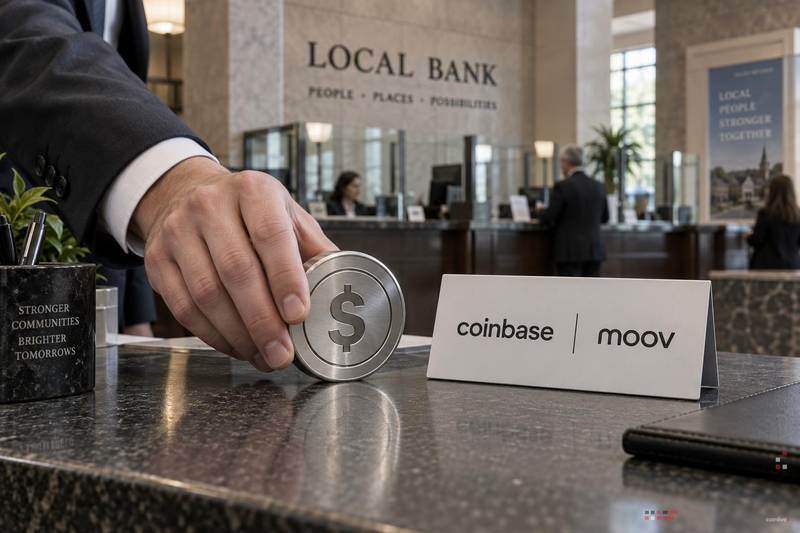
When your Sparkasse started offering Bitcoin transactions in October, you were not buying coins that could be transferred to your personal wallet. Instead, you will get an open position in a securities account, with the encryption key behind it still being held by the bank. This is the core difference between traditional street bank accounts and cryptocurrency exchange accounts, and it determines what you can actually do with these positions in the future.
This article discusses this point. We will explain what custody in a bank account means in practical and legal terms, what obligations authorized custodians have to fulfill under the EU Cryptographic Asset Markets Regulation (MiCAR), which three public registries allow you to find out who actually holds your crypto assets, and what issues need to be clarified before you make your first purchase. Regarding release schedules and cost issues, we have covered them in other articles.
Deka-driven cryptocurrency: The actual meaning of custody in a bank account
The service provided by Sparkasse is called "Krypto powered by Deka"(a cryptocurrency driven by Deka). Developed by DekaBank, a securities firm owned by Sparkassen-Finanzgruppe, the product runs directly within the Sparkasse application rather than a stand-alone stand-alone application. In terms of trading and technology infrastructure, DekaBank works with Börse Stuttgart Digital. Based on the information currently available, it is planned to launch in mid-October 2026, conduct an internal testing phase in September, and then roll out in batches. About 370 regional Sparkasse companies will decide when to turn on the feature. Therefore, there is no nationally unified release date, and your organization can only inform you whether your organization participates in the service.
This architecture lacks the part that many investors take for granted: withdrawing coins you buy to the address you own. Positions remain in central custody. You can see them in your account, sell them, or hold them. However, transfers to the outside world are not currently included in the scope of services provided by traditional banks.
Differences with ETN and Fund Units
Cryptocurrency index notes (ETNs) track prices and are legally debt securities issued by the issuer. The service model provided by banks is different: you buy the crypto assets themselves, but they are only managed by the bank on their behalf. From an economic perspective, you own the coin, but the one with the right to dispose of it is the custodian. This separation of economic ownership and actual control is at the heart of every custody model, as well as in centralized cryptocurrency exchanges.
Private key, wallet and custody position: The distinction between three concepts
Private key is a secret sequence of numbers that allows transactions to be signed on the blockchain. Those who hold the private key can move the relevant position; those who do not hold it cannot move it, regardless of what the account overview displays.
Wallet is not a wallet containing coins, but a management of keys. The coin itself exists only as an entry on the blockchain. A hardware wallet is a device that generates keys and makes them never leave, preventing them from being stolen by infected computers. If you want to understand the differences in common devices, our Hardware Wallet Comparison Guide is a good starting point.
Custody Position is ultimately a record in your bank account book. It indicates that a position belongs to you. It did not say at which blockchain address the position was located or who could move it. This is the difference between banking services and self-custody, and those who confuse the three concepts often underestimate the risk or convenience.
Why Sparkasse does not provide the ability to transfer to external wallets
From a provider's perspective, there are several reasons to support the banking model, and none of these reasons are arbitrary. Paying funds to any address chosen by the customer converts the provider into a transfer service provider and imposes obligations for anti- money laundering supervision, which includes inspections of the source and recipient of crypto-asset transfers. In addition, it can create sources of error that banks serving the mass market are reluctant to take: such as typing the wrong address, choosing the wrong network, and causing funds to be lost and cannot be recovered.
For you as an investor, this has two consequences. The first aspect is convenience: you don't need mnemonic words, nothing will be lost, and if something goes wrong, you have a counterparty in Germany. The second aspect is inconvenient: you are tied to the agency. Moving to another provider means selling and buying, rather than transferring money. Any plan for such transfers triggers a sale in the tax sense, which is quite different from transferring coins between two addresses.
Tax impact triggered by a sale rather than a transfer
Transfers between your own addresses do not change the date of acquisition. In the case of a re-purchase after a sale, the holding period stipulated in Article 23 of the German Income Tax Law will start again, and any gains will be evaluated in the year of the sale. This is not an objection to bank accounts, but it should be included in the calculation before identifying providers. Visible but inaccessible: In banking services, the private key is still held by the custodian.
MiCAR Article 75: Obligations of the custodian who holds your crypto assets
Since the entry into force of the Crypto Asset Markets Regulation (EU) No. 2023/1114 (MiCAR for short), the custody of crypto assets is no longer in a legal vacuum. The Federal Financial Supervisory Authority of Baden-Württemberg (BaFin) listed ten services that require authorization in its guidance note on crypto asset services. The first priority is the custody and management of cryptographic assets on behalf of customers, which is defined as the secure custody of cryptographic assets or their means of access. Any commercial provider of this service needs to be authorized.
Article 75 of the regulation describes the duties that such trustees must perform. For you as a customer, the following four points are relevant:
- must reach a agreement with you that at least clarifies the identity of the parties, the nature of the service, applicable security measures, fee structure, and applicable laws.
- Custodians are required to maintain a position register and a record of each crypto-asset movement held for them.
- Client positions must be isolated from owned assets 。This isolation also applies at the blockchain level: owned positions and customer positions are located at different network addresses.
- Under applicable national laws, crypto assets in custody should be legally separated from the service provider's own property so that its creditors cannot reach these assets in the event of bankruptcy.
This is far more protection than unregulated providers provide, and this is the real reason why banks are involved in this business. But this is not a guarantee for all losses. The regulation creates obligations and does not replace the deposit insurance system, and crypto assets are not covered by the statutory deposit protection that applies to current account balances.
Custodian bankruptcy: Why isolating client positions is important
The decision point for what happens to your positions in a worst-case scenario is one: whether they belong to the custodian's estate or your estate. If the isolation is clear, they will not fall into the bankruptcy estate, but will be attributed to the customer. This is exactly the goal of MiCAR's Article 75 quarantine obligation, and why this is not red tape but the core of consumer protection in the model.
In practice, this means that in custody, the institution's credit status is less important than its organizational structure. The key is whether client positions remain technically and legally separated, and whether records can withstand review when in doubt. If you are unable to answer these questions when asked, the provider has given you an answer.
Three questions you can ask institutions
- Who is the custodian of crypto assets and under what authority does it operate?
- Are customer positions separated from owned positions, and does this separation also apply to the blockchain level?
- What documents do I receive when obtaining dates and cost, and in what format?
Check CASP authorizations: Federal Register, BaFin Database, and ESMA Registry
In the language of the regulation, authorized cryptographic asset service providers are called CASPs (Crypto-Asset Service Providers). On its page on crypto asset services, BaFin points out three registries where you can check authorizations: the Bundesanzeiger, the BaFin corporate database, and the MiCAR registry of European securities regulator ESMA. All three are open and free.
This check is not only worth doing at your own bank (the results will hardly be surprising), but also worth doing it at every other provider you are considering at the same time. If you are weighing regulated trading platforms as an alternative to bank accounts, our overview of regulated cryptocurrency exchanges lists the providers that are authorized in the EU. Query the registry does not replace this overview, but rather supplements it.
How to identify vague statements
This becomes suspicious when a provider promotes a registration that is not authorized at all, or mentions licenses for services other than the one provided, or the name in the registry is different from the name on the website. Group structure is a common stumbling block here: it is often authorized by specific companies, not brands.
The actual restrictions on your bank account for what you are blocking without your own key are specific and can be evaluated in advance: - There is no self-custody.
- The phrase "If it's not your key, it's not your coin" accurately describes this position. You take the risk of trustee, not of losing your own backup.
- No pledge and no loan.
- Anyone who holds Ethereum in a bank account does not participate in verification and does not receive pledge rewards unless explicitly provided by the provider.
- No chain use.
- Payments, applications in decentralized finance, signing messages with your own address: all of these require control over the key.
- Trades only during provider business hours.
- Blockchain runs 24/7, but this may not be the case for banking services. Which trading hours apply are specified in the terms.
The opposite is an advantage that should not be belittled. Settlement occurs through your existing account. There is no need for a separate customer acceptance process, no additional authentication, and no payment address you might have entered incorrectly during the setup process. For beginners with smaller amounts, this is really a real improvement in security compared to trying to run a wallet for the first time. Anyone can be looked up: the Federal Register, the BaFin Corporation database and ESMA's MiCAR registry are publicly available.
Holding period under Article 23 of the Income Tax Act: Access to data is also ensured in bank accounts
For private disposal of crypto assets, Germany currently applies the one-year holding period under Article 23 of the Income Tax Act. If you hold it for more than one year, your disposal is tax-free. If you sell before then, if you exceed the exemption threshold, you will pay income tax at your personal income tax rate. In order for the tax department to track, you need two pieces of information about each position: the acquisition date and the acquisition cost.
In a bank account, you can obtain both pieces of information from an institution, which is a convenient advantage over your own records. Even so, you shouldn't just rely on this. Save statements over time and in a format that can still be read after changing providers. Tax and portfolio tools are especially helpful when you hold assets in multiple places, otherwise allocations can quickly become difficult to track.
In addition, there is an open construction project in 2026: a draft bill from the Treasury Department will in the future consider crypto asset gains as investment gains and set a deadline for new acquisitions. No decision has been made and today's rules continue to apply unchanged. We have written separately about the current status of the grandfather clause and deadline. For hosting issues, this means one thing: Complete access to data becomes increasingly important.
Inheritance, powers of attorney and account freezing: The advantages of bank accounts
Self-custody has a little-discussed weakness: it is effective only if the holder is able to act. If the backup is lost, the position disappears and disappears forever. The same applies if the holder dies and no one has access to the backup. By contrast, in bank accounts, familiar mechanisms come into effect: heirs prove their rights, enduring powers of attorney come into effect, and court-appointed custody is recognized.
Conversely, the banking model has a situation that self-custodians don't know about: freezing. If the account is temporarily blocked due to anti-money laundering inspection or suspicion, you will not be able to access the position even if it belongs to you. Both models come with the risk of failure, but the risk lies in different places. People holding large amounts often deliberately spread their funds between these two paths.
The difference between Bitcoin and Ethereum at launch: Why does the list of currencies vary according to source
There are different opinions on what can be traded at start-up, and this should be frankly stated. In early September 2026, Sparkassen- und Giroverband in Hesse and Thuringia announced the launch of 46 Sparkasse in Hesse and Thuringia, specifying Bitcoin and Ethereum. Industry reports on the same project mention a wider range of initial options, including XRP, Solana and Polygon in addition to Bitcoin and Ethereum.
Both may be true, because batch promotion means that what individual regional associations announce for their own organizations may not necessarily be the full scope of the entire offer. Lists are secondary to your decisions anyway. What matters is what actually appears in your organization's App on launch day, and this can only be determined at that time. For the overall timeline, we collected detailed information in our evaluation of the planned October release and included cost aspects in our analysis of commissions and spreads.
The statement on custody still leaves open questions
So far, what is publicly documented is the division of roles between DekaBank and the Stuttgart Stock Exchange's digital arm, and the fact that customers receive custody positions rather than their own keys. What is not publicly recorded is how detailed the records are organized, whether there is a register of positions at the individual client level, and what evidence customers will receive in disputes. These questions can only be answered through the contract document, which must be provided to you before your first purchase. Read it before agreeing.
Checking Sparkasse Custody: Summary of Points
- Establish who holds the assets and under what authorization before purchasing.
- The contract document names the custodian, and three public registries confirm this. If you are also considering trading platforms, apply the same criteria and check out our overview of regulated cryptocurrency exchanges.
- Make a conscious decision to choose between a bank account and self-custody.
- For small funds and inheritance cases, many factors support bank accounts; for funds you want to hold and control yourself for the long term, many factors support your own devices. The differences between common models are explained in our Hardware Wallet Comparison.
- Ensure the acquisition date and acquisition cost from the first purchase.
- File statements in a readable format and summarize them when assets are held in multiple locations. Which tools can provide this, see our overview of tax tools and combination trackers.
Further reading Source: BaFin describes cryptographic asset services that require authorization in its guidance note on cryptographic asset services under MiCAR, and authorizations of individual institutions can be queried in the BaFin company database. (As of September 12, 2026. This article does not constitute investment advice. Price and fee structures are subject to change; please check terms with your provider before purchasing.)