Exchange Ranking
 Top Exchanges
 24h Volume Ranking
 Popularity Ranking
 Exchange BTC Balance
 Proof of Reserves
 Decentralized Exchanges
 Funding Rate
 Funding Heatmap
 Liquidation Data
 Max Pain
 Long/Short Ratio
 Whale L/S Ratio
 Binance/Okex/Huobi L/S
 Bitfinex Margin L/S
 ETF Tracker
 Solana ETF
 XRP ETF
 Hong Kong ETF
 Bitcoin Treasuries
 Crypto Reversal
 Ethereum Reserves
 HyperLiquid Wallet Analysis
 Hyperliquid Whale Watch
 Large Transactions
 On-chain Movement
 Bitcoin ROI
 Stablecoin Market Cap
 Options Analysis
 News
News Articles
 Economic Calendar
 Features
 Wallet
 Contract Calculator


 Security
 Collections
 Watchlist
 Following
DeFi used to mean chasing farm annualized yields and praying that token emissions would not collapse. This set of gameplay is now obsolete. The new narrative is simple: Funding real servers, not Ponzi economics-and deriving benefits from the need for artificial intelligence, not token incentives.
On-chain GPU lending comes into being for this. Lenders put stablecoins into structured credit transactions. Borrowers use this capital to purchase or deploy GPU computing power. Revenue generated by running these GPUs is repaid to the lender. The question is whether the shift will be durable and how to evaluate it while avoiding losses.
If you are curious about where to start, what needs to be checked, and how to compare various platforms, this guide will help you sort out their operating mechanisms and a practical workflow.
Overview of core points
What is this: On-chain asset-backed loans to fund GPU servers used for AI/compute workloads; repayments come from operating cash flow.
How revenue is generated: Borrowers pay interest after deducting costs (power, custody, maintenance) from GPU lease income; lenders earn agreement fees and interest.
Collateral and Custody: GPUs and related equipment are used as collateral; Custody is usually the responsibility of the host or special purpose vehicle (SPV), with a right of recovery as stated in the document.
Fluidity: It is usually a fixed-term investment with a lock-in period; some agreements allow secondary market transactions or redemption as appropriate.
Target users: Asset allocators who can accept credit risk and infrastructure operational risk, not just token price fluctuations.
Main risks: Reduced utilization, obsolete hardware, soaring power costs, counterparty and legal enforcement risks, oracle/on-chain risks.
Trading venues: exist on L2 and application chains; for example, activities for certain credit agreements are mainly concentrated on Arbitrum.
You can think of on-chain GPU lending as a credit stack attached to real devices. Funds are raised in the form of stablecoins, transferred to borrowers or a SPV in bankruptcy isolation, used to purchase or deploy GPUs, and then repaid through cash flow from selling computing power. If the borrower performs poorly, the lender can rely on collateral and enforcement rights to recover losses.
This is not empty talk. In June 2026, USD.AI announced a $98.1 million, three-year financing plan to deploy 2304 NVIDIA B300 GPUs managed by Hydra Host, a concrete example of DeFi Credit\'s financing for large-scale physical computing.
Size matters because underwriting costs are not cheap. USD.AI itself mentioned in its annual report ending June that its total locked position value (TVL) was US$398 million, of which US$202 million had been issued as loans, with a total of 13 active loans (average size of approximately US$15.8 million). The report also shows that it has a potential project pipeline of $13 billion and has signed 26 terms lists totaling $817 million, of which $205 million was actually completed and deployed.
Chain revenue is equally considerable. In a May review, USD.AI said it ranked second on the Arbitrum in terms of 30-day revenue, charging approximately $1.19 million in fees during the period. Even if this does not represent the whole picture, it also roughly reflects its level of activity.
Quick check of common terms
SPV (special purpose vehicle): Entity holding GPUs and contracts; isolates collateral from the borrower\'s bankruptcy risk.
Utilization: Percentage of time that GPUs are rented and generate revenue; this is the main driver of cash flow.
Waterfall distribution: The order in which income is distributed (operating costs, insurance, interest, principal, and then the rest).
Repossession: In the event of a borrower default, the lender has the right to seize the equipment and resell or deploy it.
Service Provider: The host or operator responsible for uptime, maintenance, and power procurement.
Terms list: A pre-contract summary outlining the economic and legal terms before final documents are signed.
Step-by-step guide
1. Combing through revenue models: requires a simple unit model: expected daily revenue per GPU, utilization assumptions, power costs and expenses. Verify its rationality against current market prices.
2. Read Waterfall Allocation: Confirm that operating expenses and insurance are paid before interest, and that interest and principal are clearly prioritized above equity residual value.
3. Verify collateral and custody: Clarify the ownership, storage location, serial number or asset register of the GPU, and the exact recovery path should the situation deteriorate.
4. Evaluate operators: Examine their performance records: uptime, customer composition and power contracts. Customer recommendation letters are more valuable than gorgeous roadshow materials.
5. Stress test assumptions: What would happen if utilization fell by 30%, electricity costs increased by 40%, or rental prices fell? Check debt service coverage in these cases.
6. Chain of inspection and legal architecture: On which chain is the contract deployed? Which oracles provide metrics? Which jurisdiction is governed by the enforcement of contracts? Mismatches here are often the reason why transactions fail.
7. Understand liquidity: lock-up periods, redemption restrictions, secondary markets, and who is ready to take over when you need to exit.
8. Control position size: Start with small amounts, monitor service provider reports every month, and increase investment only after seeing the consistency of actual cash flow.
The true source of revenue
Unlike swap fees or token emissions, these returns depend on boring physical realities: electricity, uptime and customer demand. A GPU must be online, rented and reasonably priced. Hosts with stable loads (reserved contracts) typically have lower nominal yields than hosts chasing spot demand. This helps maintain operations during market downturns, which is also good.
At the agreement level, fees reflect activity and risk appetite. One recent data point: USD.AI reported that it ranked second in 30-day revenue on the Arbitrum in May, with approximately US$1.19 million in fee revenue over 30 days. This doesn\'t prove that every loan is perfect, but it shows that lenders are willing to pay to enter and that transactions are indeed taking place on the chain.
As for hardware, the financing window exists because AI workloads are limited by computing power and high capital expenditures. That being said, if hyper-scale cloud service providers adjust pricing, or new chips leapfrog performance per watt, utilization rates may shift rapidly. Don\'t assume straight growth.
Platform and transaction structure comparison
Not all GPU credits are the same. Some transactions are aggregated into on-chain funds pools with standardized documents and transparent dashboards. Others feel like tokenized private credit. You will see different fees, lock-up periods, and how quickly lenders enforce rights.
Option 1: On-chain credit agreements (such as GPU pools): Collateral is held by SPV or host with pledged assets; income comes from interest on GPU lease cash flow; liquidity is fixed-term and partially redeemable; high transparency, providing dashboards, on-chain receipts and service provider reports; the main risks are utilization and execution delays.
Option 2: Tokenized private equity credit funds: Collateral is managed at the fund level; income comes from mixed returns of multiple loans; liquidity is quarterly or limited; transparency is low, quarterly letters are provided, and on-chain data is limited; the main risks are opacity and cross-transaction risk contagion.
Option 3: Centralized lender notes: The collateral is held by the lender; the income is fixed coupon; poor liquidity and cannot be redeemed before maturity; extremely low transparency, PDF files are provided, and there are very few traces on the chain; the main risks are counterparty and custody risks.
Option 4: Direct borrower notes with host: The collateral is controlled by the host with a lien attached; the income is coupon plus revenue share; poor liquidity is a customized arrangement; transparency depends on the borrower\'s information disclosure; the main risk is execution complexity.
If you are pursuing scale and transaction flow, protocols are currently more advantageous. For example, USD.AI disclosed a $98.1 million financing to deploy 2304 B300 GPUs through Hydra Host and reported a TVL of $398 million, of which $202 million has been issued as a loan. This does not mean there is no risk, but it means its underwriting and operations must be more repeatable than a customized single transaction.
The stress scenarios you should actually simulate
Default is an obvious risk, but the path of default is crucial. Even if overall demand seems hot, a 20% decline in utilization rates and a 25% increase in electricity prices could squeeze cash flow below debt service levels. If this continues, you will rely on cash reserves and contract terms. How long is the grace period? Who controls the switchback switch? Where will the GPU flow and how fast will it be monetized?
Next is the hardware risk. If the new chip is more advantageous in performance per watt, the secondary market value of your collateral may decline, which becomes important when you need to liquidate. Ask about remarketing channels and historical recovery rates, even if they are just a directional estimate rather than an accurate number.
Professional tip: During due diligence, strive to join a time-limited takeback contract and a pre-arranged remarketing partner. In the recycling process, speed is often more important than price.
Finally, there are legal and on-chain risks. If the SPV is located in one jurisdiction and the payment channel or oracle is running elsewhere, you need a clear bridge that doesn\'t rely on contingency. Also keep in mind that stablecoins, Gas fees, and oracle dependencies themselves create failure patterns.
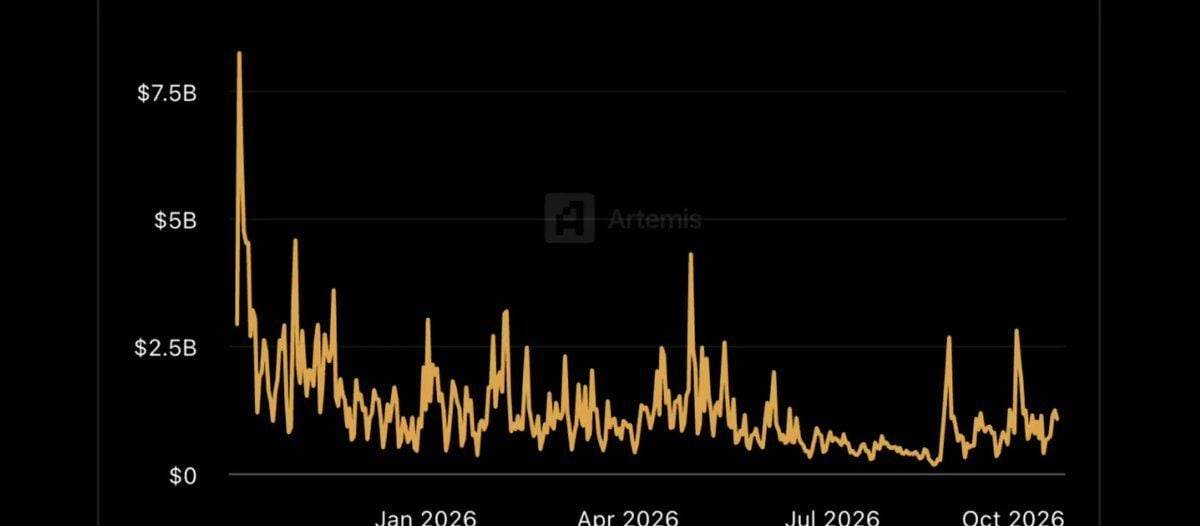
High-to-low transaction flow display: A $13 billion borrower project pipeline went through the terms sheet stage (26 terms sheets/$817 million) and finally completed $205 million in closed loans-visual evidence of on-chain capital flowing into GPU infrastructure financing. Source: USD.AI
Traps and warning signals
Ambitious collateral details: No serial numbers, asset registrations or on-site photos? Please skip before obtaining documentation.
Unclear power arrangements: Electricity contracts priced on a monthly basis and without hedging expose you to the risks of price spikes and power curtailments.
Fuzzy waterfall allocation: If expenses and expenses are not clearly sorted before equity residual value, your judgment on the recovery rate will be just a guess.
Operator concentration: Is all revenue driven by just one tenant or one market? This is not a diversified cash flow.
Execution Bluff: Strong words but weak contracts. If it takes a year of litigation to reclaim, that\'s not true credit protection.
On-chain opacity: If the on-chain report is just a token price chart, rather than loan and pool level cash flow, you will be blind.
FAQs
Are GPU loans just another form of RWA (real-world asset)? They fall into the category of real-world assets, but the source of repayment is operating cash flow from computing power rather than rent or trade invoices. This makes utilization and power costs as important as the legal structure.
How do lenders actually understand the situation? Good platforms publish service provider reports and on-chain receipts, and provide data rooms during due diligence. Some also display indicators of pool and loan levels on the dashboard. In May, one agreement even reported that it ranked second on Arbitrum in 30-day revenue, indicating an active on-chain fee stream.
What happens if a borrower misses payment? There is usually a grace period, and then remedial measures begin to be implemented: cash collection, account control, and ultimately recovery through SPV and re-marketing of the GPU. Speed and certainty depend on contract terms and jurisdiction.
Is the return fixed or floating? Different. Many loans have fixed interest rates and have performance triggers; others have income-sharing components. Expect lock-up periods and redemption limits; this is not a product that can be redeemed on the same day.
Isn\'t hardware depreciation a big problem? Yes, this is why underwriting focuses on cash flow over the life of the loan rather than the value at the end of life. Faster payback cycles and higher utilization rates help offset depreciation risk.
Can retail investors participate? Access depends on the platform and your jurisdiction. Some pools allow smaller investments; others are for institutions. Be sure to read KYC/AML requirements and investor qualifications.
Which institutions are actually doing this business on a large scale? As of the second quarter of 2026, there are public activity and signs of size for USD.AI: a $98.1 million financing plan for 2304 B300 GPUs managed by Hydra Host, and a reported $398 million TVL and $202 million deployed loans. Be sure to cross-check the latest data before making a decision.
Disclaimer : This article is for reference only. Does not constitute and should not be used as legal, tax, investment, financial or other advice.