Exchange Ranking
 Top Exchanges
 24h Volume Ranking
 Popularity Ranking
 Exchange BTC Balance
 Proof of Reserves
 Decentralized Exchanges
 Funding Rate
 Funding Heatmap
 Liquidation Data
 Max Pain
 Long/Short Ratio
 Whale L/S Ratio
 Binance/Okex/Huobi L/S
 Bitfinex Margin L/S
 ETF Tracker
 Solana ETF
 XRP ETF
 Hong Kong ETF
 Bitcoin Treasuries
 Crypto Reversal
 Ethereum Reserves
 HyperLiquid Wallet Analysis
 Hyperliquid Whale Watch
 Large Transactions
 On-chain Movement
 Bitcoin ROI
 Stablecoin Market Cap
 Options Analysis
 News
News Articles
 Economic Calendar
 Features
 Wallet
 Contract Calculator


 Security
 Collections
 Watchlist
 Following
 BTC
BTC  XMR
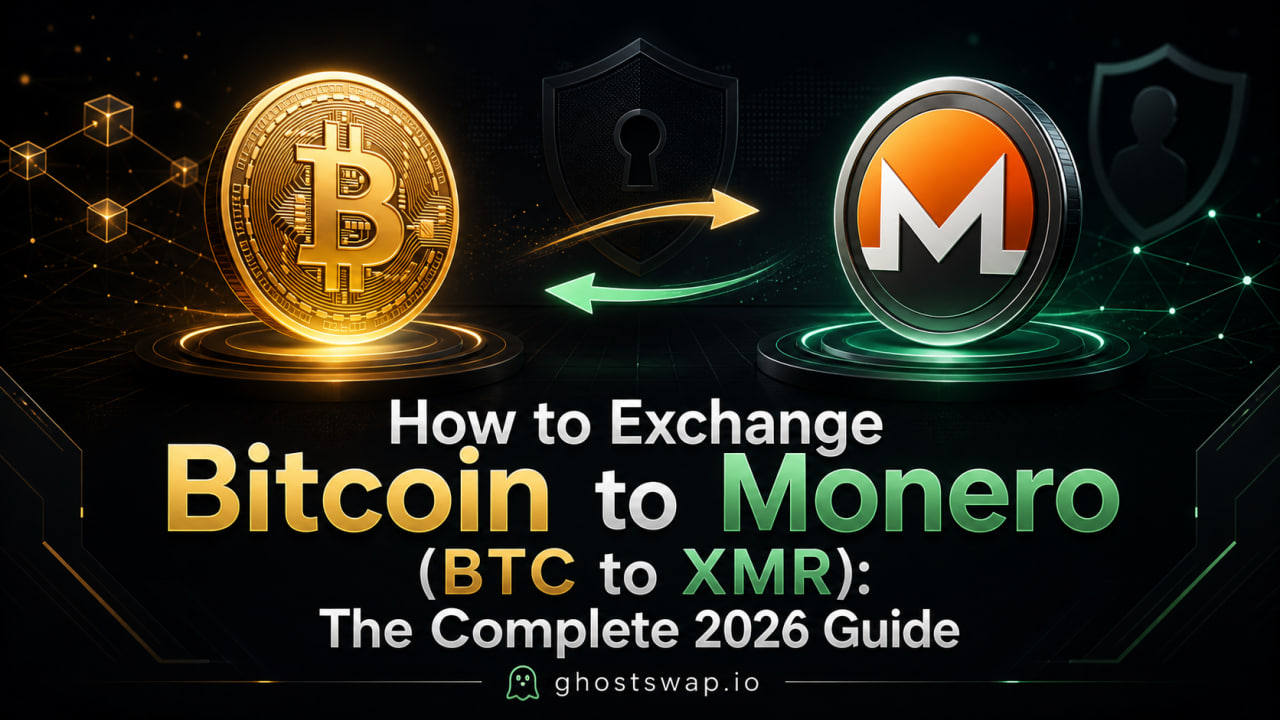
XMR How to convert Bitcoin to Monero (BTC to XMR): A complete guide for 2026
If you have owned Bitcoin for some time, you already know what it is: pseudonym, transparency, and permanent record. Every bitcoin you ever receive, send, or earn is recorded on a public ledger that can be accessed permanently by anyone-whether it's Chain Analytics, your employer, or a curious predecessor. Monero Coin (XMR) is the answer to this question, and demand to convert Bitcoin into Monero will continue to rise in 2025 and even 2026, especially as THORChain prepares to launch its long-awaited native XMR integration and privacy coin transactions hit record highs.
This guide will explain in easy-to-understand language how to convert BTC to XMR in 2026, what your actual options are, and how to choose the most suitable path based on your priorities-whether it's privacy, speed or exchange rate quality.
Why people exchange bitcoin for Monero
Before discussing "how to do it", it is necessary to clarify the "why" first, because the correct conversion method depends entirely on your goals.
The most common reasons why people will convert Bitcoin to Monero in 2026:
Pre-privacy. Once your Bitcoin enters a brand new XMR wallet, the "breadcrumb" trail left by chain analysis effectively ends. Monero's ring signature, hidden address and confidential transactions break the linkability that Bitcoin can never get rid of.
Interchangeability. Bitcoin exports can be "contaminated" by past connections-exchanges have frozen funds weeks or months after deposits arrive due to upstream history. Monero, on the other hand, treats all coins as equivalent, like physical cash.
Safe operation. Journalists, activists, business owners in restricted jurisdictions, and long-term holders are increasingly routing some assets through XMR, specifically to confuse transaction patterns.
Diversify long-term value storage. Privacy coins as a category rose sharply in late 2025 and early 2026, with many holders rebalancing assets from BTC to XMR to capture this exposure.
Usage scenarios determine the path. The needs of a person who transfers small amounts of money on a Coinbase-enabled device are very different from those of a person who tries to maintain complete privacy in the end-to-end process.
Four ways to convert BTC to XMR in 2026
Currently, there are four main types of platforms that can be used to convert Bitcoin to Monero. Each platform has its own unique trade-off characteristics.
1. Centralized exchanges (requires KYC, such as Kraken, etc.)
Most major centralized exchanges that still have Monero-of which Kraken is a prominent representative in many jurisdictions-require full identity verification. You need to upload a passport, take a selfie, and associate a bank account before you can trade BTC for XMR.
Advantages: Deep fluidity, narrow point difference, familiarity with interfaces.
Disadvantages: For most users, this completely goes against the original intention. Your identity will be permanently linked to your XMR withdrawal address, which means a starting point for chain analytics companies employed by exchanges and governments. Many large exchanges (such as Binance, Coinbase, and Kraken in some regions) have completely removed XMR under regulatory pressure, so availability is shrinking.
Applicability: You don't actually need privacy, you just want to make small configurations.
2. The decentralized cross-chain protocol (THORChain, coming soon)
THORChain is preparing to launch a native Monero integration in mid-2026, using FROST threshold signatures to achieve trustless atomic exchanges of BTC XMR without bridging, wrapping tokens or custodians. Once online, this will be a meaningful new option, especially for cypherpunk-leaning users who pursue the most decentralized path.
Advantages: No KYC, no custodian, and atomic execution.
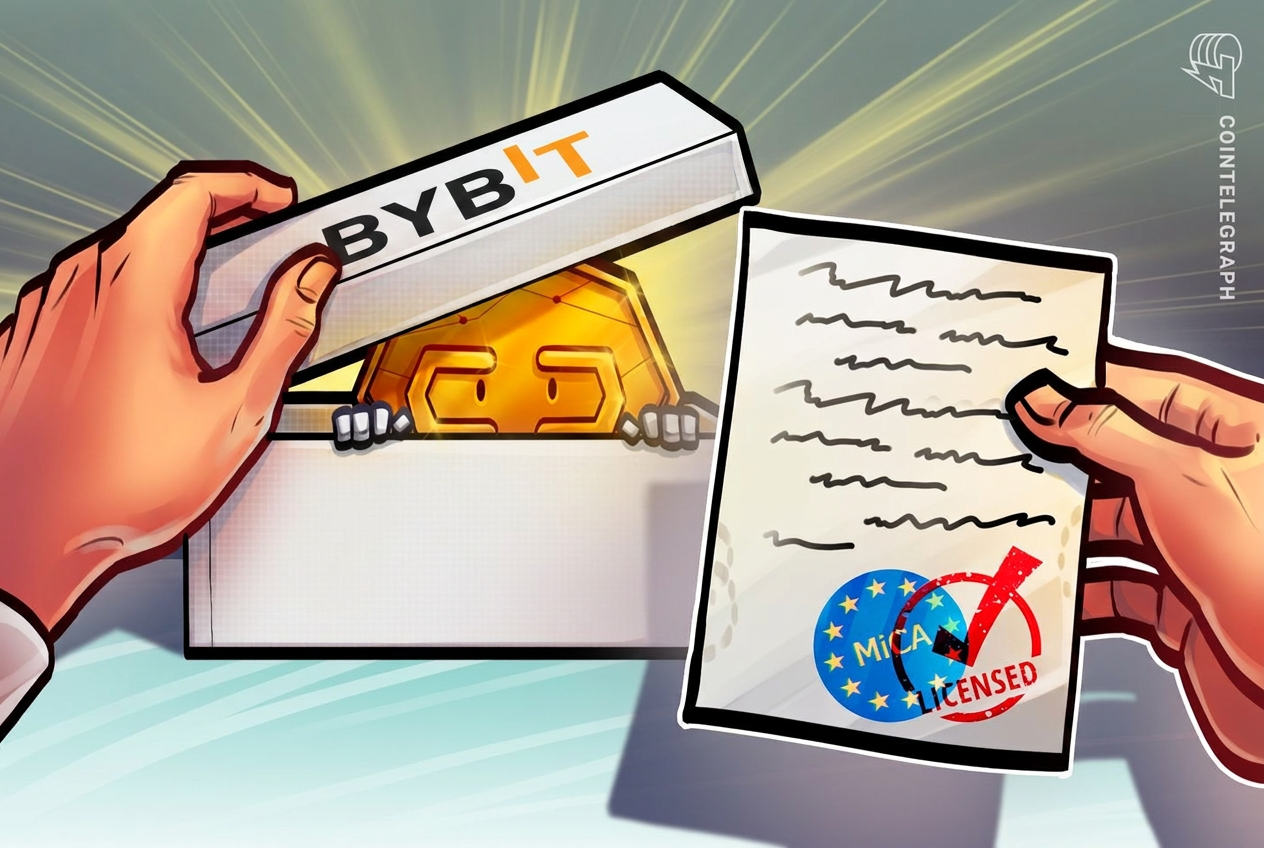
Disadvantages: Initial liquidity is low (the agreement starts with a US$10,000 seed pool, with significant slippage for larger transactions). The user experience requires familiarity with unmanaged wallets such as Vultisig and tolerates occasional pauses at the protocol level. After the Bybit money laundering controversy and the separate bankruptcy of its lending products in 2025, THORChain's reputation is more complex. There are also technical limitations when the pool's native XMR withdrawals are launched.
Applicable: You are an advanced user, transaction sizes are small, and ideological decentralization is more important to you than speed.
3. A KYC-free instant redemption service
This is the most popular path in 2026 for users who want to balance privacy and convenience. Instant redemption services that do not require KYC act as aggregators or work directly with liquidity providers-you paste your XMR receiving address, send your BTC, and the service handles everything in one transaction. No account required, no email required, no authentication required.
Platforms like GhostSwap fall into this category. You choose the BTC→XMR trading pair, lock in a fixed or floating exchange rate, and send your Bitcoin. Monero usually reaches your wallet in 10-30 minutes, depending on the network confirmation time. No registration required. Unless the transaction triggers a specific compliance flag, no KYC is required, in which case the service provider will inform you in advance before you invest money.
Pros: Fast, no account required, supports hundreds of trading pairs, fixed exchange rates eliminate slip point anxiety, can be used with hardware wallets, and there is no custodian risk of exchange bankruptcy.
Disadvantages: spreads are slightly higher than centralized exchanges (typically 0.5-2%), and the service is technically an exchange intermediary rather than a fully decentralized protocol.
What applies: You want privacy and convenience, don't want to open a new exchange account, and value predictable execution. For most people in most cases, this is the right answer.
4. Atomic exchange (Cake Wallet, COMIT, Haveno)
Atomic exchange is a point-to-point cryptographic exchange. Both parties directly trade BTC and XMR, and a hashed time-lock contract ensures that neither party can cheat. Cake Wallet has integrated atomic exchange capabilities, while Haveno runs a fully decentralized P2P exchange.
Advantages: Maximum decentralization, no third party, and extremely privacy protection when correctly executed.
Disadvantages: is thin, the user experience is unfriendly (failed exchanges mean waiting for time locks to expire), and there is usually a cap on transaction size. Exchange rate quality is uneven.
Applicability: You have rich technical experience and are willing to sacrifice convenience for ideological purity.
How to convert BTC to XMR: A step-by-step guide (no KYC path required)
For the path that most readers will actually use, here is the complete process.
Step 1: Set up your Monero wallet Before you can redeem anything, you need a receiving address for XMR. Recommended options for 2026:
Cake Wallet (Mobile, open source, natively integrated atomic exchange)
Feather Wallet (Desktop, lightweight, audited)
Monero GUI / CLI (official client, full node optional)
Generate a new wallet, write a 25-word mnemonic on paper (do not take screenshots, do not save a password manager synchronized to the cloud), and verify your wallet by sending a small amount in and out of the wallet before performing any important operations.
Get your primary receiving address -it is a long string of characters that start with 4 or 8. This is where your redeemed XMR will be delivered.
Step 2: Select a redemption service and get a quote Open a redemption service that does not require KYC, such as GhostSwap. Select BTC as the "sending" currency and XMR as the "receiving" currency. Enter the amount of BTC you want to redeem.
You will usually see two exchange rate options:
Fixed exchange rate: Quoted exchange rate is locked in for a short period of time (usually 10-30 minutes). What you see is what you get.
Floating exchange rate: What you get is the real-time market exchange rate at the time of BTC confirmation. The average price may be slightly better, but there is execution uncertainty.
For most people sending a single transaction, a fixed exchange rate is the right choice. The premium is small and predictability is good value for money.
Step 3: Paste your XMR address and confirm that the service provider will ask you to provide the Monero receiving address -Paste the address you generated in step 1.
Double check this address. Monero transactions are irreversible and XMR sent to the wrong address cannot be retrieved. Copy from your wallet, paste it into a redemption form, and then visually compare the first six and last six characters to ensure your clipboard is not hijacked by malware.
Then, the service provider displays a Bitcoin deposit address. This is where you send BTC.
Step 4: Send your Bitcoin From your BTC wallet (it is recommended to use a hardware wallet when the amount exceeds a few hundred dollars), send the accurately quoted amount to the deposit address. Use a fee that can be confirmed within a reasonable time-usually 1-3 blocks.
Once your BTC has received the required number of confirmations (redemption services usually require 1-2 confirmations), the service provider will automatically complete the redemption and send your XMR.
Step 5: Receive your Monero Within 10-30 minutes of your BTC confirmation, XMR will arrive at the address you provide. After Monero's own approximately 10 block confirmation windows, it will appear in your Monero wallet.
That's it. End-to-end, the entire process typically takes 20-45 minutes, including network confirmation time.
What to note when selecting a BTC to XMR redemption service
Not all redemption services are the same. When evaluating where to send funds, weigh the following factors:
KYC is not required by default. The whole point of converting BTC to XMR is privacy. If the service requires you to verify your identity before redemption, that will defeat the purpose. The best non-KYC cryptocurrency exchange options either guarantee that no verification is required or transparently state specific edge situations that may trigger verification.
Fixed exchange rate options. Floating exchange rates are suitable for traders. For a one-time exchange, the exchange rate you want to see at the beginning is the final exchange rate you get.
Reasonable spread. For services that do not require KYC, any spread between 0.5% and 2% is normal. A spread of more than 3-4% means you are being ripped off.
Transparent fee structure. Internet fees, service fees and spreads should be disclosed before you invest money.
Order tracking. Reputable services display a public order ID and allow you to view status in real time without needing an account.
Operating history. The cryptocurrency world is full of short-lived exchange services. Stick to platforms that have been in operation for at least a year and have a visible community presence.
Common mistakes to avoid
Some specific ways people lose money in BTC to XMR conversions:
Send the wrong amount. Many services require precise deposit amounts. When the quote is 0.05 BTC, sending 0.0501 BTC may delay the refund, or worse, automatically trigger a floating rate refund.
Use a wallet address copied from a phishing website. Replacement of clipboard content with attacker addresses by malware is a real and persistent problem. Always perform visual verification.
Sent from the exchange where the privacy coin is marked. If you withdraw BTC from a centralized exchange and use it specifically to convert it to XMR, some exchanges will lock your account when they see the target chain. Please use a self-managed wallet as an intermediary.
Select redemption services based on the highest quoted exchange rate. The platform with the absolute best exchange rate is often the one that cannot complete a transaction, changes the exchange rate at the last minute, or freezes your XMR-related funds due to "compliance reviews." Reliability is more important than the last 0.3% difference.
Skip test transactions. For large amounts, redeem a small amount first to confirm that the service does work end-to-end.
Frequently Asked Questions
Is it legal to convert Bitcoin to Monero? In most jurisdictions, yes-buying and selling cryptocurrencies is legal, and converting one cryptocurrency into another is not in itself illegal. A few countries (such as Japan, South Korea, and some regions under the EU MiCA regulations) have restricted exchanges from listing privacy coins for commercial purposes, but in almost all major economies, it is legal for residents to own and convert privacy coins through non-KYC services. Please check your local regulations.
How long does it take to exchange BTC to XMR? It usually takes 20-45 minutes end-to-end. The biggest variable is the Bitcoin confirmation time, which depends on the fees you set and the current network congestion.
What is the minimum amount I can exchange? Most services that do not require KYC start with BTC equivalent of approximately US$20 -50. Below this amount, network fees will eat up too much of the transaction value.
Can I cancel the transaction from BTC to XMR? No. Cryptocurrency transactions are irreversible. If you send it to the wrong address, the funds are lost. This is why address verification is crucial.
What is the difference between a fixed exchange rate and a floating exchange rate? Fixed exchange rates lock in quotes at the beginning. Floating exchange rates use the real-time market exchange rate at the time of confirmation of your deposit. Fixed exchange rates are safer for one-time transactions; floating exchange rates can sometimes be slightly better than fixed exchange rates, but introduce price risk.
Will THORChain replace the existing BTC to XMR exchange service? For ordinary users, it may not. THORChain's native XMR integration is indeed interesting from a decentralized perspective, but initial mobility will be limited, user experience will require technical familiarity, and the service has historical reliability issues. For most people, mature non-KYC instant redemption services will remain a simpler and more reliable option for the foreseeable future.
Final Summary
In 2026, the path you choose to convert Bitcoin to Monero will depend on what you really value. If you are a skilled advanced user with a specific commitment to decentralization, atomic swaps and (eventually) THORChain native integration are effective options. If you use an existing centralized exchange account to trade and don't really need privacy, Kraken can.
But for the vast majority of people-those who want a redemption service that is clean, fast, account-free, respects privacy, and puts XMR into your wallet without unnecessary friction-a KYC-free instant redemption service (such as GhostSwap) is the right tool. Privacy is a process, not a single transaction, and those platforms that make privacy convenient are the platforms that will be used.
No matter which path you choose: Write down your mnemonic, verify your address, start with a microtest transaction, and don't trust any service that requires you to provide identification before giving a quote.