Exchange Ranking
 Top Exchanges
 24h Volume Ranking
 Popularity Ranking
 Exchange BTC Balance
 Proof of Reserves
 Decentralized Exchanges
 Funding Rate
 Funding Heatmap
 Liquidation Data
 Max Pain
 Long/Short Ratio
 Whale L/S Ratio
 Binance/Okex/Huobi L/S
 Bitfinex Margin L/S
 ETF Tracker
 Solana ETF
 XRP ETF
 Hong Kong ETF
 Bitcoin Treasuries
 Crypto Reversal
 Ethereum Reserves
 HyperLiquid Wallet Analysis
 Hyperliquid Whale Watch
 Large Transactions
 On-chain Movement
 Bitcoin ROI
 Stablecoin Market Cap
 Options Analysis
 News
News Articles
 Economic Calendar
 Features
 Wallet
 Contract Calculator


 Security
 Collections
 Watchlist
 Following
 BTC
BTC  ETH
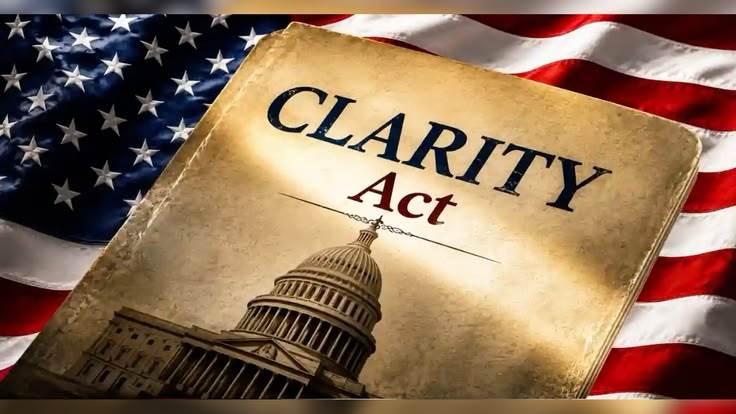
ETH After more than a year of bipartisan negotiations, the CLARITY bill faces a critical test
After more than a year of intensive cross-party negotiations, an important piece of financial legislation will face its final test on Tuesday. Senator Cynthia Lummis, chairman of the Agriculture Committee, John Boozman, and chairman of the Banking Committee, released the final text of the CLARITY Act on September 10. A closing debate vote on the bill is scheduled for September 15, and at least 60 votes are needed to pass the process.
Senator Loomis issued an announcement on social media X: "After a year of intensive and daily bipartisan negotiations, this bill is ready." She wrote.
Ethics provisions become focus
According to an official press release, the final text incorporated 126 substantive changes made at the request of the Democratic Party. The most significant addition is the integration of the entire spirit of Tillis-Gallego ethics proposal. This provision gives state attorneys general a substantive role in the law enforcement process.
President Trump has voluntarily agreed to accept the moral restrictions that apply to all federal elected officials, judges and their spouses. Senator Loomis described the rules as one of the strictest moral constraints in American history.
The press release also noted that the bill grants new powers to the Treasury Secretary to prevent the outflow of deposits associated with payment stablecoins, thereby protecting community banks, farmers and small businesses. In addition, other provisions exempt developers from currency transfer registration requirements and establish a civil safe harbor mechanism.
Broad gathering of industry support
The press release confirms that the CLARITY Act has received support from major financial institutions including BlackRock, Fidelity, Franklin Templeton, Goldman Sachs, Charles Schwab and SoFi. Law enforcement organizations also turned to support the bill.
Both the National Sheriffs Association and the Majority County Sheriffs Association recently withdrew objections, citing legislation that gave law enforcement effective tools to fight crime.
Tuesday's vote and stakes
Republicans currently control 53 seats in the Senate. For the adjournment motion to succeed, at least seven Democrats need to vote in favor. Congressional journalist Steven Dennis said between seven and 10 Democrats would support the legislation.
Loomis believes that voting no will hinder ethical reform, cede leadership in digital assets to foreign competitors, and deprive Americans of market protection. "Democrats got what they wanted; now they need to accept 'yes' as an answer," she noted.
Chairman Scott reinforced this view: "After more than a year of bipartisan negotiations and more than 100 changes requested by Democrats, it is time for the Senate to push this strong bipartisan bill."
Senate Minority Leader Chuck Schumer called the Democratic caucus on Sunday night to unify the party's positions before the vote. If the closing debate is passed, the Senate will enter the formal debate stage, followed by amendment discussion and final vote. Loomis had previously warned that if Tuesday's vote failed, the next opportunity could be postponed until 2030.