Exchange Ranking
 Top Exchanges
 24h Volume Ranking
 Popularity Ranking
 Exchange BTC Balance
 Proof of Reserves
 Decentralized Exchanges
 Funding Rate
 Funding Heatmap
 Liquidation Data
 Max Pain
 Long/Short Ratio
 Whale L/S Ratio
 Binance/Okex/Huobi L/S
 Bitfinex Margin L/S
 ETF Tracker
 Solana ETF
 XRP ETF
 Hong Kong ETF
 Bitcoin Treasuries
 Crypto Reversal
 Ethereum Reserves
 HyperLiquid Wallet Analysis
 Hyperliquid Whale Watch
 Large Transactions
 On-chain Movement
 Bitcoin ROI
 Stablecoin Market Cap
 Options Analysis
 News
News Articles
 Economic Calendar
 Features
 Wallet
 Contract Calculator


 Security
 Collections
 Watchlist
 Following
Most Americans still don't understand stablecoin, but bank-grade guarantees can significantly increase acceptance
Although most Americans are not familiar with the concept of stablecoin, most people would like to use it if it could provide security similar to a bank account. This was the main finding of Visa in its "2026 Fund Flow Trend Report" released on Wednesday.
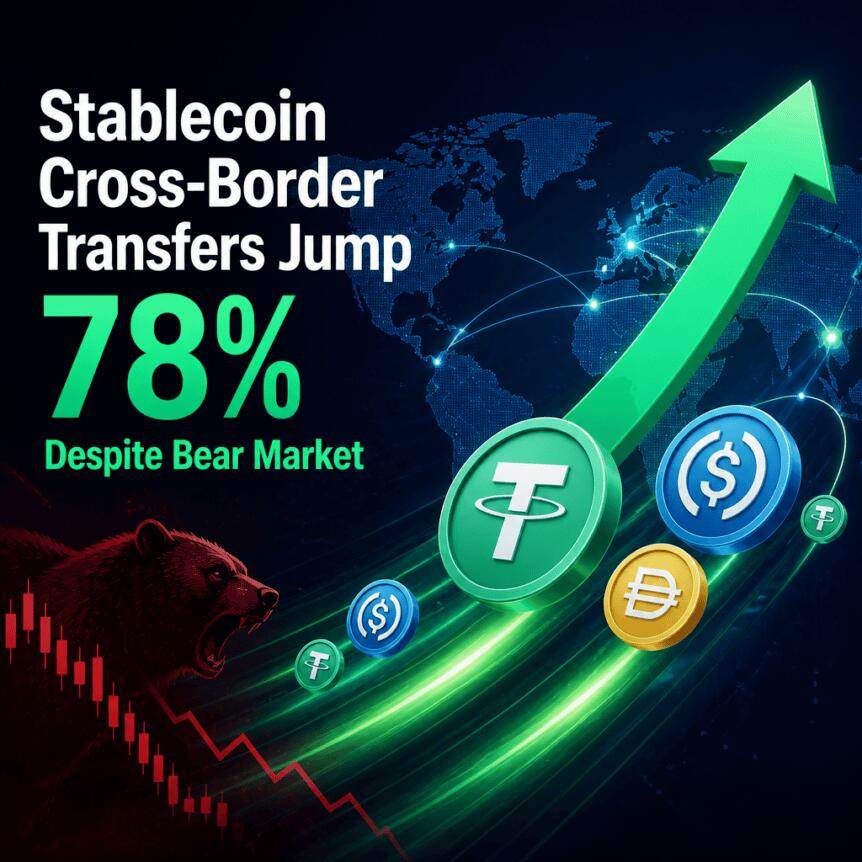
Visa pointed out that in a hypothetical scenario, if stablecoins have bank-level fraud protection mechanisms and deposit insurance, the proportion of Americans willing to use them for cross-border transfers will jump from 36% to 56%. A stablecoin is a cryptocurrency pegged to a stable asset, usually the U.S. dollar, designed to avoid bitcoin-style sharp price swings. However, stablecoins do not currently enjoy insurance coverage from the Federal Deposit Insurance Corporation (FDIC), and Visa also emphasized that the hypothetical scenarios it proposes do not mean that such protection already exists or is about to be introduced.
Cognitive impairment and lack of trust are major challenges
Familiarity remains a greater obstacle. About 56% of U.S. respondents have never heard of stablecoins, and many people familiar with the concept mistakenly believe that their prices will fluctuate as much as Bitcoin. In addition, the importance of issuing institutions cannot be ignored. When stablecoins are provided through existing financial institutions, users 'willingness rises to 45%. About 60% of Americans said they more trust traditional banks (61%) or global payment networks (60%) to provide digital currency services, and Visa is one of the latter.
Global trends coexist with security risks
This trend is equally significant outside the United States. In Latin America, willingness to use when safe has doubled from 34% to 74%. The survey was conducted by Morning Consult from February 24 to March 2 and interviewed a total of 45,445 people in 20 markets, including 2,192 U.S. adults.
Visa also pointed out that the risk of fraud is becoming increasingly serious. 36% of U.S. remittance respondents said they had experienced cross-border payment fraud, and 44% were concerned that artificial intelligence deep counterfeiting technology could be used to impersonate family members.
"Our research shows that for people who rely on these payment channels, the most important thing is trust." said Vira Platonova, global head of Visa Direct.
Accelerated deployment of industry infrastructure
Visa has been building the infrastructure of stablecoin for years. Its stablecoin settlement volume has reached an annualized scale of more than US$20 billion, a significant increase from the annualized US$3.5 billion when USDC settlement in the U.S. market began on the Solana chain in December last year. In August this year, Visa Direct added stablecoin payout functionality through Zerohash.
Wall Street is also paying close attention to this area. This month, BlackRock pushed its forecast for the market value of stablecoins to more than $300 billion, noting that adjusted trading volume last year exceeded $11 trillion. The asset management company believes that as the overall ecosystem of cryptocurrencies develops, AI agents will become the main driving force for the next wave of stablecoins adoption.