Exchange Ranking
 Top Exchanges
 24h Volume Ranking
 Popularity Ranking
 Exchange BTC Balance
 Proof of Reserves
 Decentralized Exchanges
 Funding Rate
 Funding Heatmap
 Liquidation Data
 Max Pain
 Long/Short Ratio
 Whale L/S Ratio
 Binance/Okex/Huobi L/S
 Bitfinex Margin L/S
 ETF Tracker
 Solana ETF
 XRP ETF
 Hong Kong ETF
 Bitcoin Treasuries
 Crypto Reversal
 Ethereum Reserves
 HyperLiquid Wallet Analysis
 Hyperliquid Whale Watch
 Large Transactions
 On-chain Movement
 Bitcoin ROI
 Stablecoin Market Cap
 Options Analysis
 News
 Articles
 Economic Calendar
 Features
 Wallet
 Contract Calculator


 Security
 Collections
 Watchlist
 Following
 BTC
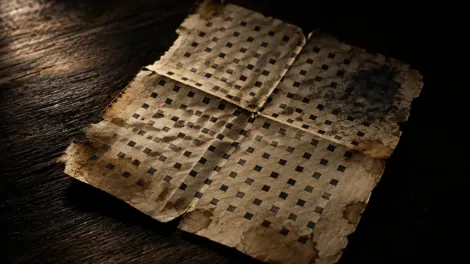
What is a paper wallet: A non-functional print key is misleading to the name
. A "wallet" in the usual sense is a program that manages keys, knows balances, and constructs transaction transfers. Paper wallets cannot do this. It contains just two strings of characters: one is the address to which others can send bitcoins, and the other is the private key to which those bitcoins can be spent again. Usually these two will also appear on paper in the form of QR codes, so that manual entry is not necessary.
The private key is essentially a very large random number. Anyone who knows the private key can dispose of Bitcoin at the corresponding address without a password, account, or further inquiry. Because of this, the core issue with this storage method boils down to: how the key is generated and who has seen it in the process.
Differences betweenand mnemonic words
A mnemonic word is a sequence of twelve or twenty-four words from which the wallet derives any number of keys needed, not just one. The standard behind it is called BIP-39, and the derivation process itself is called BIP-32. You will need to copy these words manually, without involving a printer, and your wallet will generate a new address for each incoming payment. This distinction may sound technical, but it explains almost everything mentioned below.
Why were paper wallets popular between 2011 and 2016
In those years, there were no widely available hardware devices on the market and no established standard word lists. Anyone who wants to store coins for a long time can only choose between a computer program file connected to the network and a printout placed in a safe. Printed copies seem to be the "lesser evil", but websites that generate such key pairs in browsers make it convenient.
There is also a physical variant: a metal coin with a hologram sticker with a private key stuck underneath it. The BIP-38 standard was created in 2012 for this purpose. It uses a password to encrypt private keys so that if someone picks up the printing paper, the assets in it will not be immediately obtained. However, the standard states in its official commentary line that there is unanimous opposition to implementing the standard, which greatly reflects the path the industry has traveled since then.
Printing links as weaknesses: caching jobs, network and shared devices
To print the key pair on paper, it must go through a printer. Many office machines have built-in hard drives and store each print job file there. A person who later reads the device will discover the key in plaintext state. Machines in offices, schools or copy shops also record jobs centrally, and if the wireless network is not properly protected, jobs are transmitted unencrypted over the air.
This vulnerability cannot be eliminated by configuration, it is an inherent flaw in the method. Mnemonic words avoid this problem entirely, because words appear on the equipment that generates them and are transferred from there to paper or metal by hand. Guidelines for safely storing mnemonics are detailed in our relevant guidelines.
One key, one address: address reuse and blockchain traces
Paper wallets have only one address. Anyone who uses the address multiple times will collect all payments in one place, and since every transfer exists publicly in the blockchain, any observer can read all positions and complete payment history on the address. In modern wallets, each incoming payment gets a new address, making it significantly less likely that outsiders will establish connections between payments.
There is also a practical problem that is often ignored: the paper itself does not know whether funds will arrive. To check the balance, you must use a blockchain browser (i.e., an external service) to query the address, which means that the external service remembers who is interested in which address.
This is the place where owners most often lose funds. Bitcoin transfers always cost the entire amount present at the address and send the unwanted portion as change to the new address. This change address belongs to the software used to build the transfer, not a paper wallet.
Therefore, anyone who imports a key into a wallet, sends part of the amount, and then assumes that the remaining funds are still on paper is wrong. The remaining funds are actually in the software. If the software is lost and the paper wallet is kept as a so-called backup, the change funds will no longer be accessible.
Import and Sweeping are two different things
When importing, the wallet takes over the external key and processes it with the keys it manages. But the key is still isolated and not protected by the wallet mnemonic. If the paper is later destroyed and the wallet is later recovered from the words, the user will no longer have the imported key. In contrast, in a collection operation, the wallet transfers the entire amount in the old key to the new address belonging to its mnemonic. After that, the paper became worthless, and that was the purpose of collection.
Misinterpretation of characters, water damage and QR codes: Paper documents have weak error correction capabilities
Private keys are usually printed in small fonts. In many fonts, the upper case letter B and the number 8, the number 1 and the lower case letter L look almost identical, and a single character reading error can invalidate the key. The format includes checksums to report errors, but there is no tool to correct them for ordinary users.
QR codes also do not have this kind of fault tolerance. The patterns tolerate small amounts of stains, but water immersion, severe creases and folds can make them unreadable. In this regard, word lists are more inclusive: even in sloppy handwriting, words are still clearly recognizable, and the list is selected so that the first four letters can uniquely identify a word.
The third point concerns the format itself. Whether the wallet understands the old key depends on the notation it is printed. There have been cases where funds have been temporarily trapped due to format changes. Differences in manufacturer processing standards are demonstrated in our article on "Using Different Manufacturers to Recover Mnemonics."
BIP-38 and password encryption: standards that even developers recommend avoiding
BIP-38 试图解决纸质钱包最大的弱点。私钥通过口令加密,并以 58 个字符的字符串形式打印,受一种使暴力攻击成本高昂的程序保护。任何人如果没有口令,捡到纸张也无法利用其中的资产。
代价是第二个秘密,它可能像第一个秘密一样容易丢失,并且依赖于仍能处理该格式的软件。BIP-38 规范在其注释标题中指出,实施该规范受到一致反对。技术社区很难更明确地埋葬自己制定的程序。
归集而非导入:安全清理现有的纸质钱包
如果你的抽屉里还有打印纸,最干净的方法是将其全部金额移入现代钱包,并将纸张视为已完成使命。为此,你需要一个支持归集的钱包,并保持冷静。
- 在拿起旧密钥之前,先完全设置好目标钱包并备份其助记词。哪些程序适合此目的,请参阅我们的软件钱包比较。
- 在区块链浏览器中查看旧地址的持仓,以便你知道需要转入多少金额。
- 在新钱包中,明确选择“归集”功能,而不是“导入”功能,并输入纸张上的私钥。
- 等待转账确认,并确保旧地址随后为空,且金额(扣除网络费用后)进入新钱包。
- 只有在核对无误后,才销毁纸张。只要旧地址上仍有资金,纸张就是唯一的入口。
重要的是输入密钥的位置。切勿在别人的电脑上输入,也切勿在提供为你构建转账的网站输入。从输入的那一刻起,该设备就知道了密钥,因此该地址被视为永久燃烧(不可再用)。
助记词与硬件钱包:今日纸质存储的替代方案
纸质钱包原本承担的工作,如今由两个构建块处理。硬件设备生成并保存密钥,永不释放它们,并在设备本身签署转账。助记词作为设备损坏、丢失或更换时的备份。两者共同确保密钥远离每台打印机和每个浏览器。
手机上的永久连接钱包与分离式存储之间的区别依然存在,对于选择而言,品牌的重要性远不如存储方式。这两种形式的差异在我们关于热钱包和冷钱包的文章中已有剖析。欧洲市场上有哪些设备及其价格,请参阅我们的硬件钱包比较。
德国的税务与举证:清理旧纸质钱包时的适用规则
Collection is not sales. You moved funds between two addresses that were both yours, without change in ownership. Calculated based on the holding period under Section 23 of the Income Tax Act, what remains valid is the date you first received the coin, not the date of the transfer. Taxes are incurred only when sold within one year of the acquisition, and are exempt from taxation if the total proceeds from all private disposal transactions in the calendar year are less than € 1,000.
What is more difficult to deal with than the legal position is the proof of old positions. Few people who printed paper in 2014 still kept purchase receipts. Therefore, collect all evidence that supports the acquisition date: the time of the first payment from the browser, old bank statements, confirmation emails from the day's exchange. Tools for persistently recording such positions can be found in our comparison of cryptocurrency tax tools and portfolio trackers. This section is not a substitute for tax advice. For old positions with huge gains, it is worthwhile to consult an expert.
Even if a printed document appears, what to do with
This form has not completely disappeared. Some cryptocurrency ATMs print receipts with keys for customers who do not have their own wallets, while metal coins with hologram keys are still in circulation at trade shows or as gifts. In these cases, the same rule applies: a receipt is a means of transportation, not a means of storage. The person receiving the receipt should immediately transfer the amount into his wallet.
The second situation is inheritance and house cleanup. If such paper appears, it is worth checking in a browser before throwing it into the wastebasket. The reverse is true: if a piece of paper has an empty address, even if it once had value, it has no value now.
Paper wallet: The current steps
Check the position and prepare the destination
Check in the browser whether there are still funds on the address and set up a new wallet in advance. For candidates, please refer to our software wallet comparison.
Transfer the entire amount to an address in your new wallet by collecting and clearing
and destroy the paper after verification. For larger amounts, the key should be placed on a separate device, as shown in the hardware wallet comparison.
Record the acquisition information
Record the date, number of coins, and origin while receipts can be collected. For related tools, please refer to Comparison of Cryptocurrency Tax Tools.
(As of October 4, 2026. This article does not constitute investment advice. Price and fee structures are subject to change; please check terms with your provider before purchasing.)