Exchange Ranking
 Top Exchanges
 24h Volume Ranking
 Popularity Ranking
 Exchange BTC Balance
 Proof of Reserves
 Decentralized Exchanges
 Funding Rate
 Funding Heatmap
 Liquidation Data
 Max Pain
 Long/Short Ratio
 Whale L/S Ratio
 Binance/Okex/Huobi L/S
 Bitfinex Margin L/S
 ETF Tracker
 Solana ETF
 XRP ETF
 Hong Kong ETF
 Bitcoin Treasuries
 Crypto Reversal
 Ethereum Reserves
 HyperLiquid Wallet Analysis
 Hyperliquid Whale Watch
 Large Transactions
 On-chain Movement
 Bitcoin ROI
 Stablecoin Market Cap
 Options Analysis
 News
 Articles
 Economic Calendar
 Features
 Wallet
 Contract Calculator


 Security
 Collections
 Watchlist
 Following
 ESPORTS
 FF
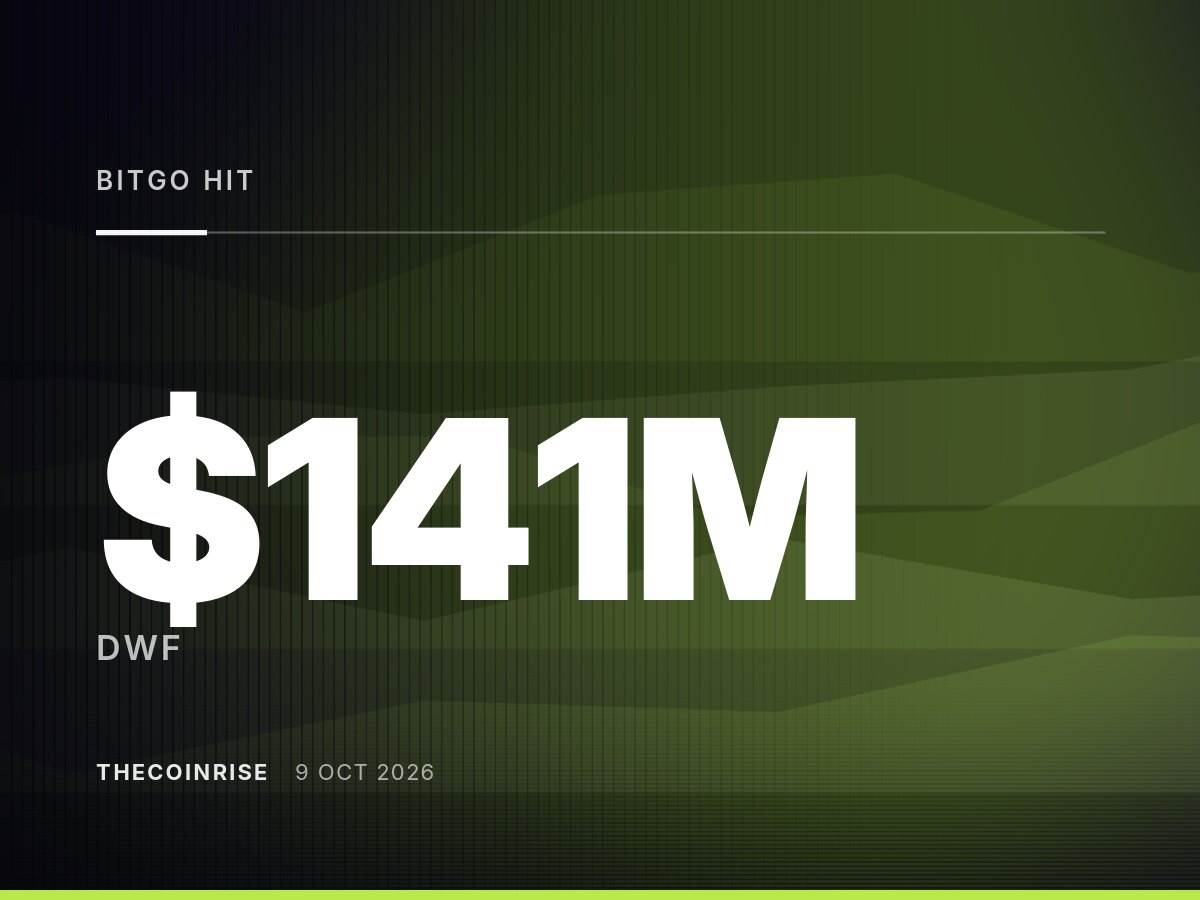
Two companies associated with DWG Labs sued BitGo for US$141 million
Recently, two companies associated with DWG Labs filed a lawsuit in London, accusing the cryptocurrency custodian service provider BitGo of violating the agreement by selling restricted tokens before the agreed lock-in period, causing the plaintiff to suffer significant losses. The plaintiffs seek $141 million in damages.
Core dispute in the lawsuit: Illegal early selling of tokens
According to reports, the plaintiff accused BitGo of selling Falcon Finance (FF) and ESPORTS tokens without authorization before the expiration of the contractual trading restriction period for them. Allegedly, the relevant agreement stipulated an initial lock-up period of three months, followed by further token vesting conditions that limited the time the tokens could be traded. The plaintiff argued that BitGo's early sell-off violated the terms of the purchase agreement, causing the token price to fall and reducing the value of its remaining positions.
The Financial Times reported on October 9 that DWG Maas and Falcon Digital filed a lawsuit in the High Court of London, accusing BitGo of violating a private token sale agreement involving Falcon Finance (FF) and ESPORTS tokens. Previously, Law360 made a preliminary report on the legal action on October 2. As of press time, BitGo declined to comment on the allegations, which have not yet been found to be facts by the court.
Background of the controversy: OTC trading and lockdown agreements
The core of the dispute involves over-the-counter (OTC) transactions involving cryptocurrency tokens that are sold under contractual trading restrictions. DWG Maas and Falcon Digital claim that BitGo acquired the assets after agreeing to a specific lock-up period. These agreements reportedly involve discounted token transaction structures where buyers receive assets under negotiated terms but may be prohibited from immediately reselling.
The plaintiffs argued that BitGo failed to comply with restrictions on when acquired tokens could enter the market. These two digital assets are Falcon Finance's FF token and ESPORTS token respectively. The plaintiffs maintained that the so-called early sell-off increased the number of tokens that could be traded on the market before the agreed release date.
It should be noted that the compensation sought by DWG Maas and Falcon Digital is based on the losses they believe have suffered as a result of BitGo's actions. However, the reported $141 million was for damages claimed by the plaintiffs, rather than a court-ordered payment or an independently determined alleged loss valuation. Publicly available reports do not establish the exact quantities sold, the selling price BitGo received, or the exact date of each disputed transaction. These details are crucial to comparing the suspected trading activity to the contractual release schedule.
Why claim US$141 million?
According to the plaintiffs, the alleged default affected their remaining token holdings because a large sell-off before the scheduled date would put downward pressure on market prices. The company argued that the restrictions were part of the original over-the-counter trading arrangements and that its violations caused financial losses. Although the full damages calculation has not been independently verified, the compensation they requested was based on their determination of the losses caused by BitGo's actions.
Lockout agreements generally prevent the buyer from selling or transferring specified assets during the contract term. Attribution conditions can be extended by releasing purchased tokens in batches as planned. In the disputed transaction, the plaintiff claimed that the initial restrictions and subsequent attribution requirements constituted BitGo's contractual obligations. Courts need to review agreements and suspected transactions to determine whether any breach occurred.
The case has drawn attention to private token transactions by companies involved in cryptocurrency market-making. Founded in 2022, DWG Labs engages in digital asset trading and investment, while its affiliates participate in transactions involving token issuers and other market participants.
Although the Financial Times identified the parties and assets involved, no publicly verifiable blockchain evidence of establishing specific BitGo sales emerged in the material reviewed for this report. Therefore, the available information does not determine whether the alleged transaction resulted in the alleged price loss.
ESPORTS tokens have previously suffered heavy sell-off
该诉讼涉及一种在2026年初经历巨大抛压的资产。5月份,ESPORTS价格在约两小时内暴跌超过90%,这与涉及项目关联钱包的大量代币转移有关。当时发布的链上分析显示,约有1.78亿个ESPORTS代币转入价值约1276万美元的交易活动中。部分转移涉及与DWF Labs有关的地址,包括通过Kraken进行的转账。
早前的报告显示,在崩盘之前,约有1990万个ESPORTS代币(当时价值1390万美元)已转移到与DWF相关的Kraken地址。然而,链上运动并没有确立每个转移的代币都已售出,也没有确定BitGo是负责这些交易的当事方。
5月份的抛售活动尚未与伦敦诉讼中争议的 transaction 建立独立联系。无论是《金融时报》的报道还是公共可访问的Law360摘要,都未确立早期的ESPORTS崩盘是由涉嫌的合同违约造成的。
Falcon Finance此前一直与DWF Labs保持业务联系。2025年7月,该项目联合创始人Andrei Grachev表示,作为资产管理安排变更的一部分,Falcon已从中心化交易所撤出资金。Grachev表示,团队已获得独立审计师关于这些提款的证明。该公告涉及Falcon的托管安排,并未解决后来对BitGo的指控。
BitGo面临其他法律案件
The London lawsuit is not BitGo's only ongoing legal dispute. The U.S. -based digital asset company has been involved in litigation with Galaxy Digital over a $1.2 billion acquisition agreement they abandoned, which the company originally announced in 2021.
In May 2026, Galaxy founder Mike Novogratz appeared in Delaware Chancery Court to hear proceedings related to the failed transaction. BitGo is seeking at least $100 million in compensation for Galaxy's decision to end its acquisition in August 2022. The court dispute between BitGo and Galaxy Digital centers on contractual obligations involving financial reporting and accounting requirements. Galaxy dismissed BitGo's claim, insisting that it had the right to terminate the transaction under their agreement.
BitGo's quarterly filing with the U.S. Securities and Exchange Commission confirmed that the trial took place from May 18 to May 22, 2026. At the time of the filing, the company was awaiting a court ruling. The same document discloses another shareholder lawsuit filed in June 2026 in the U.S. District Court for the Eastern District of New York. The case is called Jacques Arsenault v. BitGo Holdings, Inc., et al.,Involves suspected securities law violations related to BitGo's January 2026 initial public offering (IPO) and statements made during the period specified in the complaint.
The shareholder plaintiff seeks unspecified damages, legal fees and other expenses. BitGo disclosed that the deadline for motions to appoint the lead plaintiff is August 7, and further proceedings are expected with the appointment of the lead counsel. In the new London case, as of October 9, no public court ruling establishing liability had been found. The subsequent substantive procedural development will depend on BitGo's formal response and the court's handling of the contract dispute. Among the reports reviewed, no verified hearing dates or deadlines were provided for BitGo's defense.