Exchange Ranking
 Top Exchanges
 24h Volume Ranking
 Popularity Ranking
 Exchange BTC Balance
 Proof of Reserves
 Decentralized Exchanges
 Funding Rate
 Funding Heatmap
 Liquidation Data
 Max Pain
 Long/Short Ratio
 Whale L/S Ratio
 Binance/Okex/Huobi L/S
 Bitfinex Margin L/S
 ETF Tracker
 Solana ETF
 XRP ETF
 Hong Kong ETF
 Bitcoin Treasuries
 Crypto Reversal
 Ethereum Reserves
 HyperLiquid Wallet Analysis
 Hyperliquid Whale Watch
 Large Transactions
 On-chain Movement
 Bitcoin ROI
 Stablecoin Market Cap
 Options Analysis
 News
News Articles
 Economic Calendar
 Features
 Wallet
 Contract Calculator


 Security
 Collections
 Watchlist
 Following
 SOL
SOL Solana validators have approved a major adjustment to the Internet token supply schedule, voting to double the agreement's annual deflation rate. This decision is expected to slow the pace of future SOL issuance while retaining Solana's long-term inflation target.
The final results released by the Solana Governance Portal showed that proposal SGP-0002, called "Double Deflation", received 67% support, 25.16% votes against, and 7.84% abstentions. According to final statistics, the proportion of participating in voting reached 60.7% of the qualified pledge amount.
Core Points
SGP-0002 was passed with 67% support despite clear opposition and a considerable proportion of abstentions.
The annual deflation rate will increase from 15% to 30%, while the terminal inflation target will remain at 1.5%.
Solana is expected to hit inflation of 1.5% sooner-approximately 2.8 years, compared with the previous timetable of approximately 5.7 years.
Lower issuance means that the dilution effect for SOL holders may be reduced, but pledge rewards for principals and verifiers may also be reduced.
Large participants had different opinions, with some major voting camps changing their positions or seriously diverging their views.
Governance vote changes to Solana
SGP-0002 updates Solana's deflation mechanism, increasing the annual deflation rate from 15% to 30%. Importantly, the proposal does not change Solana's long-term inflation target, which remains at 1.5%-which means the network will still converge to the same final rate, but on a faster timetable.
Based on analysis, the revised timetable is expected to allow Solana to reach terminal inflation of 1.5% in approximately 2.8 years, compared with a previous estimate of approximately 5.7 years at the rate of deflation.
The same analysis estimates that the new policy will reduce the circulation of SOL by approximately 18.9 million over the next six years. This reduction is the core trade-off of "double deflation": the token dilution effect may be reduced in the long run, but it will also reduce the inflationary incentives that drive pledge returns.
Data behind the approval: Voter turnout and opposition
The final result not only reflects a clear majority in favor, but also shows a sizable minority in opposition. According to governance statistics, 25.16% of votes pledged opposed the measure, and 7.84% abstained. The total participation rate is 60.7% of the eligible pledge amount, which will help determine the final result.
This decision is part of Solana's first binding governance process. At the same time as SGP-0002, the validators approved a proposed Solana constitution and rejected another proposal related to resources and included fees. As a result, supply rate voting is part of a broader governance package rather than an independent change.
Large voters are divided-one significant shift in positions
Although the final result favors approval, some of the largest governance players are not united. According to analysis, the main participants have differences on SGP-0002. Figment--shown as the largest voter in final governance data, pledging 17.1 million SOL--voted all against the measure.
Other large players hold the opposite view. For example, Helius and Jupiter overwhelmingly supported the proposal.
Kraken's voting behavior has also attracted attention. Kraken's position reportedly shifted during the voting. The U.S. exchange initially voted against SGP-0002 at 12:33 UTC, temporarily lowering support below the required threshold. At the close of the vote, more than 90% of Kraken's approximately 8.9 million SOL votes pledged supported the proposal.
This late-stage stance adjustment is important in a binding governance system because threshold conditions make results susceptible to the final preferences of large holders.
What a faster 1.5% inflation rate means for SOL holders
From an investor and network economics perspective, the key impact of double deflation is the speed at which Solana inflation falls towards the final target of 1.5%. A faster decline generally reduces the number of new tokens that continue to enter the market, thereby reducing dilution pressure on long-term SOL holders.
However, this vote also marks a shift in the balance between supply controls and pledge incentives. Since deflation determines the speed at which new SOL decreases, adopting a higher deflation timetable may mean that inflation-driven rewards will decrease over time. This means principals and validators may face a less generous reward environment than previous schedules.
In other words, SGP-0002 tightens the issuance curve while keeping terminal goals unchanged-changing the timing of rewards and token issuance rather than eliminating them completely.
Governance decisions go hand in hand with ETF momentum
Solana's governance vote also comes at a time when the market continues to focus on US-listed SOL-related products, despite SOL's weak performance earlier this year.
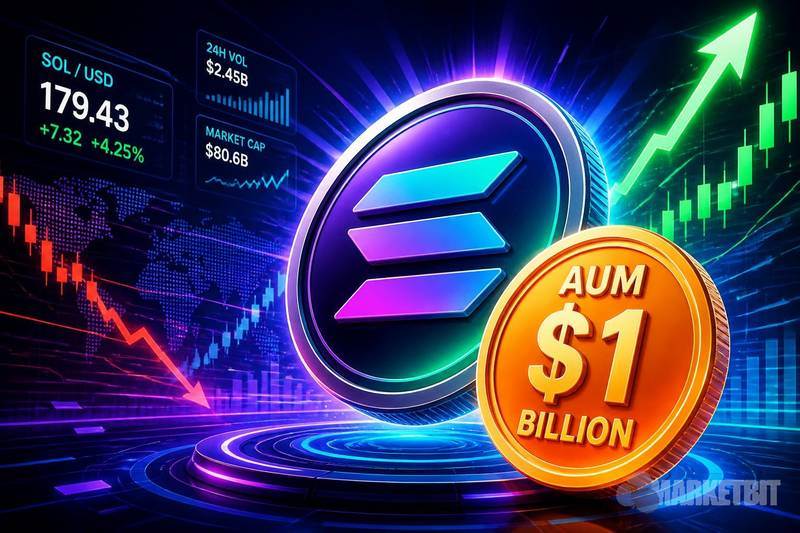
According to reports, Bitwise's Solana ETF assets have exceeded US$1 billion, becoming the first Solana ETF to reach this milestone. In addition, the cumulative net inflow of the Solana ETF in the United States since its launch is approximately US$1.7 billion, with almost no sustained outflow.
While governance changes and ETF flows are not directly linked, this juxtaposition highlights a broader theme: Solana is simultaneously adjusting its long-term supply mechanism and continuing to attract investor money through regulated investment channels.
Next, SOL stakeholders should focus on how the new timetable translates into a pledge economy, and whether major validators and large principals will adjust their strategies in response. On the market side, the key question is whether ETF-driven demand can offset reward expectations that may change due to lower future issuance.