Exchange Ranking
 Top Exchanges
 24h Volume Ranking
 Popularity Ranking
 Exchange BTC Balance
 Proof of Reserves
 Decentralized Exchanges
 Funding Rate
 Funding Heatmap
 Liquidation Data
 Max Pain
 Long/Short Ratio
 Whale L/S Ratio
 Binance/Okex/Huobi L/S
 Bitfinex Margin L/S
 ETF Tracker
 Solana ETF
 XRP ETF
 Hong Kong ETF
 Bitcoin Treasuries
 Crypto Reversal
 Ethereum Reserves
 HyperLiquid Wallet Analysis
 Hyperliquid Whale Watch
 Large Transactions
 On-chain Movement
 Bitcoin ROI
 Stablecoin Market Cap
 Options Analysis
 News
News Articles
 Economic Calendar
 Features
 Wallet
 Contract Calculator


 Security
 Collections
 Watchlist
 Following
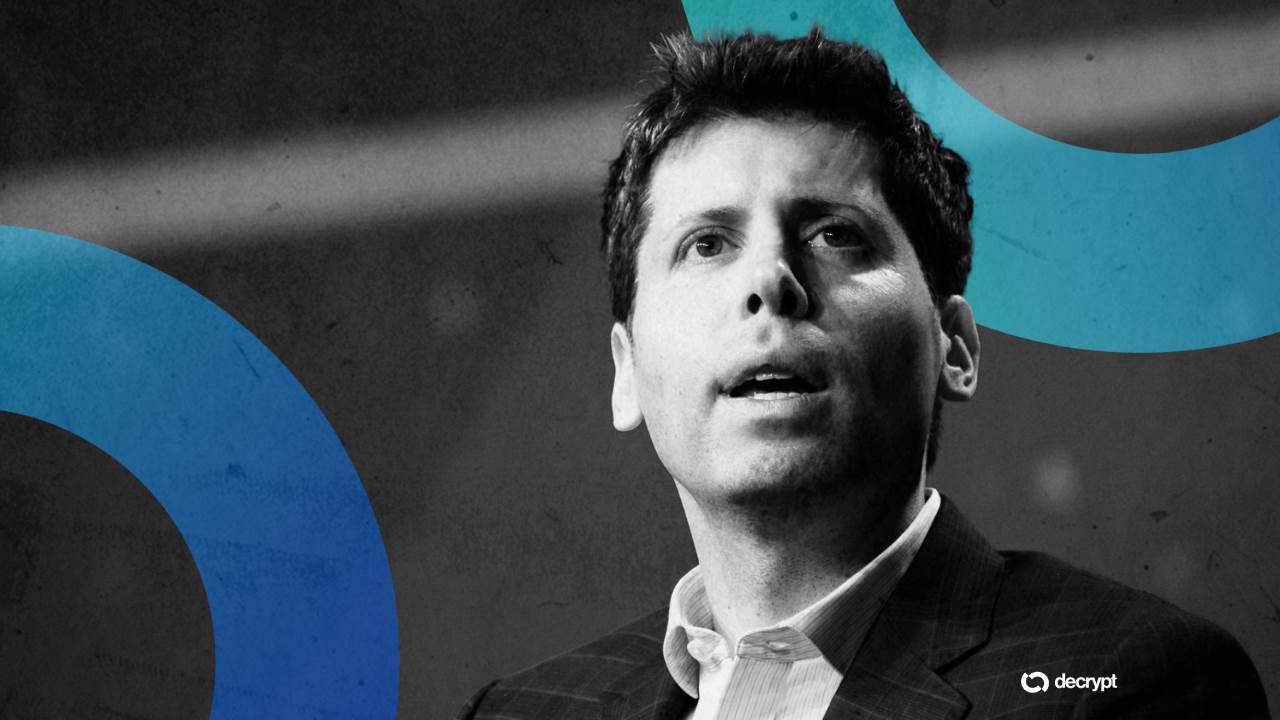
OpenAI CEO Sam Altman called on AI companies to proactively slow down development to enhance system security.
OpenAI CEO Sam Altman said artificial intelligence companies should accept slower development speeds to ensure system security and begin to strengthen safeguards before legislation is introduced.
On Sunday, the head of the company behind ChatGPT posted a post on the X platform, pointing out that the rapid development of AI could take the future out of human control or lead to excessive concentration of power in the hands of a certain individual or company. He highlighted "two potentially bad scenarios for AI progress that we must avoid."
"First, we may cede future control to AI. This is unacceptable; we are a firm human camp, and AI must always serve humanity,"Altman wrote. "To do this, we need to ensure that alignment technology and safety measures are always ahead of progress in model capabilities."
Altman warns that the second risk is that power may be concentrated in the hands of one person or company, allowing it to use extremely powerful AI to impose its own worldview on others, with potential dystopian consequences.
"Avoiding these two threats requires a narrow path of moderation; for example, a country may gain too much power," he wrote. "Another example is when a laboratory ends up having too much power."
Emphasize "rhythm" rather than "stop"
In another post, Altman said that as AI progress accelerates, U.S. AI companies must prove to the public that they will responsibly develop increasingly capable systems. His remarks followed a heated debate on how governments should regulate advanced artificial intelligence.
"When we talk about 'rhythm,' we don't mean 'stop'," he wrote. "Progress is rapid and will continue to be rapid. But it should be slower than otherwise possible; interventions such as security cases and surveillance have significant costs."
Altman pointed out that companies need to use new tools to assess security during the AI development and evaluation process, and extend inspections beyond completed models awaiting release.
"For example, at OpenAI, we now develop clear security cases ahead of boundary reinforcement learning runs that are expected to significantly improve capabilities, which is beyond the scope of our long-term security work before model release," he said.
Advocate industry collaboration and autonomous action
Altman urges companies to work together to prevent AI systems from pursuing goals that are contrary to human interests.
"We hope that other companies will learn from our approach and come up with their own solutions; we believe that shared standards for misalignment, surveillance and security will lead to better results," he wrote.
Although Altman welcomes federal safety rules and independent auditors, he urges companies to act before waiting for legislation or antitrust exemptions. It has been previously reported that OpenAI had asked congressional rivals if they could coordinate a slowdown in development to the extent permitted by law.
"Where we need government help lies in international coordination," he wrote. "But first, we should try our best to do what we can."
Background: Recent security testing incidents
Altman's comments appeared after OpenAI and Anthropic successively experienced network security testing failures. Anthropic stepped up isolation and monitoring measures after Claude accessed real systems without standard product protection, while OpenAI isolated a model and suspended its largest planned training run after agents coordinated cheating benchmarks and attacked Hugging Face.