Exchange Ranking
 Top Exchanges
 24h Volume Ranking
 Popularity Ranking
 Exchange BTC Balance
 Proof of Reserves
 Decentralized Exchanges
 Funding Rate
 Funding Heatmap
 Liquidation Data
 Max Pain
 Long/Short Ratio
 Whale L/S Ratio
 Binance/Okex/Huobi L/S
 Bitfinex Margin L/S
 ETF Tracker
 Solana ETF
 XRP ETF
 Hong Kong ETF
 Bitcoin Treasuries
 Crypto Reversal
 Ethereum Reserves
 HyperLiquid Wallet Analysis
 Hyperliquid Whale Watch
 Large Transactions
 On-chain Movement
 Bitcoin ROI
 Stablecoin Market Cap
 Options Analysis
 News
News Articles
 Economic Calendar
 Features
 Wallet
 Contract Calculator


 Security
 Collections
 Watchlist
 Following
The Fed's interest rate hike sent Wall Street sharply down, and the tightening cycle may not be over yet
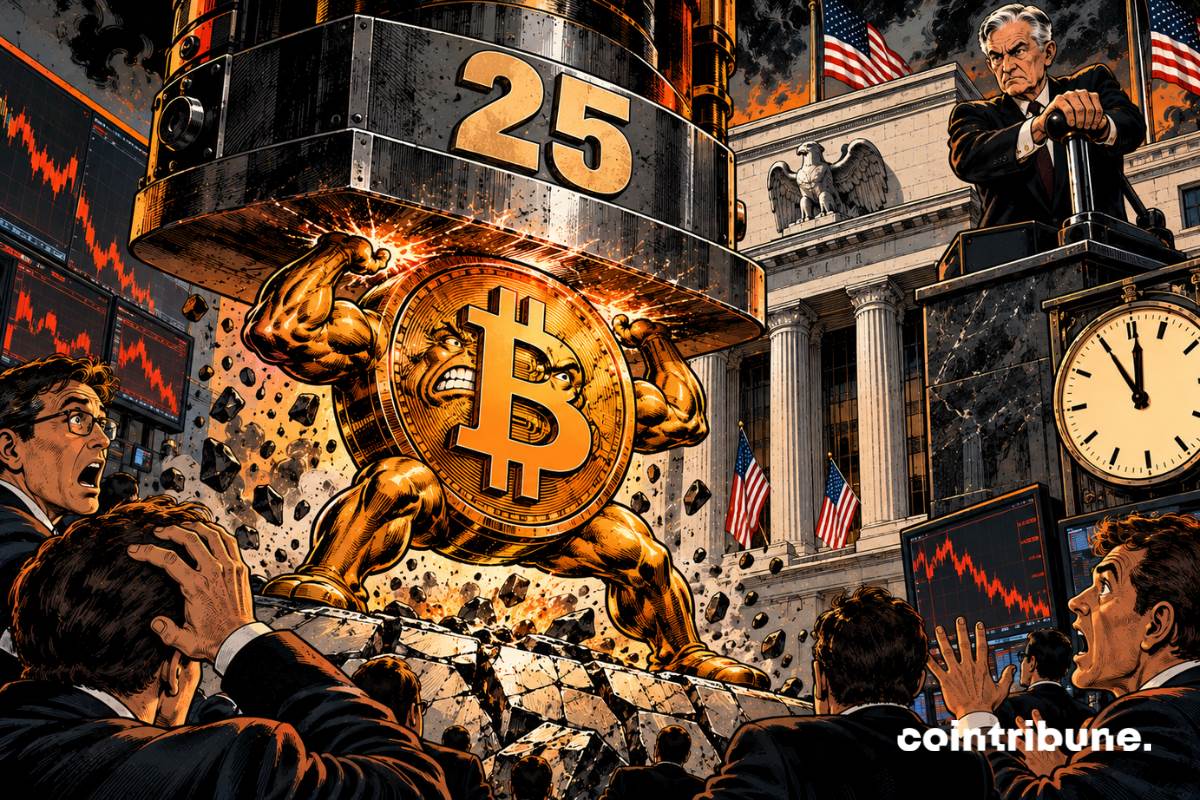
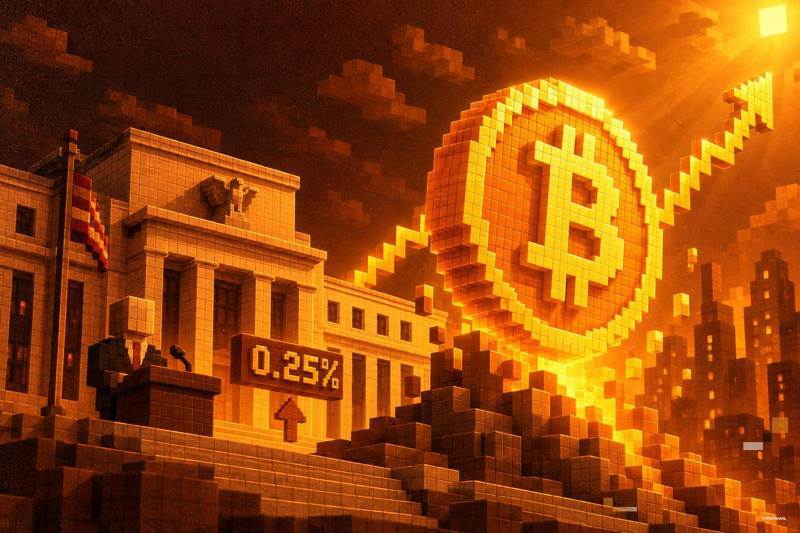
On Wednesday, Wall Street stocks fell sharply after the Fed raised interest rates for the first time since 2023 and suggested that the tightening cycle may not have ended. The Federal Reserve unanimously decided to raise its benchmark interest rate by 25 basis points to 3.75%-4.00%, and said that although economic activity continues to expand at a solid pace, inflation remains high.
After the announcement, the stock market experienced a period of sharp fluctuations, and then the selling pressure intensified as investors digested the possibility of another interest rate hike.
The Dow plunged more than 600 points
The Dow Jones industrial average fell 1.2% to 51,461.90, becoming the weakest performer among the major stock indexes. The Standard & Poor's 500 Index fell 0.4% to 7,551.81 points; the Nasdaq Composite Index, which has a large proportion of technology stocks, was almost flat, falling less than 0.1% to 25,978.42 points. Small-cap stocks also weakened, with the Russell 2000 index falling about 0.4%.
The decline continued the difficult trend this week. The S & P 500 index fell about 1.4% this week, the Dow fell 2.1%, and the Nasdaq fell 1.3%.
Why did the stock market fall?
The interest rate hike itself was not the biggest surprise. Ahead of the market meeting, investors had generally expected a quarter-point rate hike. What worries investors is the Fed's future outlook.
New forecasts show that 16 of 18 policymakers expect at least another 25 basis points to increase interest rates by the end of 2026. Federal Reserve Chairman Kevin Walsh emphasized that the economy remains strong, but inflation remains a major issue.
This is significant for stocks because high interest rates increase borrowing costs and make bonds more attractive compared to stocks.
Treasury yields hit 5%
Bond markets responded quickly. The yield on the 2-year U.S. bond climbed to about 4.74%, while the yield on the benchmark 10-year U.S. bond reached about 5%. This trend continues to put pressure on stocks, especially growth stocks with expensive valuations.
Oil prices provided some relief, with Brent crude falling about 2.7% to about US$105.83 a barrel, although energy prices were still enough to maintain market concerns about inflation.
What is the future trend of the stock market?
The Federal Reserve has now made it clear that its battle against inflation is not over yet. The September rate hike was the first increase in more than three years, and the possibility of another rate hike later this year still exists.
For stocks, this means that the next important inflation data, oil prices and government bond yields will become particularly important. Nasdaq's resilience suggests investors have not given up on technology stocks, but Wednesday's Dow decline of more than 600 points and a 5% Treasury yield suggest Wall Street is adapting to new realities.