Exchange Ranking
 Top Exchanges
 24h Volume Ranking
 Popularity Ranking
 Exchange BTC Balance
 Proof of Reserves
 Decentralized Exchanges
 Funding Rate
 Funding Heatmap
 Liquidation Data
 Max Pain
 Long/Short Ratio
 Whale L/S Ratio
 Binance/Okex/Huobi L/S
 Bitfinex Margin L/S
 ETF Tracker
 Solana ETF
 XRP ETF
 Hong Kong ETF
 Bitcoin Treasuries
 Crypto Reversal
 Ethereum Reserves
 HyperLiquid Wallet Analysis
 Hyperliquid Whale Watch
 Large Transactions
 On-chain Movement
 Bitcoin ROI
 Stablecoin Market Cap
 Options Analysis
 News
 Articles
 Economic Calendar
 Features
 Wallet
 Contract Calculator


 Security
 Collections
 Watchlist
 Following
 BTC
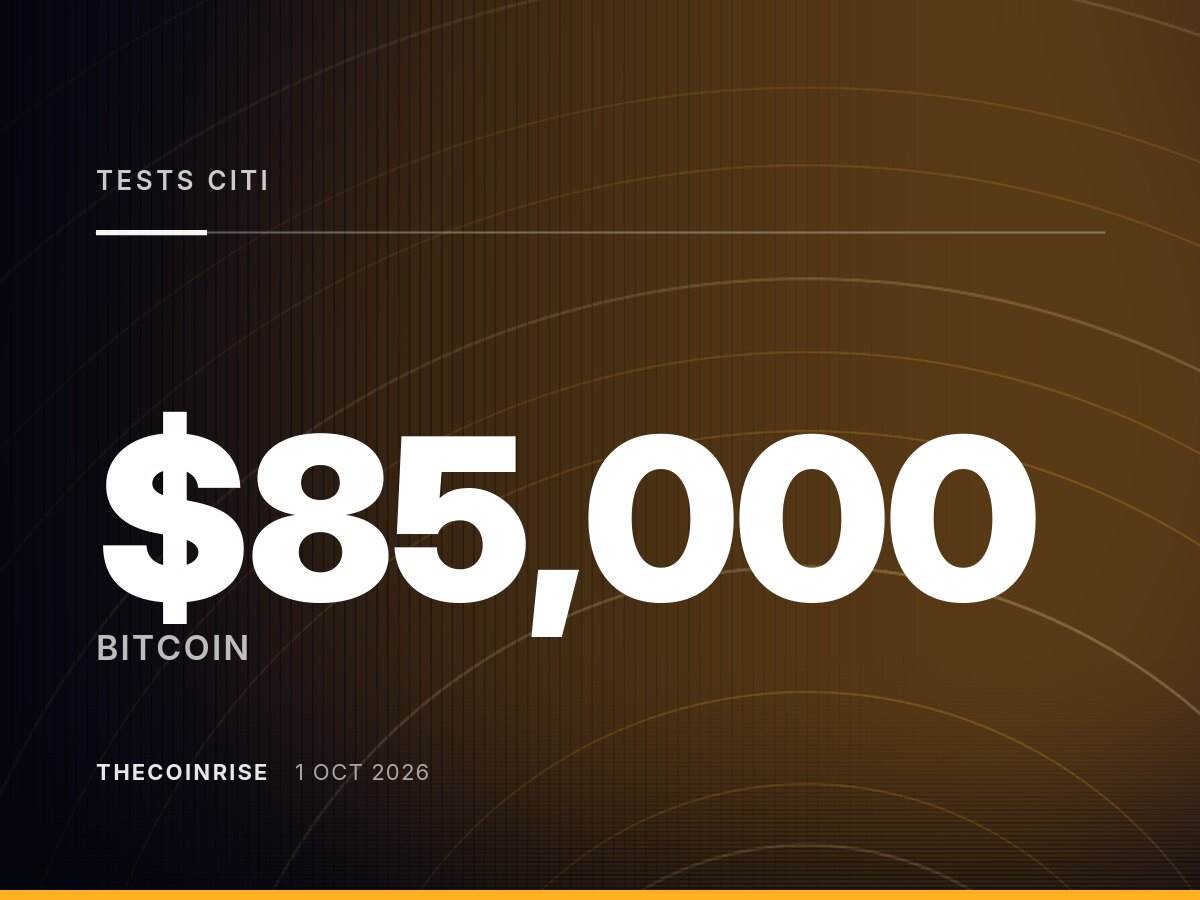
Bitcoin stabilizes above US$83,000, macro data triggers a cautious wait-and-see market
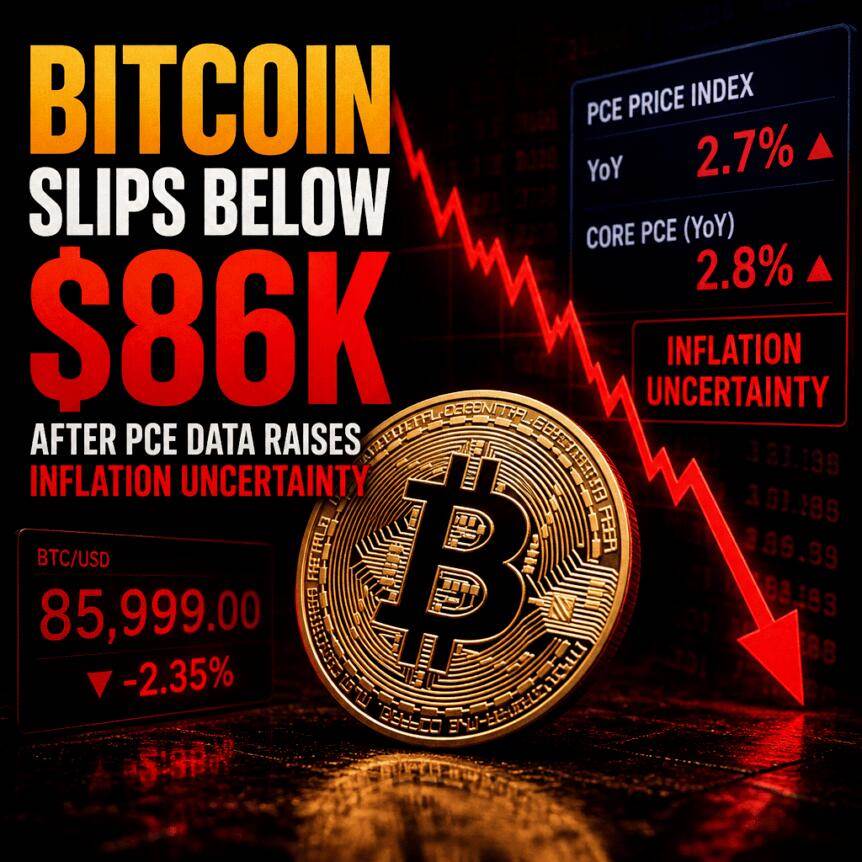
On Thursday, Bitcoin (BTC) prices broke through the US$83,000 mark, showing a correction after briefly touching US$85,600. The correction followed the release of U.S. personal consumption expenditure (PCE) inflation data, which was lower than market expectations, but due to changes in underlying measurement methods, market interpretation was uncertain.
While intraday volatility in the spot market appears moderate-Coinbase data shows that the overall BTC/USD trading pair is stable-derivatives indicators paint a more complex picture. CoinGlass data showed that new clearing-intensive areas appeared near key support levels, while Glassnode pointed out that while prices rose, Open interest contracts in bitcoin-denominated futures fell. This combination helps reduce the risks of forced deleveraging.
Summary of Core Points
- The BTC/USD price entered a range shock after rebounding from US$85,600 and regained its footing above US$83,000.
- The U.S. PCE inflation rate recorded 3.4%(year-on-year), lower than the expected 3.7%, but methodological adjustments complicated the interpretation of "core" inflation data.
- A new estimated concentration of clearing exposure of approximately US$60 million has emerged near US$83,000, which is close to the widely watched support level near US$82,500.
- Although Bitcoin has risen about 35% since its August low, open interest contracts denominated in Bitcoin have fallen nearly 20%. Glassnode said open interest is currently at its lowest level since March.
Inflation data boosted sentiment, and then markets proactively reduced exposure
At the beginning of the quarter, Bitcoin prices were around US$83,550. Previously, Bitcoin rose 42.7% in the third quarter, which CoinGlass data showed was the strongest third quarter since 2017. Historically, the fourth quarter is usually a period of strong performance for Bitcoin, but the start of this period still depends on the continuation of macro momentum.
Thursday's consolidation occurred after Wednesday's reversal. BTC/USD briefly pushed higher to US$85,600, before giving up some of the gains. The main catalyst was the release of U.S. PCE data: According to data from the U.S. Bureau of Economic Analysis (BEA), the PCE inflation rate in August was 3.4%(year-on-year), lower than the expected 3.7%.
BEA also reported that core PCE excluding food and energy rose 3.0% year-on-year. However, methodological updates related to "Portfolio Management and Investment Advice","Computer Software and Accessories" and "Legal Services" were mentioned in the same report. These adjustments are critical because they affect how "core" inflation is measured and its comparability with previous data.
Market analyst The Kobeissi Letter wrote on Platform X (formerly Twitter) that methodological adjustments alone could lead to a downgrade of core PCE inflation data by as much as 20 basis points, and that early overall and core PCE readings have been revised downward by 30 basis points.
In actual trading, traders seemed to quickly absorb the impact of the August data. The S & P 500 closed down 0.25% on Wednesday, and the Dow Jones Industrial Average fell 0.86%. At the same time, CME's FedWatch tool shows that the probability of a 25 basis point rate hike at the Federal Reserve's October meeting is about 37%, no significant change from the previous day. Markets continue to tend to keep the federal funds target rate unchanged in the 3.75%-4% range.
Liquidation liquidity is concentrated near support levels
Even if there is no sustained sell-off, the structure of derivatives positions suggests that Bitcoin's price bottom line may be tested. CoinGlass's liquidation heat map shows that potential fund clearing clusters exist both above and below current market levels.
Data on Thursday showed a new estimated concentration of clearing exposure around US$83,000, with a size of approximately US$60 million, immediately adjacent to the much-watched support band around US$82,500. Previous analysis has linked this level to a broader rebound since June lows, highlighting how technical "pegging" occurs when macro catalysts fade and market structures dominate.
The importance of these clearing clusters is not because they guarantee price movements in a specific direction, but because they amplify short-term fluctuations. If prices drift towards areas of high exposure, the forced liquidation of leveraged positions may mechanically accelerate price movements-either causing prices to fall below support and further downward, or triggering a rebound as short positions are squeezed.
Prices rose, but leverage denominated in bitcoin shrank
One of the more positive signals about bitcoin comes from the divergence between spot earnings and exposure to bitcoin denominated derivatives. Glassnode points to the difference between the price of bitcoin and open interest contracts (OIs) denominated in bitcoin-an indicator of open futures positions measured in bitcoin rather than the U.S. dollar.
Glassnode wrote on X that bitcoin prices are up about 35% from August lows, while open interest in currency-denominated contracts are down nearly 20%. In the same post, Glassnode added that this brought open interest to the lowest level since March, potentially making the rally less sensitive to "leverage flushes."
Glassnode: "Prices are up 35% from August lows, while open interest in currencies are down nearly 20%. This pushed open interest to its lowest point since March and could make the rally less susceptible to leveraged liquidations."
This is significant for traders because a decline in open interest denominated in bitcoin could mean two things: either fewer leveraged positions are established, or new increased exposure is less concentrated when denominated in bitcoin, especially as markets move higher. The result is usually a reduced frequency of cascading liquidations during normal market pullbacks-although this does not completely eliminate volatility.
与此同时,阻力动态仍然是一个关注点。之前的报道指出,85,000美元附近的卖单以及长期持有者硬币在84,000–85,000美元区间的聚集,可能会加强当前水平上方的阻力。结合停滞不前的反弹态势,该区域仍是观察买家能否在不依赖新增杠杆需求的情况下保持动能的关键区域。
随着宏观影响力减弱,接下来关注什么?
在经历由PCE数据驱动的反弹后,比特币在83,000美元下方区间整理。市场注意力可能转向83,000美元附近的清算集中区是会吸引更多波动,还是迅速消散。同时,关键的不确定性在于衍生品活动是否会继续保持低迷——即Glassnode提出的“未平仓合约处于3月以来最低水平”的论点是否成立——或者杠杆是否会重建,并在价格接近82,500美元等主要技术支撑位或测试85,000美元附近阻力时,重新引入剧烈波动的风险。