Exchange Ranking
 Top Exchanges
 24h Volume Ranking
 Popularity Ranking
 Exchange BTC Balance
 Proof of Reserves
 Decentralized Exchanges
 Funding Rate
 Funding Heatmap
 Liquidation Data
 Max Pain
 Long/Short Ratio
 Whale L/S Ratio
 Binance/Okex/Huobi L/S
 Bitfinex Margin L/S
 ETF Tracker
 Solana ETF
 XRP ETF
 Hong Kong ETF
 Bitcoin Treasuries
 Crypto Reversal
 Ethereum Reserves
 HyperLiquid Wallet Analysis
 Hyperliquid Whale Watch
 Large Transactions
 On-chain Movement
 Bitcoin ROI
 Stablecoin Market Cap
 Options Analysis
 News
 Articles
 Economic Calendar
 Features
 Wallet
 Contract Calculator


 Security
 Collections
 Watchlist
 Following
 DOGE
On-chain data shows that position adjustment signals for large positions of Dogecoin holders appear
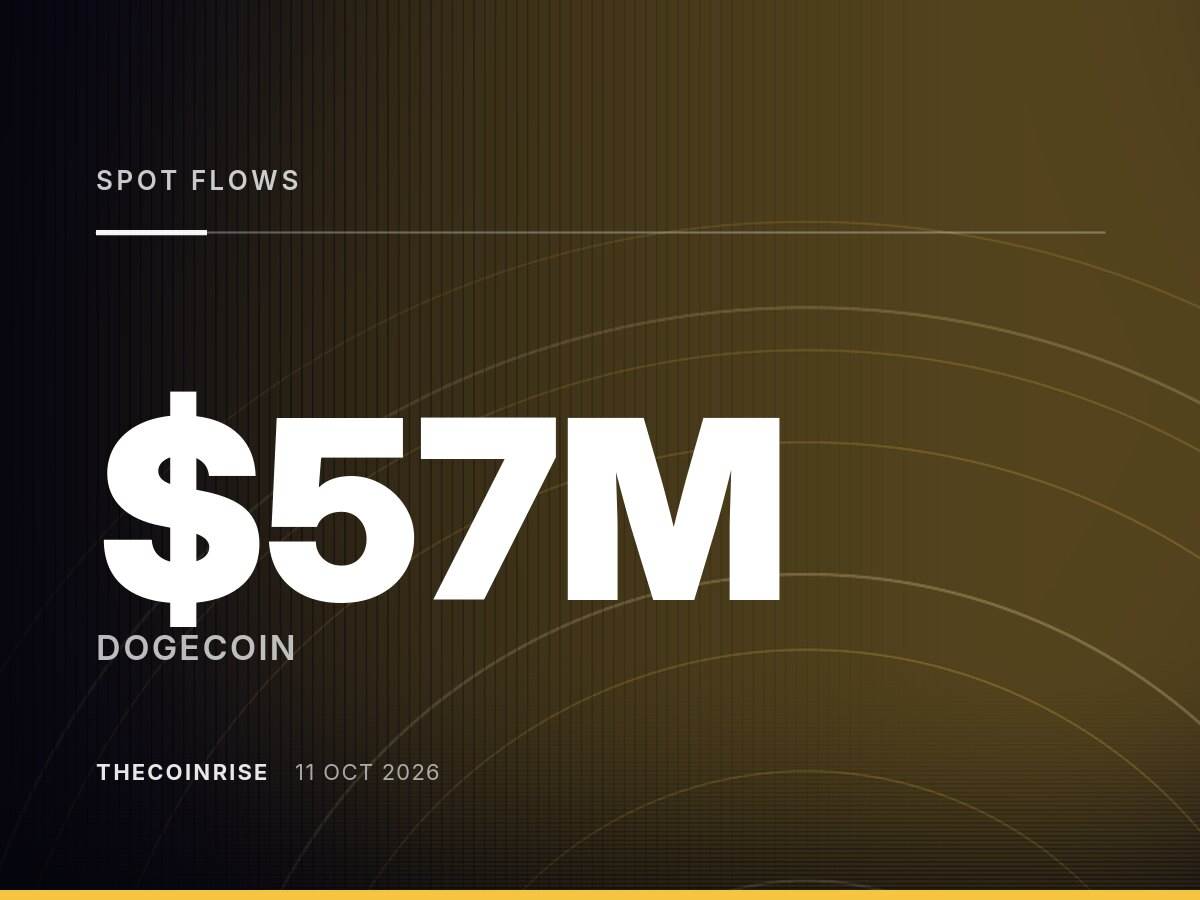
According to the latest on-chain data, net capital outflows indicate that the positions of large Dogecoin holders are changing. In the past seven days, the spot trading flow of Dogecoin has clearly turned negative. On-chain data cited by U.Today shows that the month-on-week fluctuation of net flow reached 599%, changing from a net inflow to a large net outflow. At the same time, Crypto.news reported a net outflow of approximately $57 million during the same period.
Spot traffic data tracks the net amount of assets entering or leaving trading platforms and large wallets. Such sharp declines often reflect a coordinated sell-off or repositioning by holders with large balances (commonly known as "whales"). When this outflow accelerates, analysts tend to view it as a signal of a change in mood among large players.
The scale of the reversal is eye-catching
The scale of this reversal is eye-catching. In any traffic indicator, a 599% change in a single week is a huge move, even in a market known for its volatility. This suggests that any inflows that previously existed were not only completely offset, but were also replaced by a substantial net outflow trend. Such sharp fluctuations often attract the attention of traders who are concerned about recent supply and demand dynamics, and they usually use traffic data as one of the basis for their evaluation.
Given the history of large-scale concentrated holding of Dogecoin compared with other major tokens, its whale activities have been closely watched. The operations of a few large wallets will have a disproportionate impact on short-term price movements and trading volumes. When these wallets reduce their exposure, even if there is no corresponding change in retail demand, it can put pressure on available liquidity at specific price levels.
The reason for the outflow is unclear
The reported net outflow of US$57 million does not in itself explain the reasons behind this shift. Whales may be reallocating capital to other assets, taking profits, or moving positions to cold wallets or other custody arrangements. Each action will appear as an outflow of exchange-tracked balances, but this does not necessarily reflect a bearish view of the asset itself.
Market observers often warn against over-interpreting single-week traffic data. Flow indicators can be noisy, and short-term fluctuations are common throughout the cryptocurrency market. Still, changes of this magnitude are rare enough to attract the attention of media that track behavior on the dogcoin chain and join broader discussions about how to position large holders at the end of the fourth quarter.
Market Impact Analysis
If the balance held by whales on the exchange continues to decrease, it may reduce available liquidity for large transactions, thereby increasing price sensitivity to new buy or sell orders. If outflows persist, traders may look to see whether the reduction in exchange supply translates into narrower spreads or more significant price movements at low volumes.
Conversely, if the outflow reflects a shift to cold storage rather than an active sell-off, the impact on recent price movements may be limited. Market participants may monitor subsequent traffic data to see whether the trend reverses, stabilizes, or accelerates further in the coming weeks.
The sharp decline in dogcoin spot flow highlights how quickly whale positions change even for tokens with a solid holder base. More data is needed to clarify whether this marks a short-term correction or the beginning of a longer trend.
FAQs
What does a 599% drop in spot traffic mean?
It describes the week-on-week fluctuations in net flow data, shifting from net inflows to large net outflows. This reflects changes in the direction and scale of funds entering and exiting dogcoin trading venues.
What is the net outflow of dogcoin?
Crypto.news reported that a net outflow of Dogecoin over the past week was approximately US$57 million, consistent with the broader traffic reversal described by U.Today.
Does this mean that whales are selling dogcoin?
Outflow data showed balances left tracked exchange wallets, but did not confirm a motive. Possible explanations include sales, profit-taking, or transfers to other custody arrangements (such as cold wallets).
Should investors be worried about these numbers?
Flow indicators are just one of many indicators used by traders and can be volatile in the short term. This report does not constitute financial advice and readers should consider multiple data sources before reaching conclusions.