Exchange Ranking
 Top Exchanges
 24h Volume Ranking
 Popularity Ranking
 Exchange BTC Balance
 Proof of Reserves
 Decentralized Exchanges
 Funding Rate
 Funding Heatmap
 Liquidation Data
 Max Pain
 Long/Short Ratio
 Whale L/S Ratio
 Binance/Okex/Huobi L/S
 Bitfinex Margin L/S
 ETF Tracker
 Solana ETF
 XRP ETF
 Hong Kong ETF
 Bitcoin Treasuries
 Crypto Reversal
 Ethereum Reserves
 HyperLiquid Wallet Analysis
 Hyperliquid Whale Watch
 Large Transactions
 On-chain Movement
 Bitcoin ROI
 Stablecoin Market Cap
 Options Analysis
 News
News Articles
 Economic Calendar
 Features
 Wallet
 Contract Calculator


 Security
 Collections
 Watchlist
 Following
 BTC
BTC Hyperscale Data Center Shuts Michigan Bitcoin Mining, Turning to AI Data Center Contract
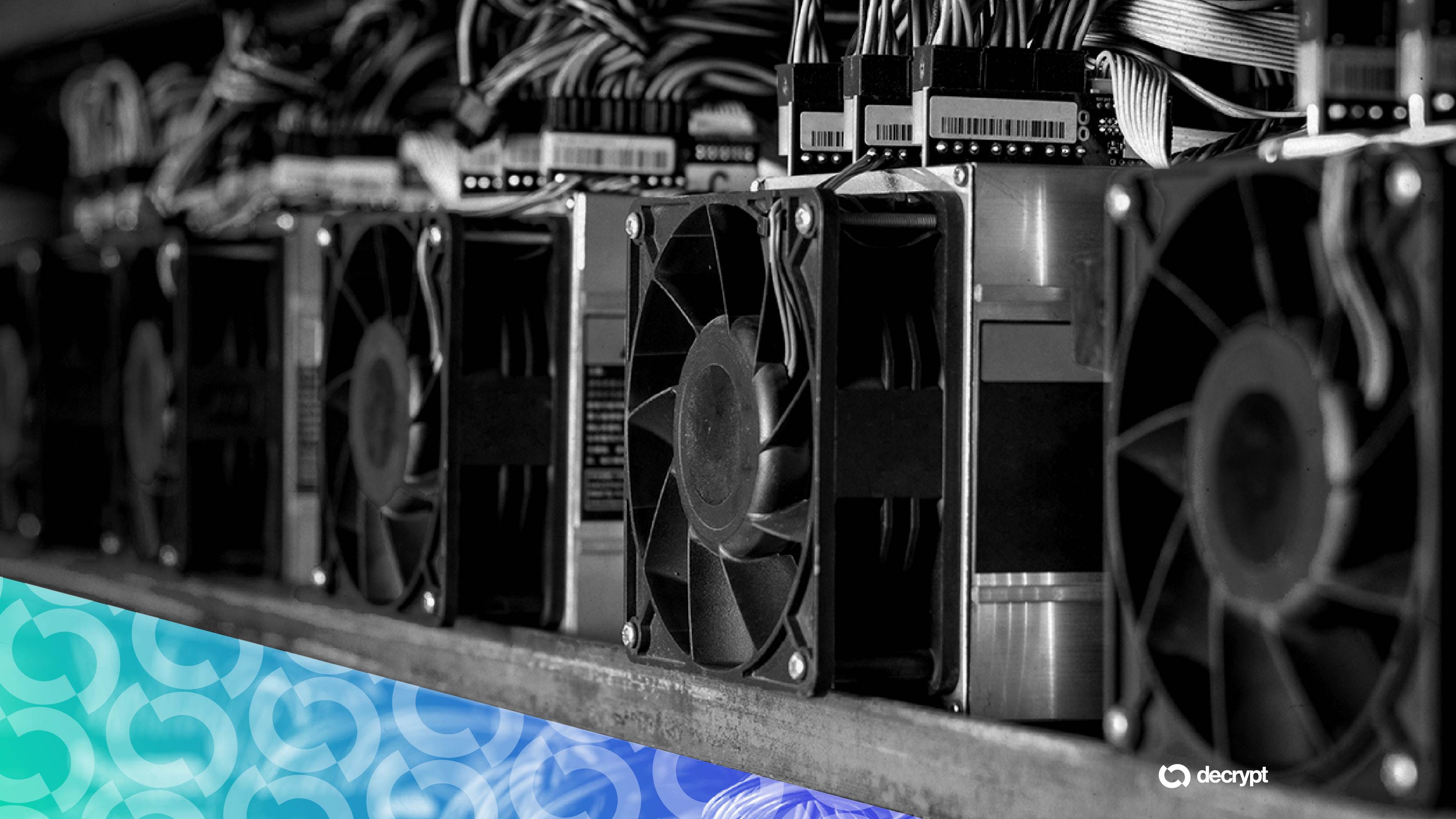
Hyperscale Data has shut down its Bitcoin Mining operation in Michigan and re-used the site for an AI data center contract estimated to be worth approximately $1.2 billion. This has become one of the most typical cases currently: on the same power and land resources, GPU computing requirements beat the economic benefits of proof of work, prompting Bitcoin miners to switch to AI transactions.
Why Bitcoin miners left mines to switch to AI trading
Ultrascale Data confirmed that it has stopped Bitcoin mining in Michigan to meet the requirements of an AI data center master service agreement and terminated on-site hashing operations on the campus. The transformation is based on the company's master services agreement with a California cloud service provider to provide 20 megawatts of AI computing power, the company's first such contract at its Michigan site. The agreement is expected to be worth approximately US$1.2 billion, which far exceeds the marginal revenue that the same infrastructure can generate by mining Bitcoin at current network difficulties.
What this transaction means for cryptocurrency mining and AI infrastructure
Mines are natural candidates for AI transformation because they already have the resources GPU clusters need most: interconnected power capacity, land, cooling systems, and grid protocols. The 20-megawatt allocation suggests that the same power capacity is shifting from ASIC hashing rates to AI reasoning and training workloads. The economic logic is at its core: A cloud service provider promises to sign a multi-year, multi-billion-dollar contract, demonstrating that computing buyers are willing to pay a premium for guaranteed capacity, while the workload exposed to fluctuations in Bitcoin prices and difficulty proves that mining cannot reliably match this model. The move is in line with a broader convergence trend: Miners are increasingly weighing contract AI computing revenue against volatile block rewards, even as Bitcoin itself has experienced a recent return to more than $80,000 volatility. At the same time, this is in sharp contrast to consumer-facing mining applications such as BAY miners 'mobile mining applications, highlighting that institutional advantages are shifting to computing leasing.
The available evidence does not disclose the identity, deployment schedule or hardware specifications of the counterparty. This report is based only on company documents and verified reports, rather than speculative transaction terms. For the intersection of AI and cryptocurrency, the signal is clear: a 20-megawatt cloud service promises to turn otherwise idle mining power into contract-bound reasoning and training capacity. If more operators follow suit, marginal buyers of miner-grade energy may increasingly come from the computing market rather than the Bitcoin network.