Exchange Ranking
 Top Exchanges
 24h Volume Ranking
 Popularity Ranking
 Exchange BTC Balance
 Proof of Reserves
 Decentralized Exchanges
 Funding Rate
 Funding Heatmap
 Liquidation Data
 Max Pain
 Long/Short Ratio
 Whale L/S Ratio
 Binance/Okex/Huobi L/S
 Bitfinex Margin L/S
 ETF Tracker
 Solana ETF
 XRP ETF
 Hong Kong ETF
 Bitcoin Treasuries
 Crypto Reversal
 Ethereum Reserves
 HyperLiquid Wallet Analysis
 Hyperliquid Whale Watch
 Large Transactions
 On-chain Movement
 Bitcoin ROI
 Stablecoin Market Cap
 Options Analysis
 News
News Articles
 Economic Calendar
 Features
 Wallet
 Contract Calculator


 Security
 Collections
 Watchlist
 Following
 BTC
BTC Policy risks are far more worrying for mining giants than Bitcoin fluctuations.
Faced with the question of "Will the Bitcoin collapse disrupt HIVE Digital Technologies 'deployment into the AI field," Frank Holmes always gives the answer quickly. What really kept him awake at night was not the price of Bitcoin, but the governments of various countries. "You need a stable policy environment," the executive chairman said in an interview.
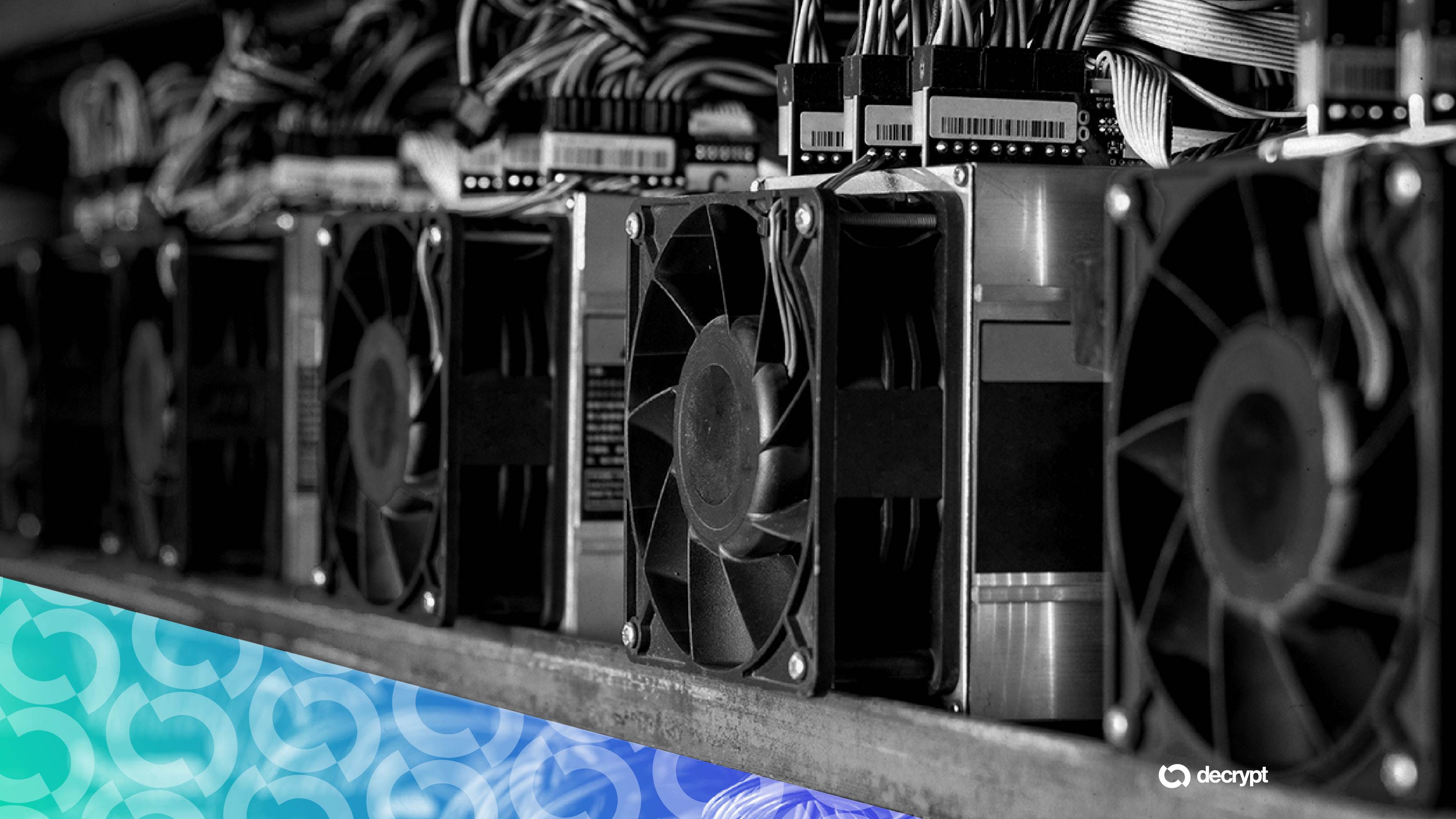
Holmes led HIVE to create a unique "dual-engine model": the primary data center is used for Bitcoin mining, and the tertiary data center handles AI computing tasks through its BUZZ HPC subsidiary. These facilities are located in Canada, Sweden and Paraguay.
This company does have the confidence to carry out such an ambitious expansion. The quarterly financial report ended June 30, 2026 showed that HIVE revenue reached US$79.1 million, a year-on-year increase of 73.5%, adjusted earnings before interest, tax, depreciation and amortization were US$13.4 million, and cash held exceeded US$200 million. However, the report also showed a net loss of $142.9 million, and the biggest cause of the loss was precisely the risks Holmes pointed out.
Lesson of US$84.7 million
Sweden is HIVE's first overseas investment destination, but Holmes admitted that the good times there have not lasted. "Our experience in Sweden proves that policy stability is crucial. At first, the local government was very welcoming and we paid tens of millions of dollars in taxes. But the Swedish tax authority does not agree with Bitcoin mining, and now all primary data center operators are regarded as 'evil forces' that are trying to destroy your business. "
The Swedish Taxation Authority relies on the fact that there is no identifiable counterparty for proof of workload mining, so it is not within the scope of VAT collection. According to this explanation, the value-added tax paid by HIVE on equipment and electricity cannot be refunded. After losing losses in both Swedish courts, the company has made a provision of US$84.7 million and is appealing.
Paraguay, which has HIVE's largest power capacity, presents another test. "Paraguay launched a very attractive AI strategy at the beginning of the year, promising to provide long-term energy contracts, but the policy suddenly turned and is still undergoing repeated adjustments. This uncertainty is the biggest risk. "
A 30-fold investment gap
Holmes once calculated that the investment per megawatt in building a Bitcoin mine is about US$1 million, while the cost per megawatt of a three-level AI data center equipped with backup power, redundant networks and dual system architecture is as high as US$30 million. "That's why we need long-term energy contracts-capital expenditures differ 30 times. Suppose we want to invest in a 100-megawatt AI data center, which requires US$3 billion. If the government suddenly adjusts policies or changes energy contracts, all the investment will be wasted. "
Faced with policy changes, mine operators can unplug equipment and ship machines to friendlier areas. But a $3 billion AI facility cannot be so flexible. Holmes emphasized that it is this structural difference-not the trend of Bitcoin's K-chart-that determines HIVE's global layout decisions.