Exchange Ranking
 Top Exchanges
 24h Volume Ranking
 Popularity Ranking
 Exchange BTC Balance
 Proof of Reserves
 Decentralized Exchanges
 Funding Rate
 Funding Heatmap
 Liquidation Data
 Max Pain
 Long/Short Ratio
 Whale L/S Ratio
 Binance/Okex/Huobi L/S
 Bitfinex Margin L/S
 ETF Tracker
 Solana ETF
 XRP ETF
 Hong Kong ETF
 Bitcoin Treasuries
 Crypto Reversal
 Ethereum Reserves
 HyperLiquid Wallet Analysis
 Hyperliquid Whale Watch
 Large Transactions
 On-chain Movement
 Bitcoin ROI
 Stablecoin Market Cap
 Options Analysis
 News
News Articles
 Economic Calendar
 Features
 Wallet
 Contract Calculator


 Security
 Collections
 Watchlist
 Following
 BTC
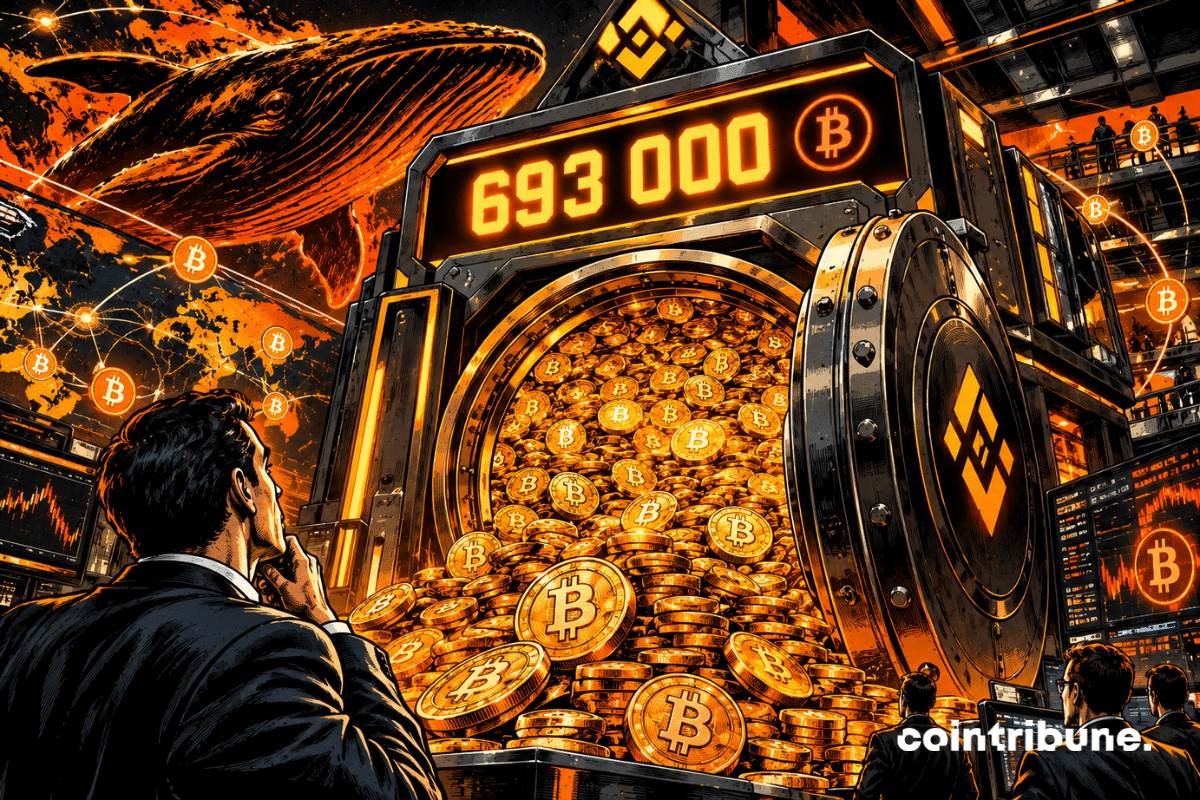
BTC Binance holds more than 693,000 bitcoins, setting a two-year high.
Currently, Binance holds more than 693,000 bitcoins, a level that has not appeared in the past two years. Since the end of April, its position has increased by 77,000 BTC, while Bitcoin's price is struggling to remain above $80,000. As the world's largest cryptocurrency platform, these reserves still have potential selling power.
Core Data Summary
According to CryptoQuant's data, Binance holds more than 693,000 BTC, accounting for approximately 30% of the total bitcoin held on major platforms. There are multiple factors behind this growth, including potential sales plans, the operations of SAFU (Safe Asset Fund), and a re-evaluation of asset security in the wake of the Coldcard incident.
As of now, Glassnode has not observed major selling pressure. The market will focus on monitoring the price range of $83,000 to $86,000.
Binance reserves reach two-year high
Data released by CryptoQuant on Thursday showed that Binance reserves now exceed 693,000 BTC. Since the end of April, the number has increased by 77,000, accounting for approximately 30% of the total bitcoin held on major cryptocurrency platforms.
This increase comes after a particularly active period in August. At the time, Binance recorded a net inflow of US$15.7 billion, a record high, according to Binance Research.
analyst Darkfost wrote: "This is a new record and the highest level in two years." He believes this growth deserves close monitoring.
Why be vigilant? By definition, bitcoins deposited on an exchange are easier to mobilize for sale. As of September 12, when the price of Bitcoin was approximately US$77,300, the 693,000 BTC held by Binance were worth nearly US$53.6 billion, accounting for approximately 3.4% of the circulating supply.
Should this really be regarded as a bearish signal?
However, the increase in reserves does not mean that all of these bitcoins are intended to be sold. Darkfost suggests several possible explanations:
- Trading strategy adjustments: Some holders may simply transfer their BTC to Binance in the intention of taking advantage of potential price increases for profit-taking.
- Role of SAFU funds: Binance's SAFU (User Asset Security Fund) may also explain some of the capital flows, although its exact size is difficult to determine.
- Increased security awareness: Security issues also play a role. After the Coldcard hack in August, some investors may have reconsidered how they store bitcoins. As a result, well-known platforms may recover some of the funds originally stored in third-party solutions.
Currently, Glassnode has not confirmed the arrival of a wave of selling. The realized share of profits for long-term holders has fallen below 47%, compared with a peak of 88% in August.
As a result, the US$83,000 to US$86,000 range could become a real test. Glassnode estimates that approximately 1.07 million BTC units were purchased in this range by long-term investors. As long as Bitcoin prices remain below this level, the pressure assessment will remain full of uncertainty.
The market will also pay close attention to the capital flow and liquidity evolution of US spot ETFs. On September 8 and 9, these ETFs recorded a net outflow of $166.8 million.
For now, Binance's reserves are more a signal to be observed than evidence of an imminent sell-off. Bitcoin's performance around $80,000 may provide more clues about the next trend.