Exchange Ranking
 Top Exchanges
 24h Volume Ranking
 Popularity Ranking
 Exchange BTC Balance
 Proof of Reserves
 Decentralized Exchanges
 Funding Rate
 Funding Heatmap
 Liquidation Data
 Max Pain
 Long/Short Ratio
 Whale L/S Ratio
 Binance/Okex/Huobi L/S
 Bitfinex Margin L/S
 ETF Tracker
 Solana ETF
 XRP ETF
 Hong Kong ETF
 Bitcoin Treasuries
 Crypto Reversal
 Ethereum Reserves
 HyperLiquid Wallet Analysis
 Hyperliquid Whale Watch
 Large Transactions
 On-chain Movement
 Bitcoin ROI
 Stablecoin Market Cap
 Options Analysis
 News
News Articles
 Economic Calendar
 Features
 Wallet
 Contract Calculator


 Security
 Collections
 Watchlist
 Following
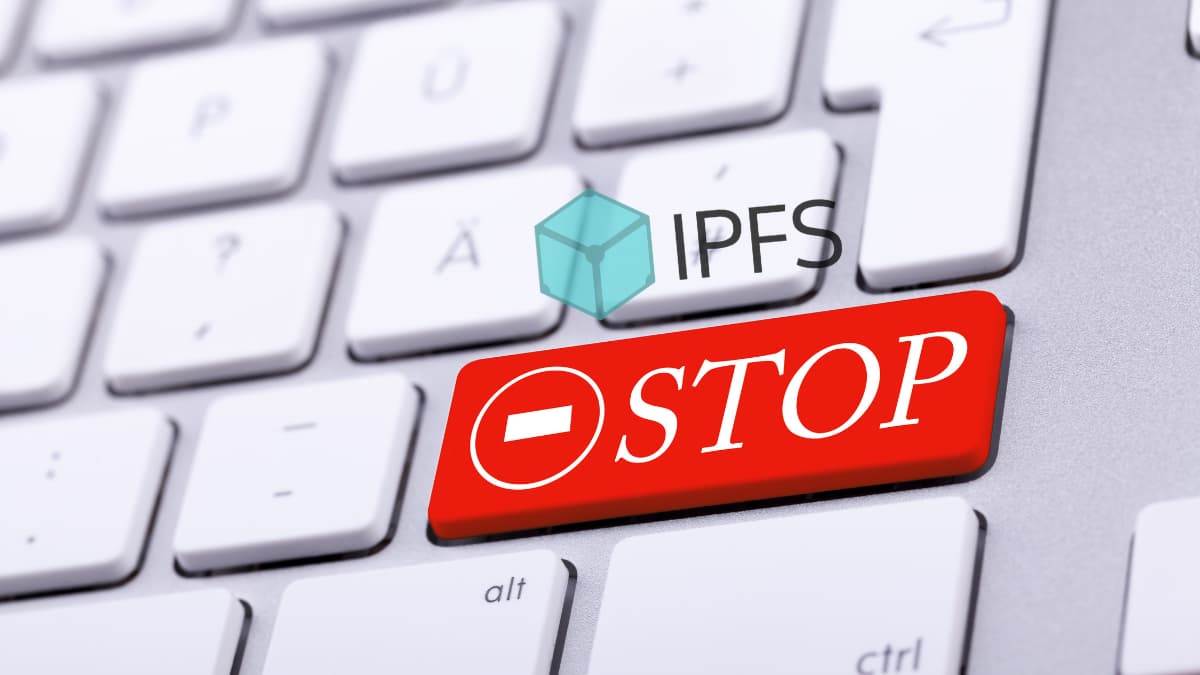
Shiyard will stop IPFS operations on September 30 due to Protocol Labs 'termination of funding
Shiyard, the organization responsible for maintaining core components of the interstellar file system, announced that it will stop all IPFS-related development, maintenance and infrastructure operations on September 30. The decision was made after Protocol Labs, the main funder of IPFS development, terminated financial support.
Shutdown Scope
The projects Shiyard is responsible for include key components such as Kubo (the original implementation of IPFS) and Helia (the modern JavaScript implementation). After losing a dedicated maintainer, these projects will no longer receive new feature development, bug fixes, or regular updates. Shiyard also plans to shut down the public infrastructure it currently operates, including the widely used gateways ipfs.io and dweb.link, as well as IPFS boot nodes that help nodes connect to the network.
Protocol Labs, which created IPFS and funded Shiyard's work, will determine future operating plans for the affected domain names and infrastructure. This shift raises questions about the long-term sustainability of IPFS's core public services.
Impact on the IPFS ecosystem
IPFS is a point-to-point hypermedia protocol designed to make networks faster, more secure and more open. Numerous Web3 projects, NFT platforms, and decentralized applications use it to store and retrieve content in a distributed manner. Shiyard's cessation of operations may affect developers and users who rely on these maintenance software and public gateways for daily work.
Although the IPFS protocol itself can still work, losing dedicated maintainers of Kubo and Helia could slow innovation and pose a security risk if the vulnerability is not fixed. The shutdown of public gateways may also reduce accessibility to users who rely on these entry points to access IPFS-hosted content.
Community Reaction and Next Steps
This announcement sparked discussions within the decentralized storage community about the need for a sustainable funding model for open source infrastructure. Some community members have called for a shift to community-driven governance or the formation of new maintenance teams. However, no specific plans have been announced yet.
Protocol Labs has not yet provided a detailed roadmap for the affected projects. The organization may choose to reassign maintenance responsibilities to other teams, or it may allow the community to fork off and continue development independently. This uncertainty creates confusion for developers building applications on these tools.
Why it matters
This development highlights the vulnerability of decentralized infrastructure when it relies on a single source of funding. For users and developers, it emphasizes the importance of diversified support and a continuity plan for critical open source software. The results could affect how other Web3 projects fund and maintain their core dependencies.
As the September 30 deadline approaches, stakeholders will pay close attention to further announcements from Protocol Labs. At the same time, IPFS users are advised to monitor the status of affected services and prepare for possible outages.
Conclusion
Shiyard's exit from IPFS maintenance and infrastructure marks a major shift in the decentralized storage ecosystem. Although the protocol itself can still work, the loss of dedicated maintainers and public gateways presents practical challenges. The coming weeks will determine how the community and Protocol Labs respond to ensure the continued healthy development of IPFS.
FAQs
Q1: What is a Shipyard? What role does it play in IPFS?
Shiyard is an organization that maintains core IPFS projects, including Kubo and Helia, and operates public infrastructure such as ipfs.io and dweb.link. Its work is funded by Protocol Labs.
Q2: What will happen to IPFS after Shiyard stops operating?
IPFS will continue to operate as a protocol, but since there is no dedicated maintainer, development and maintenance of Kubo and Helia will stop. Public gateways and boot nodes will be shut down unless Protocol Labs arranges alternative management solutions.
Q3: How can developers and users prepare for this shift?
Developers should pay attention to official IPFS channels for updates, consider using alternative gateways or self-hosted nodes, and be prepared for possible delays in bug fixes or new versions. Community-driven forks may emerge as temporary solutions.