Exchange Ranking
 Top Exchanges
 24h Volume Ranking
 Popularity Ranking
 Exchange BTC Balance
 Proof of Reserves
 Decentralized Exchanges
 Funding Rate
 Funding Heatmap
 Liquidation Data
 Max Pain
 Long/Short Ratio
 Whale L/S Ratio
 Binance/Okex/Huobi L/S
 Bitfinex Margin L/S
 ETF Tracker
 Solana ETF
 XRP ETF
 Hong Kong ETF
 Bitcoin Treasuries
 Crypto Reversal
 Ethereum Reserves
 HyperLiquid Wallet Analysis
 Hyperliquid Whale Watch
 Large Transactions
 On-chain Movement
 Bitcoin ROI
 Stablecoin Market Cap
 Options Analysis
 News
News Articles
 Economic Calendar
 Features
 Wallet
 Contract Calculator


 Security
 Collections
 Watchlist
 Following
 AVAX
AVAX  ETH
ETH  SOL
SOL Ethereum, Solana and Avalanche currently process transaction volumes that exceed the same period last year, but their native tokens ETH, SOL and AVAX have fallen by about 50% or more over the past year. In a sense, these tokens are victims of the success of their network. Cheaper transaction fees drive usage growth, but at the same time, lower fees also reduce the value accumulation of native tokens. CoinShares analyst Luke Nolan pointed out in May: "If demand doesn't expand fast enough to offset lower transaction fees, the network will end up in a busier but less profitable situation." The question is whether token prices will eventually catch up with network fundamentals, or whether this decoupling will become the new normal.
More transactions, less revenue
In terms of transaction volume alone, Ethereum, Solana and Avalanche have performed quite well. However, online revenue reveals a more complex story. According to Bitwise, Ethereum processed 203.9 million transactions in the second quarter, a year-on-year increase of 68%. Average transaction costs fell 71% to $0.31, while network revenue fell 51% to $64 million. 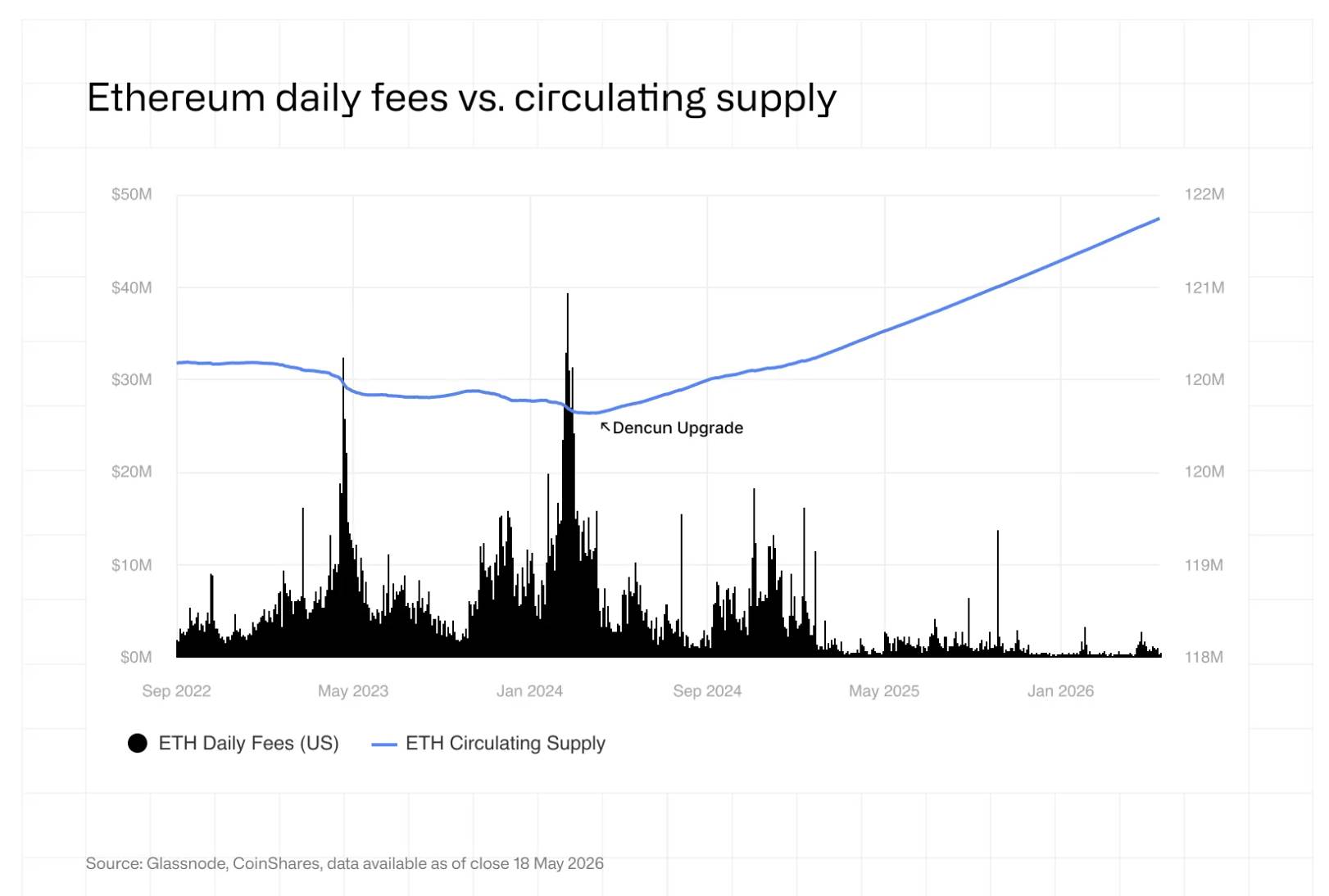 Solana's situation is similar. It processed 9.8 billion non-voting transactions in the second quarter, up 10 percent year-over-year. At the same time, average transaction costs for the network dropped 83 percent and revenue plummeted 81 percent to $51 million. Avalanche's C-chain processed 235.6 million transactions in the second quarter, more than four times the number for the same period last year. Average costs fell nearly 95% to $0.0014, while revenue fell 79% to about $330,000. According to Bitwise analysis, the main reason for the decline in revenue is simple: protocol upgrades have made block space cheaper and more abundant. Kam Benbrik, head of on-chain research at Bitwise, told The Block: "What we see on the chain is that, first, blockchain is getting cheaper; and second, on-chain activity is actually increasing."
Network growth does not guarantee token demand
This growing economic disconnect is particularly evident on Ethereum. The migration of networks to second-layer networks has weakened the link between on-chain activities and ETH requirements. Rollup can now process more transactions while paying lower fees to the base layer, reducing revenue and token destruction. Solana faces similar challenges. According to Messari, its application layer generated $342.2 million in revenue in the first quarter, but most of it went to developers, trading platforms and validators rather than SOL holders. Avalanche's token economics are particularly complex. Its customized layer 1 network can use separate tokens to pay for transaction fees. Verifiers pay AVAX to the main network, but the resulting revenue is very limited. In July, the Avalanche Foundation said it was studying fees, maximum extractable value (MEV) and revenue sharing mechanisms to strengthen AVAX's token economics. "The connection between ecosystem output and AVAX value accumulation is the core issue we are trying to address," Matias Antonio, chief investment officer of the Avalanche Foundation, said in July.
What indicators should traders pay attention to?
Trading volume shows whether blockchain is active, but it itself is a weak price signal. "Lower transaction costs often coincide with a larger number of economically insignificant transactions," researchers at Fidelity Digital Assets wrote. 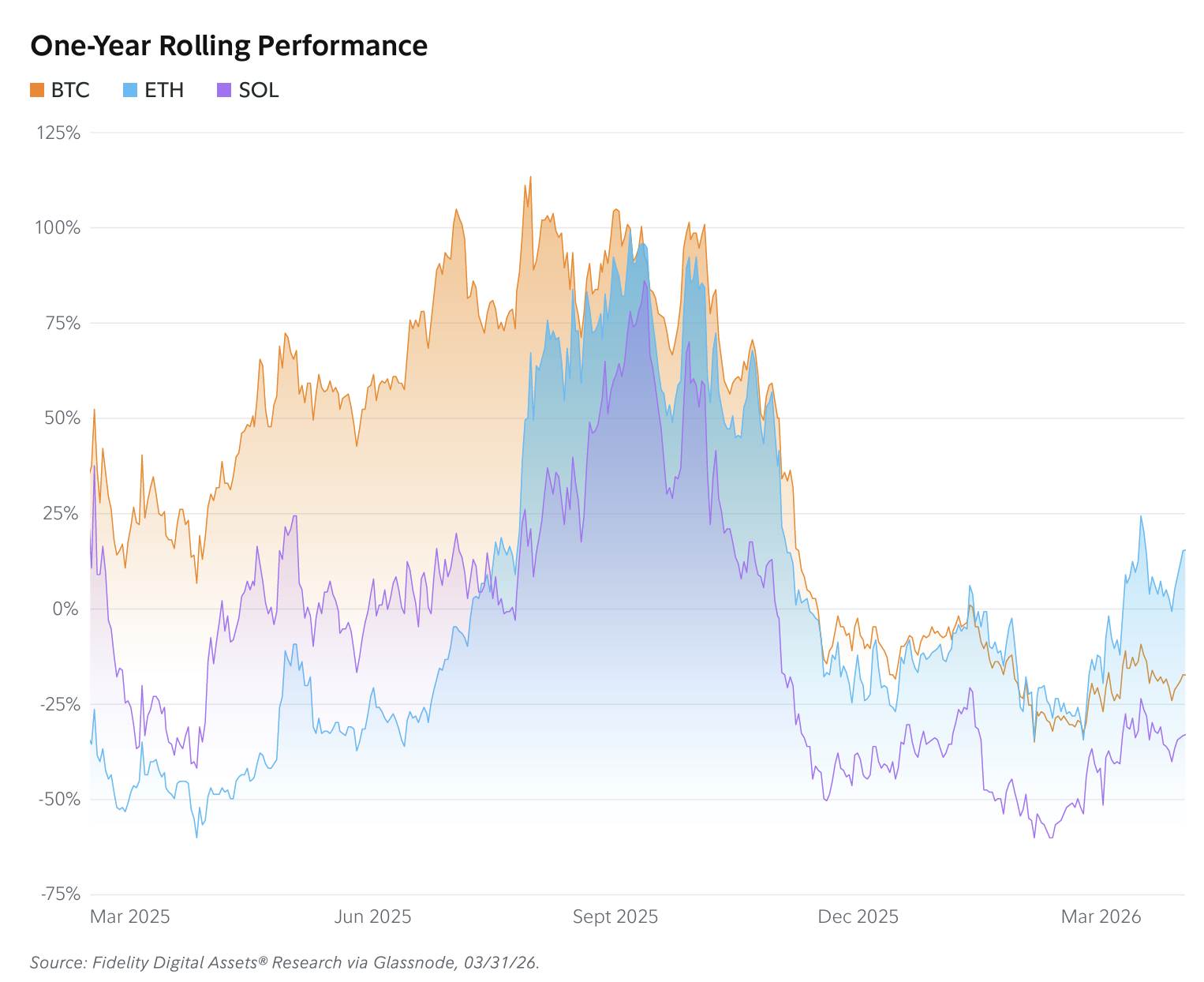 More useful measures include fee income denominated in native tokens, net issuance after destruction, the proportion of pledge rewards funded by user fees, and the amount of ETH, SOL, or AVAX held as collateral. Pledge rewards mainly funded by additional issuance will dilute non-pledge recipients. Fees funded provide stronger evidence of economic need.
Can usage ultimately increase prices?
If lower costs generate enough new demand, then cheaper block space can boost revenue. CoinShares said that Ethereum's cash flow bull market logic depends on this outcome. Otherwise, applications, second-layer networks and custom networks may retain most of the revenue. Native tokens will have to rely on collateral requirements, pledges and fee-sharing mechanisms. For network tokens like SOL, analysts at 21Shares wrote: "The price will ultimately reflect not the original network performance, but the quality, persistence and value capture of that performance."