Exchange Ranking
 Top Exchanges
 24h Volume Ranking
 Popularity Ranking
 Exchange BTC Balance
 Proof of Reserves
 Decentralized Exchanges
 Funding Rate
 Funding Heatmap
 Liquidation Data
 Max Pain
 Long/Short Ratio
 Whale L/S Ratio
 Binance/Okex/Huobi L/S
 Bitfinex Margin L/S
 ETF Tracker
 Solana ETF
 XRP ETF
 Hong Kong ETF
 Bitcoin Treasuries
 Crypto Reversal
 Ethereum Reserves
 HyperLiquid Wallet Analysis
 Hyperliquid Whale Watch
 Large Transactions
 On-chain Movement
 Bitcoin ROI
 Stablecoin Market Cap
 Options Analysis
 News
News Articles
 Economic Calendar
 Features
 Wallet
 Contract Calculator


 Security
 Collections
 Watchlist
 Following
 ETH
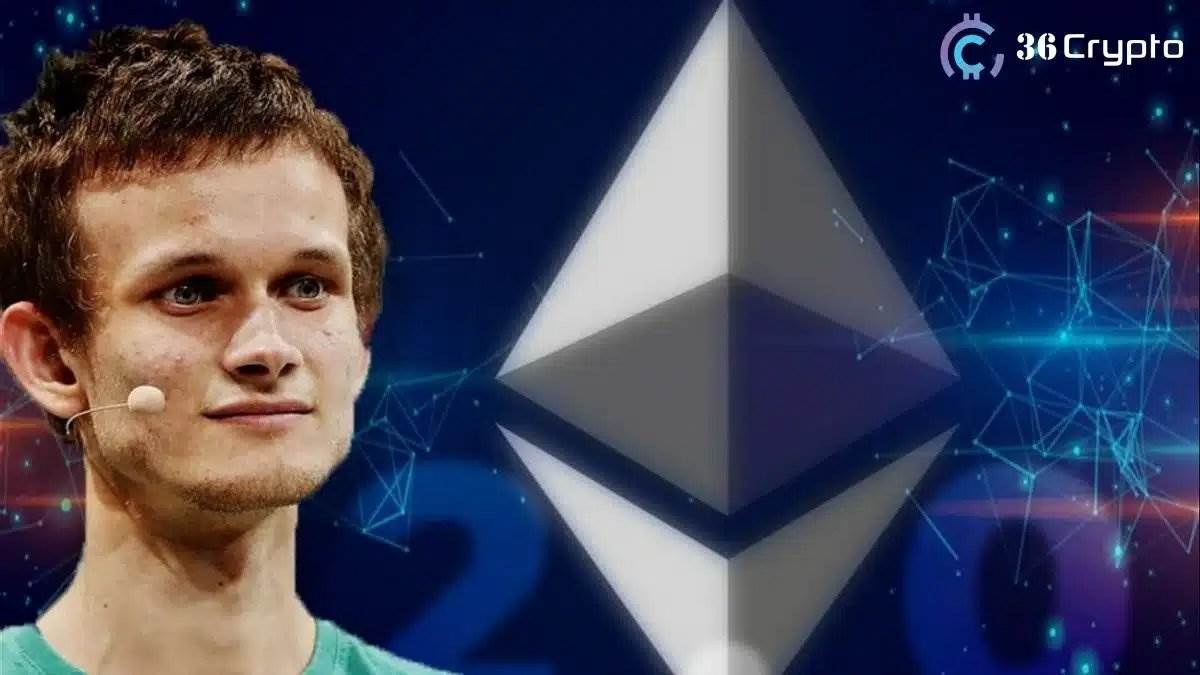
ETH Ethereum co-founder Vitalik Buterin proposed a major change in the transaction model to improve network efficiency and scalability.
Ethereum co-founder Vitalik Buterin proposed a new transaction model that advocates separating "transaction actions" from "dependency conditions" to improve Ethereum's performance in terms of verification, execution, network efficiency and scalability. This model provides new ideas for optimizing the logic of blockchain processing transactions by distinguishing between conditions that must be resolved and actions that are ultimately executed.
Transaction separation mechanism: potential for parallel verification
According to Buterin's research, this model clearly defines the difference between "Actions" and "Dependents." Actions refer to the actual effects of transactions, such as token transfers, account updates, or smart contract interactions; while dependencies are prerequisites that Ethereum must verify before executing actions. Currently, Ethereum's network nodes usually closely bind verification and execution: after receiving transactions, verify requirements first and then perform operations. But this serial model can become a bottleneck for scalability.
Buterin pointed out that many dependency conditions have the characteristics of "Pure Dependencies", that is, they do not rely on Ethereum's state data, but are based on network information or other independent parameters. This means that these dependencies can be independently checked and processed before transactions enter the block. This separation brings the following advantages:
- Parallel processing: Memory pools can pre-examine pure dependencies, preventing verifiers from repeating the same checks during block execution. Nodes can handle multiple dependencies simultaneously rather than verifying them one by one.
- Recursive STARK proof aggregation: Using recursive STARK (Successive Transparent Argument of Knowledge) technology, a large number of completed verification results can be merged into one verifiable cryptographic proof. This not only reduces the computing burden on the verifier, but also maintains the integrity of the transaction.
As Buterin emphasized on social media, recent detailed thinking on transaction formats (including EIP-8141,"future state" discussions such as UTXO, PBT, keyed Nonce, and recursive STARK memory pools) have made our understanding of transaction structures clearer and more transparent.
Account abstraction and key Nonce support flexible authorization
This proposal is closely linked to Ethereum's ongoing vision of "Account Abstraction" and aims to provide more programmable transaction options. Specifically, the following technical components support the model:
- EIP-8141: Explore new transaction formats that support flexible authorization and execution.
- Keyed Nonce: The traditional Nonce mechanism requires transactions in the same account to be executed strictly in order. Once a transaction is delayed, all subsequent operations will be blocked. Keyed Nonce allows independent sequences to be established within the same account, allowing unrelated operations to continue without waiting, reducing unnecessary delays.
- Alternative state design: Change the way Ethereum stores transaction information and identifies necessary verification conditions to further modularize the processing of transaction intent, authorization, verification and execution.
Conclusion: The concept is still developing
Although this model shows great potential, it is still a developing concept rather than a confirmed Ethereum upgrade. Developers still need to conduct a comprehensive evaluation of its security and implementation requirements. If successfully implemented, this separation of actions and dependencies is expected to support parallel verification, reduce duplication of work, and significantly improve Ethereum's ability to respond to increasingly complex transaction scenarios.