Exchange Ranking
 Top Exchanges
 24h Volume Ranking
 Popularity Ranking
 Exchange BTC Balance
 Proof of Reserves
 Decentralized Exchanges
 Funding Rate
 Funding Heatmap
 Liquidation Data
 Max Pain
 Long/Short Ratio
 Whale L/S Ratio
 Binance/Okex/Huobi L/S
 Bitfinex Margin L/S
 ETF Tracker
 Solana ETF
 XRP ETF
 Hong Kong ETF
 Bitcoin Treasuries
 Crypto Reversal
 Ethereum Reserves
 HyperLiquid Wallet Analysis
 Hyperliquid Whale Watch
 Large Transactions
 On-chain Movement
 Bitcoin ROI
 Stablecoin Market Cap
 Options Analysis
 News
News Articles
 Economic Calendar
 Features
 Wallet
 Contract Calculator


 Security
 Collections
 Watchlist
 Following
 BTC
BTC Although stablecoins and Bitcoin are both cryptocurrencies, their characteristics and uses are completely different. Stable coins are like digital versions of the US dollar, with basically unchanged prices and suitable for saving money and transferring money; while Bitcoin\'s price fluctuates greatly, it is more like a kind of \"digital gold\" and suitable for long-term investment or speculative trading. So which one is more worth investing in? This article will use simple language to help you understand their core differences, analyze their advantages and disadvantages, and help you determine which is more suitable for your investment goals.
Explain the difference in one sentence: stablecoins are digital currencies that are \"anchored legal currencies\" and are mainly used for \"stability and exchange\"; Bitcoin is \"digital gold\", more like a long-term investment or safe-haven asset.

1. Essence and Definition
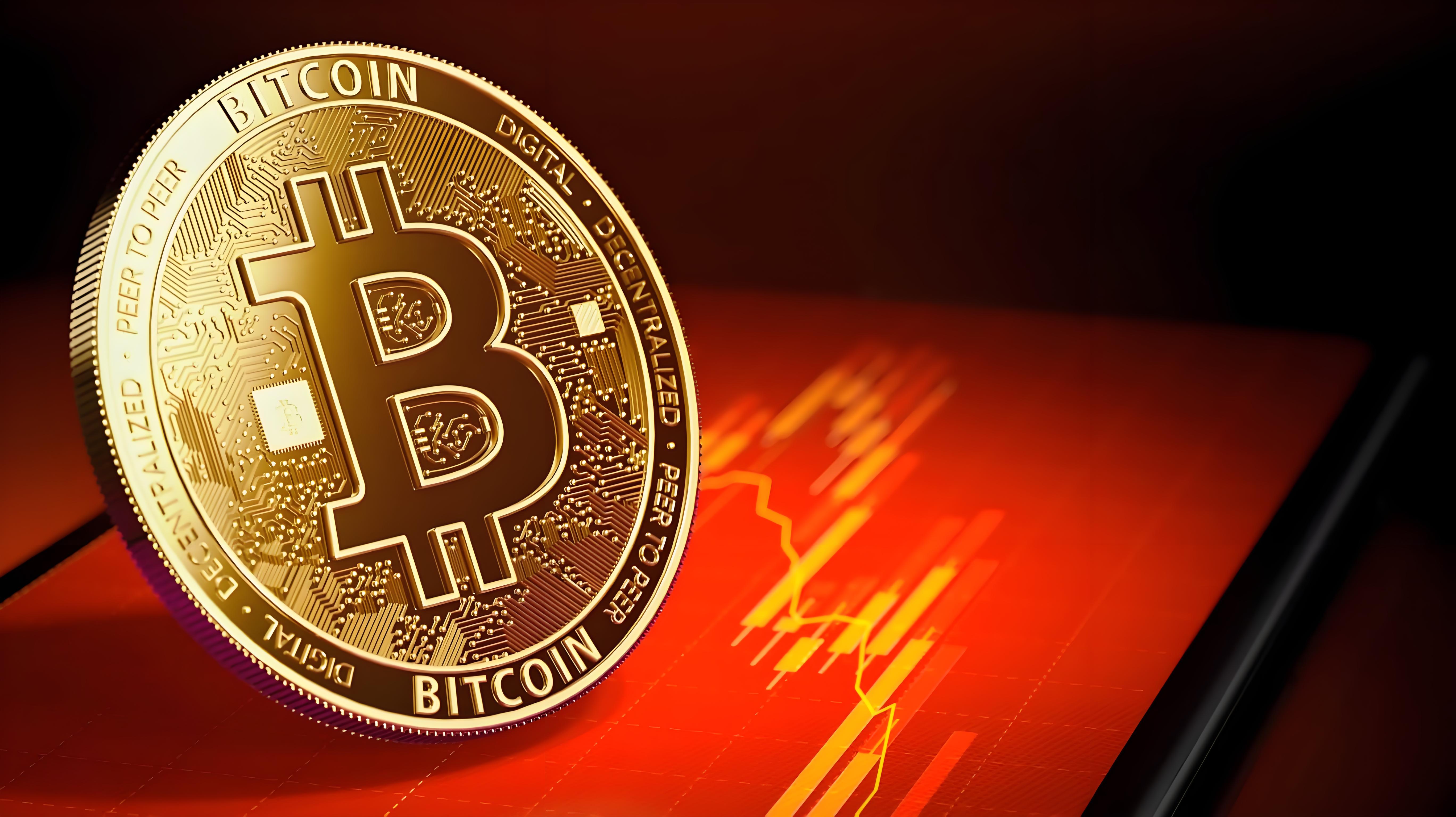
Bitcoin was born in 2009. It is a decentralized digital currency. It does not rely on a specific monetary institution to issue, but is generated through a large amount of calculations through specific algorithms. The total amount is constant at 21 million pieces. Since its birth, Bitcoin has been designed as a fully decentralized peer-to-peer electronic cash system designed to break the shackles of the traditional financial system and allow people to transfer value without the trust of third parties.
A stablecoin is a special type of cryptocurrency whose value is pegged to a specific asset (usually legal tender, such as the US dollar) and is designed to overcome the shortcomings of traditional cryptocurrencies with large price fluctuations. As a bridge connecting traditional finance and the crypto economy, stablecoins combine the convenience of digital assets and the stability of legal tender. For example, common stablecoins such as USDT and USDC usually maintain a 1:1 anchored relationship with the US dollar, that is, the value of a stablecoin is equal to 1 US dollar.
2. Value anchoring mechanism
Bitcoin is not supported by any physical or fiat assets, and its value depends entirely on market supply and demand relations and investor confidence and consensus. Bitcoin price fluctuations are affected by many factors, such as market sentiment, macroeconomic situation, policy news, mining costs, etc. During 2020 - 2021, the price of Bitcoin soared from a few thousand dollars to nearly 70,000 dollars, and then fell sharply. This violent price fluctuation made Bitcoin difficult to use as a value measure for daily transactions.
stablecoins maintain price stability by being anchored to fiat currencies or other stable assets. Take USDC as an example. When Circle Company issues USDC, it will ensure that each USDC is supported by reserve assets such as US$1 in cash or short-term U.S. Treasury bonds, and conduct regular audits to ensure transparency and stability. This anchoring mechanism makes the value of the stablecoin relatively stable and has extremely small fluctuations, which can meet the needs of daily transactions and value storage.

III. Price Volatility
Bitcoin is known for its sharp price fluctuations, and its price may rise and fall significantly in a short period of time. In some extreme market conditions, Bitcoin may rise and fall by more than 10% or more in a day. This high volatility brings opportunities for investors to make high profits, but it is also accompanied by huge risks. For ordinary investors, it is difficult to accurately grasp the price trend of Bitcoin. Investing in Bitcoin is more like a high-risk speculation.
The original intention of stablecoins is to curb price fluctuations and keep their value relatively constant. Due to the close connection between stablecoins and anchor assets, their prices usually fluctuate within a very small range. Under normal circumstances, the trading prices of U.S. dollar stablecoins such as USDT and USDC will fluctuate around 1 U.S. dollar. The fluctuations are generally within a few decimal places and are basically negligible. This stability makes stablecoins a commonly used pricing and settlement tool in digital asset transactions, and are also suitable for scenarios that require stable value storage.
4. Application Scenarios
Bitcoin is seen more as a digital asset and investment tool, similar to \"digital gold.\" Many investors use Bitcoin as part of their asset allocation and expect to gain asset appreciation through long-term holding or short-term trading. In some countries and regions, Bitcoin is also used in scenarios such as cross-border payments and black market transactions. However, due to problems such as large price fluctuations and long transaction confirmation times, its application in the field of daily payments is still relatively limited. In addition, due to Bitcoin\'s anonymity and decentralization, some people use it for illegal activities such as circumvention of supervision and money laundering, but this behavior has also been severely cracked down by regulatory agencies in various countries.

Stable coins are mainly used in pricing, fund settlement, cross-border transfer and other scenarios of digital asset transactions. In digital currency exchanges, stablecoins are often used as the base currency of trading pairs to facilitate investors to exchange between different digital currencies. In terms of cross-border transfers, stablecoins have the advantages of fast transaction speed and low handling fees, which can greatly shorten the time and cost of cross-border payments. In the field of decentralized finance (DeFi), stablecoins play a central role, serving as collateral, lending funds and basic assets provided by liquidity, supporting the operation of the entire DeFi ecosystem.
V. Supervision
The decentralization and anonymity of Bitcoin make it difficult to regulate, and different countries and regions have large differences in attitudes and regulatory policies towards it. Some countries are open to Bitcoin and regard it as a legal investment asset or payment method, such as the United States, Canada, etc. These countries supervise digital currency trading platforms and require platforms to comply with laws and regulations such as anti-money laundering and anti-terrorist financing. Other countries are cautious or prohibiting Bitcoin, believing that Bitcoin may bring financial risks and regulatory challenges, such as China, India, etc. China has completely banned virtual currency-related business activities, including the issuance, trading, mining, etc. of virtual currency.
Due to its pegging to legal currencies, stablecoins have attracted more and more regulatory attention because they involve issues such as financial stability and regulatory compliance. Regulators in various countries are formulating relevant policies and regulations to regulate the issuance, operation and trading of stablecoins. Regulatory agencies such as the U.S. Securities and Exchange Commission (SEC) and the Commodity Futures Trading Commission (CFTC) have gradually clarified their regulatory attitude towards stablecoins, requiring stablecoin issuers to comply with strict regulatory requirements, such as transparency of reserve assets and compliance operations. Hong Kong has also introduced the \"Stable Coin Ordinance\" to strengthen supervision of stable coins to safeguard the stability of financial markets and the interests of investors.

Which is more worth investing?
Who is suitable for stablecoins?
● Want to park funds in the currency circle but do not want to bear price fluctuations
● Use as an intermediary when making transactions (such as buying and selling BTC and ETH)
● Want to transfer money overseas but are afraid of exchange rate fluctuations
● It is not suitable for \"investment appreciation\" because it does not increase prices.
Who is Bitcoin suitable for?
● Optimistic about the long-term prospects of the crypto market
● Want to fight inflation
● Can accept large short-term fluctuations and pursue long-term returns
● Seeking asset preservation and wealth transfer methods
is more suitable for long-term investment or \"fixed investment\", which is expected to bring significant benefits, but has price risks.
For example:
If you have US$10,000 in hand:
● If you switch to USDT, the probability will still be similar to US$10,000 in a few years, which is suitable for short-term \"docking\" or fund scheduling.
● If you switch to BTC, it may become US$50,000 in a few years, or it may drop to 5,000-see if you can bear the risk.
To sum it up:
stablecoins are more like \"cash in the bank\", while Bitcoin is more like \"assets\" or \"gold.\" If you want to invest and increase value, Bitcoin is the first choice; if you just do transactions and capital turnover, stablecoins are more appropriate.