Exchange Ranking
 Top Exchanges
 24h Volume Ranking
 Popularity Ranking
 Exchange BTC Balance
 Proof of Reserves
 Decentralized Exchanges
 Funding Rate
 Funding Heatmap
 Liquidation Data
 Max Pain
 Long/Short Ratio
 Whale L/S Ratio
 Binance/Okex/Huobi L/S
 Bitfinex Margin L/S
 ETF Tracker
 Solana ETF
 XRP ETF
 Hong Kong ETF
 Bitcoin Treasuries
 Crypto Reversal
 Ethereum Reserves
 HyperLiquid Wallet Analysis
 Hyperliquid Whale Watch
 Large Transactions
 On-chain Movement
 Bitcoin ROI
 Stablecoin Market Cap
 Options Analysis
 News
 Articles
 Economic Calendar
 Features
 Wallet
 Contract Calculator


 Security
 Collections
 Watchlist
 Following
 ETH
当你真正支持一件事,最直接的方式就是给它打钱。
11 月 26 日,Vitalik Buterin 向两个隐私通讯应用 Session 和 SimpleX 各捐赠了 128 ETH,总价值约 76 万美元。
他在推文中写道:加密通讯对保护数字隐私至关重要,下一步的关键是实现无许可账户创建和元数据隐私。
76 万美元不是小数目,但更让人好奇的是这两个收钱的应用。
Session 和 SimpleX 在加密圈之外几乎没有知名度,Vitalik 为什么要把钱投给它们,而不是更成熟的隐私通讯工具?
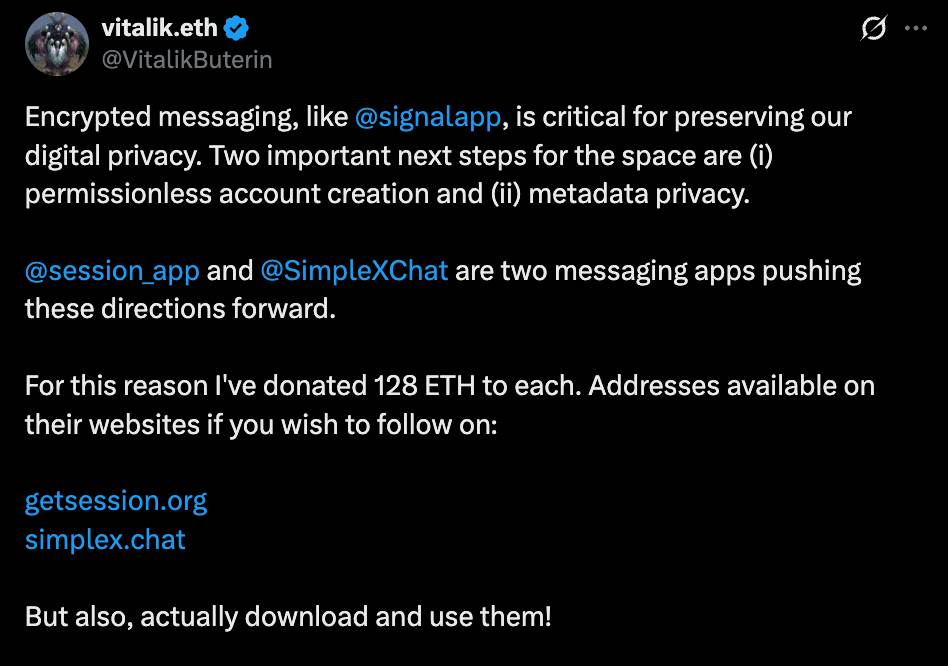
捐赠金额本身也有点意思。
128 对人类来说不是个方便的数字,但在二进制中是 2 的 7 次方。有社区成员解读这是 Vitalik 的某种表态,这是一笔结构性的隐私投资,不是随手打赏。
就在捐赠前一天,欧盟理事会刚就「Chat Control」提案达成协议。这项提案要求通讯平台扫描用户的私人消息,被隐私倡导者视为对端到端加密的直接威胁。
Vitalik 选在这个时候公开捐赠,态度已经很明确:他认为现有的隐私通讯方案还不够,需要支持更激进的替代品。
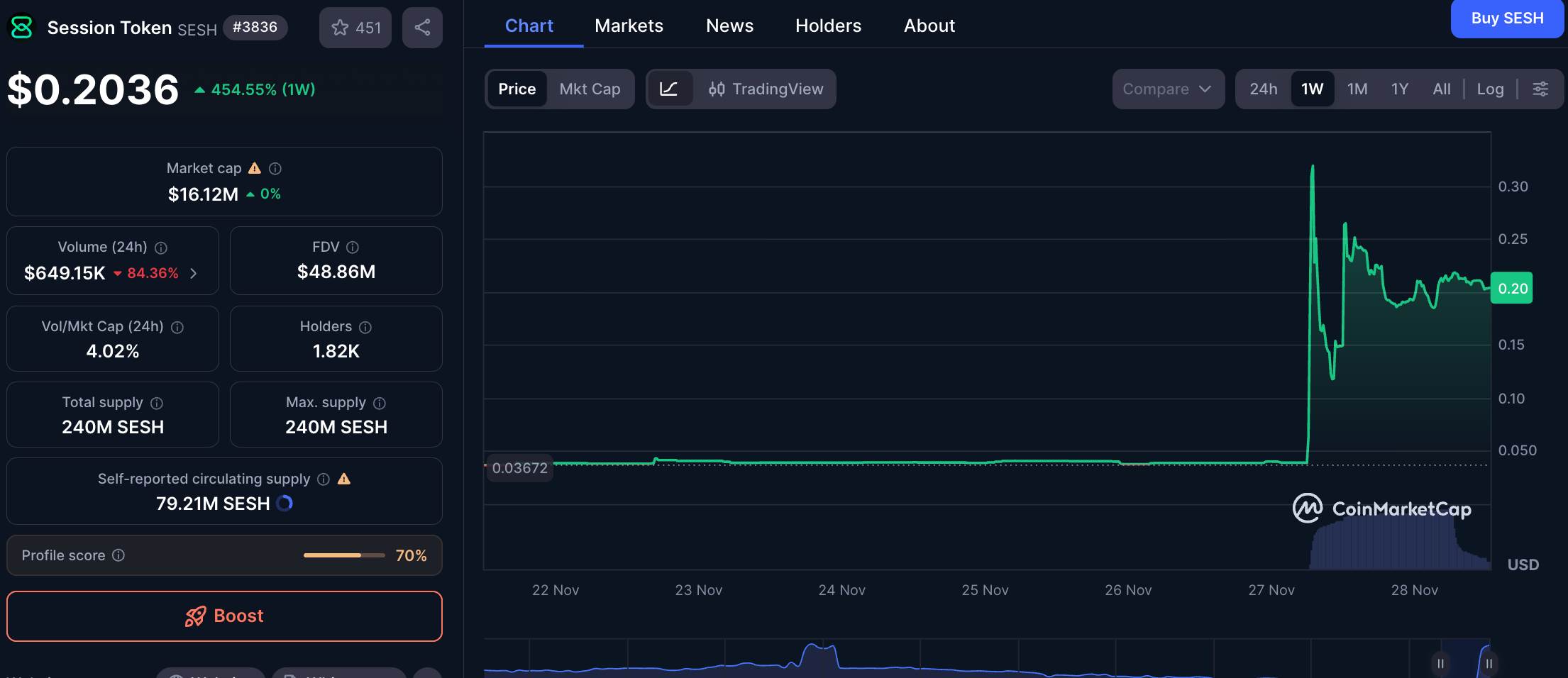
市场似乎也读懂了这个信号。Session 的代币 SESH 在消息公布后从不到 0.04 美元最高拉升到 0.40 美元左右,一周涨幅超过450%。
我们可以来快速看看这两个应用到底是什么,凭什么值得 Vitalik 押注?
Session,用 DePIN 做隐私通讯
Session 是一款去中心化的端到端加密通讯应用,2020 年正式上线,目前有近 100 万用户。
它最初由澳大利亚的 Oxen Privacy Tech Foundation 开发,2024 年因澳大利亚隐私立法收紧,团队将运营主体迁至瑞士,成立了 Session Technology Foundation。
这款应用的核心卖点是「不需要手机号」。
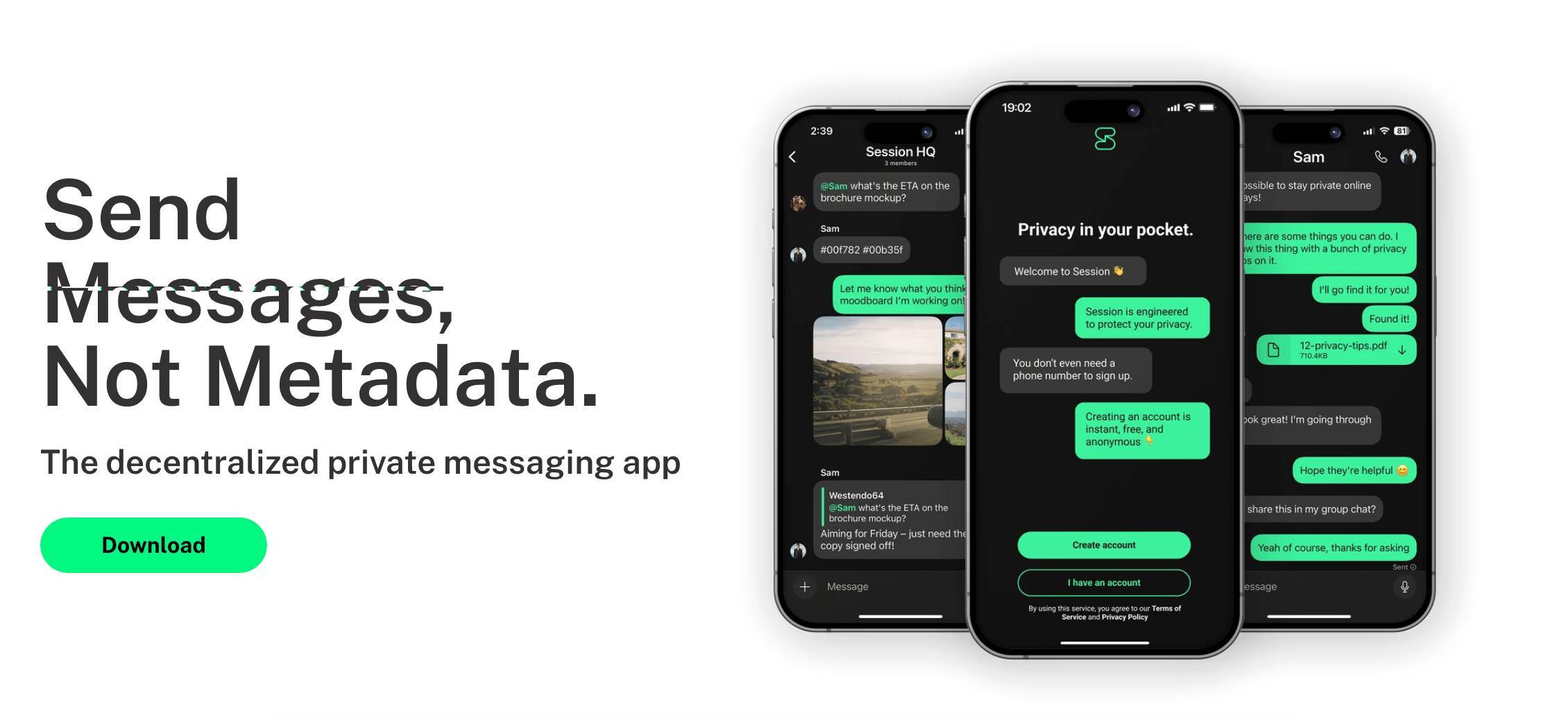
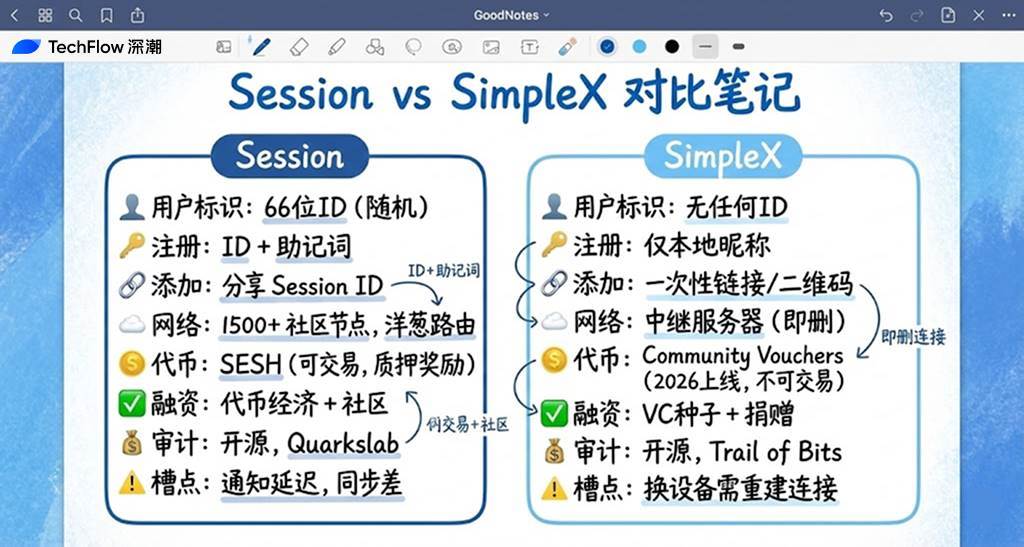
注册时,Session 会生成一个 66 位的随机字符串作为你的 Session ID,同时给你一组助记词用于账户恢复。没有手机号绑定,没有邮箱验证,没有任何能关联到你真实身份的信息。
技术上,Session 采用了一套类似洋葱路由的架构来保证隐私。
你发出的每条消息会被三层加密,依次经过三个随机选取的节点传递,每个节点只能解密属于自己的那一层,看不到消息的完整路径。这意味着没有任何单一节点能同时知道消息的发送者和接收者。
这些节点不是 Session 官方运营的服务器,而是来自社区。目前全球有超过 1500 个 Session Node 分布在 50 多个国家,任何人都可以运行节点,前提是质押 25,000 SESH 代币。
In May 2025, Session underwent a major upgrade. It switched from using the Oxen network to its own Session Network. This new network operates on a proof-of-stake consensus mechanism, and node operators can participate in network maintenance by staking SESH, thereby earning rewards.

In practical terms, Session’s interface isn’t much different from mainstream messaging apps. It supports text messages, voice messages, images, and file transfers, as well as encrypted group chats with up to 100 participants. Voice and video calls are currently in the testing phase.
One notable drawback is message delivery latency. Since messages need to go through multiple routes, they may arrive several seconds later than expected in centralized applications. Multi-device synchronization also isn’t as smooth, which is a common issue with decentralized architectures.
SimpleX even goes further, offering extreme privacy options—without even requiring an ID.
While Session claims that it doesn’t require a phone number, SimpleX goes even further: it doesn’t even require a user ID.
Almost all messaging apps on the market, no matter how much they emphasize privacy, still assign some kind of identifier to users. Telegram uses phone numbers, Signal also uses phone numbers, while Session uses randomly generated Session IDs.
Even if these identifiers aren’t associated with real identities, they still leave traces behind. For example, if you use the same account to communicate with two people, those two people could theoretically determine that they’re communicating with the same person.
SimpleX’s approach involves completely eliminating this identifier. Every time you establish a connection with a new contact, the system generates a pair of one-time message queue addresses. The address used to communicate with person A is completely different from that used to communicate with person B; there is no common metadata between them. Even if someone were to monitor both conversations at the same time, they wouldn’t be able to determine that they came from the same person. Technically, SimpleX’s registration process is unique. When you open the app, you only need to enter a display name—no need for a phone number, email, or even a password. All of your account information is stored locally on your device, with no information stored on SimpleX’s servers.
The way to add contacts also differs. You need to generate an one-time invitation link or QR code and send it to the other person. Only after they click on it can a connection be established. There’s no option to “search for a username and add as a friend,” because there are no usernames to search for.
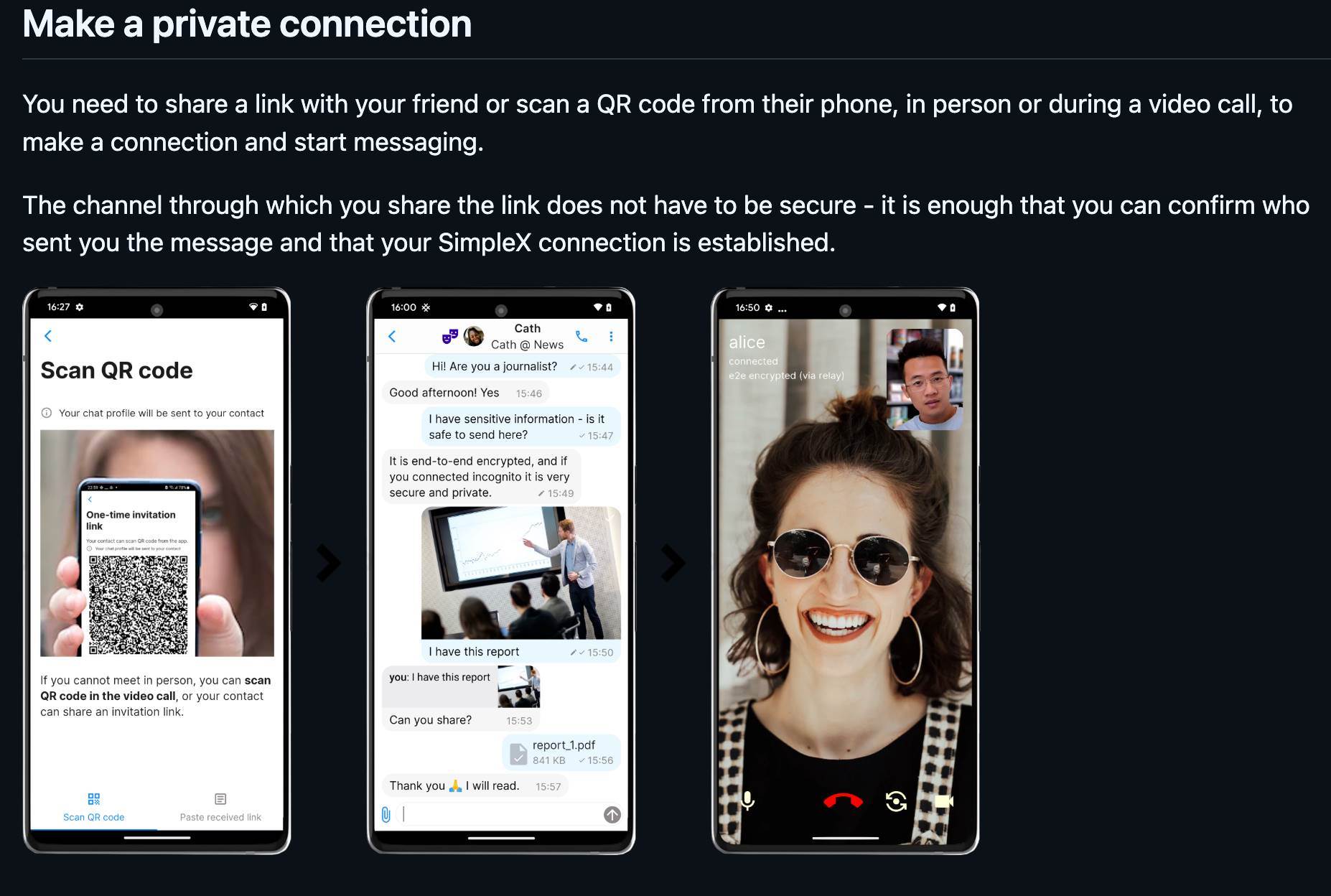
In terms of technology, SimpleX uses its own SimpleX Messaging Protocol. Messages are transmitted through relay servers, but these servers only temporarily store encrypted messages. They don’t save any user records, nor do they communicate with each other. Messages are deleted once they have been delivered. The servers don’t know who you are, nor who you’re communicating with.
This design is extremely advanced, and it’s entirely aimed at protecting privacy.
顺带一提,该应用在 Github 上已经开源,这里有更多信息。
SimpleX 由 Evgeny Poberezkin 于 2021 年在伦敦创立。2022 年获得了 Village Global 领投的种子前轮融资,Jack Dorsey 曾公开表示对这个项目的认可。目前应用完全开源,通过了 Trail of Bits 的安全审计。
实际体验上,SimpleX 的界面比较简洁,支持文字、语音消息、图片、文件和阅后即焚消息。群聊功能也有,但因为没有中心化的成员列表管理,大型群组的体验不如传统应用。语音通话可用,视频通话还存在一些稳定性问题。
一个值得注意的限制是:由于没有统一的用户 ID,如果你换了设备或丢失了本地数据,你需要重新和每个联系人建立连接。没有「登录账号恢复所有聊天记录」这回事。
这也是极端隐私设计的代价。
2款应用商业模式对比:代币激励 vs 刻意去金融化
两个应用都在做隐私通讯,但商业模式的选择截然不同。
Session 走的是典型的 Web3 路线,用代币把网络参与者的利益绑在一起。SESH 是 Session Network 的原生代币,主要用途有三个:
● 运行节点需要质押 25,000 SESH 作为保证金;
● 节点运营者通过提供消息路由和存储服务获得 SESH 奖励;
● In the future, paid features such as Session Pro membership and Session Name Service will be funded using SESH.
The logic behind this model is as follows: Node operators have an economic incentive to maintain network stability. The staking mechanism increases the cost of malicious actions, while token circulation provides a sustainable source of funding for projects. Currently, the circulating amount of SESH is approximately 79 million units, with a maximum supply of 240 million units. More than 62 million SESH units are locked in the Staking Reward Pool as reserve funds for node operators.
After Vitalik’s donation, the value of SESH increased from less than $0.04 to over $0.20 within a few hours. Its market value even exceeded $16 million. This sharp increase was certainly due to leveraging current trends, but it also indicates that the market is pricing in the concept of “private infrastructure”.
SimpleX takes a completely different approach. Its founder, Evgeny Poberezkin, has clearly stated that they will not issue tradable tokens, as he believes that speculative properties of tokens could lead the project away from its original purpose.
SimpleX currently relies on VC financing and user donations for its funding. In 2022, the seed round of financing amounted to approximately $370,000, with user donations totaling over $25,000. The team plans to launch Community Vouchers in 2026 to ensure sustainable operations.
Community Vouchers are a type of limited-purpose token, essentially prepaid server usage vouchers. Users purchase these vouchers to pay for server costs within their communities. The funds are distributed between server operators and the SimpleX network. The key difference is that these vouchers cannot be traded, there is no pre-mining, and they are not sold publicly. The price at which they are purchased is fixed.
It seems that SimpleX has deliberately eliminated any potential for financial speculation.
Both approaches have their advantages and disadvantages. Session’s token model can quickly attract node operators and capital investment, but it also exposes the project to currency fluctuations and regulatory risks. SimpleX’s de-financialization design ensures the purity of the project, but its funding sources are limited, resulting in slower expansion.
This is not just a matter of business strategy; it also reflects different views on how “privacy should be funded”.
Common challenges in privacy communication
Vitalik didn’t just speak well in his donation post. He pointed out clearly:
Neither of these applications is perfect. There’s still a long way to go before true user experience and security can be achieved. The problems he mentioned are actually structural issues that affect the entire privacy communication field.
The first challenge is the cost of decentralization itself. Centralized applications offer faster, more stable messaging experiences because all data is processed by the same servers, allowing for greater optimization. Once we move towards decentralization, messages must be routed across multiple independent nodes, which inevitably leads to delays.
The second point is multi-device synchronization. Using Telegram or WhatsApp on a different phone, you can log in to your account and access your chats. But in a decentralized architecture, there’s no central server to store your data. Multi-device synchronization relies on end-to-end key synchronization mechanisms, which are much more complex technically.
The third point relates to Sybil attacks andDoS protection. Centralized platforms use mobile phone numbers for registration, which naturally provides a barrier against spam accounts and malicious attacks. But what if we remove the need for mobile number binding? How can we prevent people from creating fake accounts to harass users or attack the network?
If we want decentralization, we must sacrifice some of the user experience. If we want permissionless registration, we need to find other ways to prevent abuse. If we want multi-device synchronization, we need to make choices between privacy and convenience.
Vitalik choosing to invest in these two projects at this time is, in some way, a statement: these problems deserve to be solved, and solving them requires funding and attention.
For ordinary users, it might still be too early to switch to Session or SimpleX right now, as there are indeed some shortcomings in the user experience. But if you care about your digital privacy, it’s worth downloading these tools and learning about what “true privacy” actually means.
After all, when Vitalik is willing to invest money in something, it’s likely that this isn’t just about geeks’ self-indulgence.