Exchange Ranking
 Top Exchanges
 24h Volume Ranking
 Popularity Ranking
 Exchange BTC Balance
 Proof of Reserves
 Decentralized Exchanges
 Funding Rate
 Funding Heatmap
 Liquidation Data
 Max Pain
 Long/Short Ratio
 Whale L/S Ratio
 Binance/Okex/Huobi L/S
 Bitfinex Margin L/S
 ETF Tracker
 Solana ETF
 XRP ETF
 Hong Kong ETF
 Bitcoin Treasuries
 Crypto Reversal
 Ethereum Reserves
 HyperLiquid Wallet Analysis
 Hyperliquid Whale Watch
 Large Transactions
 On-chain Movement
 Bitcoin ROI
 Stablecoin Market Cap
 Options Analysis
 News
News Articles
 Economic Calendar
 Features
 Wallet
 Contract Calculator


 Security
 Collections
 Watchlist
 Following
 BTC
BTC  ETH
ETH TLDR
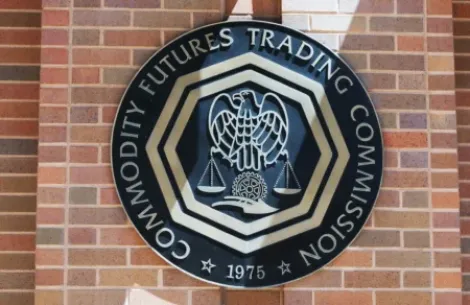
The U.S. Commodity Futures Trading Commission (CFTC) has asked the court to dismiss the Chicago Mercantile Exchange Group's lawsuit on the grounds that CME lacks legal qualifications. CME argued that Kalshi's Bitcoin perpetual contracts should be classified as swaps rather than futures. Regulators pointed out that CME's own Bitcoin and Ethereum futures trading volume increased in the relevant months, and CME itself has the ability to issue similar products.
The CFTC claims the nature of the contract is a swap
On September 2, 2026, the U.S. Commodity Futures Trading Commission (CFTC) filed a motion in the federal court to dismiss a lawsuit filed by the Chicago Mercantile Exchange Group. The core controversy in the case is how regulators characterize Bitcoin perpetual futures contracts.
CME sued the CFTC in June this year because the agency had previously approved the Bitcoin perpetual contract launched by Kalshi. CME wants the court to overturn the approval decision. However, the CFTC argued in its motion that CME did not have legal standing to file a lawsuit because CME itself could be listed for trading the same type of contract.
CME claims that CFTC approval gives emerging exchanges an unfair advantage and maintains that perpetual contracts should be legally defined as "swaps" products rather than "futures" contracts in the traditional sense. In response, the CFTC clearly expressed its opposition, pointing out that under current law, futures contracts do not need to have a fixed expiration date.
Case timeline and next steps
Background and focus of controversy
Perpetual contracts allow traders to hold price exposure without an expiration date and anchor the contract price to the asset price through a funding rate mechanism. CME believes that this structure conforms to the legal definition of "swaps" under the Dodd-Frank Act, while traditional futures usually have clear maturity and settlement dates.
The CFTC rejected this view. The agency said it had approved Kalshi's BTCP ERP contract through a formal review process for new products. CFTC Chairman Michael Selig defended the approval, emphasizing that the contract would still be subject to standard leverage, margin and customer protection rules. At the same time, CME CEO Terry Duffy criticized the approval process, warning that perpetual contracts could lead to excessive speculation. Kalshi countered that the lawsuit was a means by competitors to limit market competition.
Regulators 'evidence and arguments
In its filing, the CFTC cited CME's own trading data as evidence: data showed that CME's Bitcoin and Ethereum futures trading volume increased in both June and August compared with May. Regulators believe that CME's alleged competition damage is self-inflicted because the company chose not to list similar contracts. In addition, the CFTC also requested an oral hearing on the motion.
The CFTC further pointed out that even if the court ultimately upheld CME's view on contract classification, other exchanges could still offer similar products under swap rules, which would not eliminate the competitive pressure CME claims to face.
Follow-up procedures
CME must submit a response to the motion to dismiss by October 2. Currently, the court has not yet ruled on the motion or the classification of perpetual contracts. Kalshi's Bitcoin perpetual contract can still be traded normally during the trial. It is reported that the company is preparing more types of perpetual contracts, including products linked to crude oil.