Exchange Ranking
 Top Exchanges
 24h Volume Ranking
 Popularity Ranking
 Exchange BTC Balance
 Proof of Reserves
 Decentralized Exchanges
 Funding Rate
 Funding Heatmap
 Liquidation Data
 Max Pain
 Long/Short Ratio
 Whale L/S Ratio
 Binance/Okex/Huobi L/S
 Bitfinex Margin L/S
 ETF Tracker
 Solana ETF
 XRP ETF
 Hong Kong ETF
 Bitcoin Treasuries
 Crypto Reversal
 Ethereum Reserves
 HyperLiquid Wallet Analysis
 Hyperliquid Whale Watch
 Large Transactions
 On-chain Movement
 Bitcoin ROI
 Stablecoin Market Cap
 Options Analysis
 News
News Articles
 Economic Calendar
 Features
 Wallet
 Contract Calculator


 Security
 Collections
 Watchlist
 Following
 AAVE
AAVE  BTC
BTC  EIGEN
EIGEN  ENA
ENA  ETH
ETH  SOL
SOL  SUI
SUI  GPS
GPS  GUN
GUN Overview
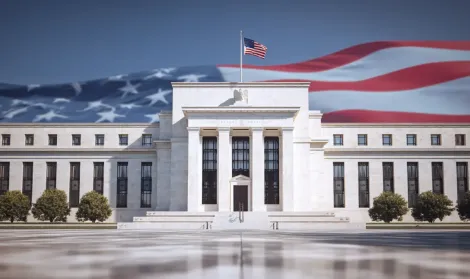
The CME Fed Observation Tool shows that the probability of a 25 basis point rate hike at the September 15-16 Federal Open Market Committee meeting has risen to 66%, higher than the 35% before Federal Reserve Chairman Kevin Walsh delivered a hawkish speech in Jackson Hole. At the same time, the conflict in Iran pushed oil prices above $90.
Bitcoin is currently trading at US$78000 after rising 25% in August. But structural questions remain unresolved: Will ETF demand change the impact of interest rate hikes on the crypto market, or will it simply delay the pain?
Key Data
CME Fed Observation Tool pricing shows that the probability of a 25 basis point rate hike in September is 66%, compared with 35% before Washh's Jackson Hole speech.
Barclays Bank now predicts that it will raise interest rates twice in 2026, in September and December respectively, reversing its previous judgment of suspending interest rate hikes and raising its terminal interest rate expectations.
Bitcoin rose 25% in August, setting its best monthly performance since November 2024. The spot Bitcoin ETF achieved net inflows in 16 of the 21 trading days, totaling US$3.52 billion.
The federal funds rate is currently between 3.50% and 3.75%, and has experienced three rate cuts in 2025; a September rate increase will be the first since July 2023, ending the longest pause since the pre-pandemic tightening cycle.
Brent crude oil soared to more than $91 a barrel after another conflict between the United States and Iran near the Strait of Hormuz. The PCE inflation index was 3.7% in 12 months and 4.1% in 6 months, well above the 2% target.
Bitcoin's August performance
Bitcoin has just had its best August since 2017, with a 25% gain. Spot ETFs attracted US$3.52 billion in funds, and prices rebounded to US$78000 from a May low of US$63000. By any conventional indicator, the trend is upward.
The problem is that when the new Fed chairman said in Jackson Hole that inflation was "worrying" and the market immediately shifted its September expectation from a pause in interest rate hikes to a possible rate hike, conventional logic no longer applied. Oil prices exceed $90 because Iran is no longer a hypothetical risk. Inflation is almost double the target level. The tool used by the Federal Reserve to fight inflation-interest rate hikes-has historically been the most reliable killer of cryptocurrency gains.
The last time the Federal Reserve raised interest rates significantly, Bitcoin plunged 77%. This time, because of the existence of ETFs, the situation should be different. Whether this holds or not depends on who is buying Bitcoin and whether they will continue to buy when yields rise.
Data on which the Fed is concerned
The numbers before the Federal Open Market Committee on September 15 are not vague. The Federal Reserve's preferred inflation indicator, the personal consumption expenditure price index, is 3.7% in 12 months and 4.1% in 6 months, both about twice the 2% target. Core PCEs excluding food and energy, although more controlled, are still at high levels. The direction is wrong.
Energy is the direct cause. On September 1, Brent crude oil hit US$91.25 a barrel after another conflict between the United States and Iran broke out near the Strait of Hormuz, reigniting concerns about shipping at the world's most important oil choke point. WTI crude oil reached US$86.36. Gasoline prices rose accordingly. Inflation hit 4.2% in May, a three-year high, with a 23.5% surge in energy costs being the main driver.
The July employment report briefly pushed down the probability of a rate hike to about 30% due to the significant number of non-agricultural payrolls falling short of expectations. But Washi's speech in Jackson Hole on August 28 overcame that signal. He called the inflation situation "worrying," explicitly citing PCE readings and indicating the Fed was ready to take action. The market re-priced within hours.
Federal Reserve Governor Michael Barr then reinforced this message, saying he supported a "decisive" interest rate hike if inflation failed to ease. Following his announcement, Polymarket traders pushed the probability of a rate hike to 72%. CME's Fed observation tool reflected actual federal funds futures positions, which were eventually fixed at 66%. The market is not guessing, but pricing interest rates as a benchmark scenario.
BNP Paribas went further and revised its forecast, predicting three interest rate hikes starting in December 2026, effectively reversing the three interest rate cuts during 2025. If this path becomes a reality, the federal funds rate will return to the 4.25% to 4.50% level by mid-2027, which is the level that has led to the deepest retracement in Bitcoin history.
Even a single rate increase will change the narrative. Markets are looking forward to interest rates for most of 2025 and early 2026. The shift from "when will the Fed cut interest rates" to "how many times the Fed will raise interest rates" is an expected institutional shift, and the price fluctuations caused by institutional changes are often greater than individual interest rate decisions themselves.
Transmission mechanism: Interest rates rise, risk assets fall
The mechanism for how interest rate increases are transmitted to crypto markets is straightforward, even if markets sometimes pretend otherwise. When the Federal Reserve raises the federal funds rate, risk-free returns on U.S. Treasurys and money-market funds rise. Every asset in the economy is priced relative to this benchmark. Higher risk-free rates mean that risky assets need to provide higher expected returns to justify their volatility, or their prices will fall until the implied rate of return rises to meet the new threshold.
In 2022, the Federal Reserve will increase interest rates from 0.25% to 4.50%, the fastest tightening cycle in four decades. Bitcoin fell 77%, from approximately $48000 in March to $15500 in November. The S & P 500 fell 25%, and the Nasdaq fell 33%. Bitcoin is not an inflation hedge, nor is it a hedge for anything. It is the most interest-sensitive large-cap asset in the market.
During that cycle, the correlation between Bitcoin and the Nasdaq reached an all-time high, shattering the "unrelated asset" argument that had been a pillar of institutional Bitcoin allocation models. Bitcoin tracks risk appetite, and interest rate hikes destroy risk appetite.
A 25 basis point rate hike, from 3.50% to 3.75%, is not the same as a 425 basis point rate hike in nine months. Magnitude is important. But the direction is the market pricing first, and the direction is clear: the cost of capital is rising, not falling. When this direction reverses, every asset on earth is repriced, and Bitcoin's history shows that its repricing is more drastic than most assets.
Why this time should be different
The bullish reason for Bitcoin to survive the rate hike relies on a structural change: the spot ETF. The U.S. spot Bitcoin ETF was launched in January 2024, and since then cumulative assets have exceeded US$99 billion. In August 2026 alone, they attracted $3.52 billion, setting their strongest monthly performance of the year. Among the 21 trading days, 16 trading days recorded net inflows, including net inflows for nine consecutive trading days from August 17 to 27. The number of large asset management companies holding Bitcoin ETF positions has increased by 150% over the past year.
The argument is that ETF flows represent a new type of buyer: institutional allocators, who run model portfolios with bitcoin allocation weights of 1% to 5%. These buyers will not trade out of macro fears. They rebalance as planned. When Bitcoin falls, their allocation weight falls below the target and they automatically buy. When Bitcoin goes up, they will reduce their holdings. This buying is mechanical and creates a structural buying that did not exist during the 2022 crash.
August data support this interpretation. Bitcoin rose 25% amid soaring oil prices, escalating tensions in Iran and doubling the probability of a rate hike. Under the old model, Bitcoin should have fallen. However, the inflow of ETF funds accelerated. Institutional demand appears to absorb the selling pressure that geopolitics and macro fears typically cause. The opposite view is simpler: a rate hike has not yet occurred.
Scenario of ETF demand collapsing under interest rate hikes
ETF capital inflows are not unconditional. They respond to the same forces as other investment flows, but with a lag. In the first half of 2026, the cumulative net outflow of Bitcoin ETF was US$5.29 billion, and the price fell from US$94000 in January to US$63000 in May. Institutional buying failed to prevent the pullback and instead participated in it.
If the Fed raises interest rates on September 16, the immediate effect will be a stronger dollar, a rise in Treasury yields, and a repricing of risk premiums for all asset classes. Model portfolios that include Bitcoin as a risky asset will have higher expected return thresholds. Some allocators will reduce exposure, while others will suspend new inflows until the interest rate path becomes clearer.
August's rally made things worse, not better. After a 25% gain, the $78000 Bitcoin has less upside than the $63000 Bitcoin. Raising interest rates at the top of a momentum-driven rally is the setting that causes the most drastic pullback, as leveraged bulls and momentum traders exit at the same time.
August's $3.52 billion ETF inflows were indeed impressive, but it was less than 4% of total net assets of $99 billion. Sentiment reversals could cause outflows to exceed inflows in a single month, as occurred in February and March 2026, when US$2.1 billion flowed out for two consecutive weeks.
The composition of ETF buyers is also important. A considerable part of the ETF inflow comes from hedge funds 'basis trading: buying spot bitcoin through ETFs and shorting CME futures to gain the spread. These positions are interest rate sensitive. When Treasury yields rise, the opportunity cost of occupying funds in basis trading increases, the spread narrows, the attractiveness of the transaction decreases, and positions are closed. This is not a panic selling, but a rational reconfiguration, which will be reflected in ETF outflow data without changing the direction of Bitcoin prices.
The number of large asset management companies holding positions in Bitcoin ETFs has increased by 150%, which sounds like unstoppable institutional adoption. But position size is more important than the number of positions. A pension fund with 0.5% Bitcoin will not increase its allocation just because Bitcoin performed well in August. It will mechanically rebalance, and if Bitcoin rises enough, it will sell to maintain target weight. The same structural forces that create the bottom also create the top.
The "digital gold" argument is facing another test
The same argument appears every cycle: Bitcoin is digital gold, a tool to hedge against inflation and currency devaluation. Every rate hike cycle tests this claim. So far, it has failed every time. In 2022, inflation will exceed 8%, and Bitcoin will fall by 77%. Gold fell only 3% over the same period. The correlation between Bitcoin and gold has been negative for most of the tightening cycle. Bitcoin behaves like a technology stock, not a commodity.
The test in 2026 will be different because inflation is driven in part by a war. Oil prices are rising not because of demand, but because of military threats to the supply route in the Strait of Hormuz. Since the outbreak of the conflict, gold has outperformed Bitcoin and stocks. If Bitcoin is really digital gold, it should rise along with physical gold during the supply-side energy crisis. But it didn't. Bitcoin rose 25% in August, but gold also rose 9%, and gold did not first fall 40% from its peak. Given the much higher volatility, risk-adjusted comparisons are not conducive to Bitcoin's store of value narrative.
The honest assessment is that Bitcoin is a risky asset with an inflation narrative label. This narrative is easy to sell when liquidity is abundant and interest rates are falling. When interest rates rise and liquidity tightens, Bitcoin behaves as it actually does: leveraged exposure to global risk appetite.
Impact of interest rate hikes on altcoins and DeFi
If Bitcoin is a leveraged exposure to risk appetite, then altcoin is a leveraged exposure to Bitcoin. This amplification effect is two-way. During the 2022 tightening cycle, Ethereum fell 82%, Solana fell 96%, and the total market value of altcoins excluding Bitcoin fell by about 80%. The sell-off was more violent, faster and more thorough than Bitcoin's 77% decline. Altcoins have no structured buying orders for ETFs. Most do not have model portfolio configurations. They rely on speculation, narrative and momentum trading, all of which disappear when interest rates rise.
A September interest rate hike will have a greater impact on altcoins, not just because of widespread risk aversion: many altcoin projects rely on venture capital funds, and the prices of venture capital funds are determined relative to risk-free interest rates. When Treasury yields rise, the threshold for venture investment also rises. Funds that might have flowed to the DeFi Agreement Series A financing turned to national debt. Financing pipelines have dried up, development has slowed down, and tokens that rely on ecosystem growth for value have lost their growth momentum.
Ethereum is a partial exception because it has its own cash ETF flow. The U.S. spot Ethereum ETF attracted $697 million in the last week of August, with BlackRock's ETHA accounting for 72%. This creates structured buying orders similar to Bitcoin, but on a much smaller scale. The total assets of the Ethereum ETF are still only a small part of the assets of the Bitcoin ETF, and institutions 'allocation of ETH is narrower.
DeFi borrowing rates will also respond to interest rates. On-chain borrowing costs and off-chain interest rates are loosely but continuously linked. When risk-free rates rise, DeFi yields need to rise to remain competitive, which means either raising borrowing costs or narrowing spreads for liquidity providers. Both outcomes will reduce DeFi activity. The total locked value of major agreements fell by approximately 60% in the 2022 cycle and has not yet fully recovered. Aave's stablecoin variable borrowing rates have exceeded 5%. A further 25 basis points increase in the federal funds rate would push up these rates and shrink the number of borrowers willing to pay them.
The September token unlock calendar adds another layer of pressure. ENA, EIGEN, GUN and GPS are all unlocked this week, increasing the supply of these tokens, and demand for these tokens will weaken in a post-interest rate increase environment. SUI is consolidating around $0.70 and its unlocking period is approaching. During the tightening cycle, the planned increase in supply is the worst time for token holders.
It's important that Washi is different from Powell
Kevin Washi succeeded Jerome Powell as chairman of the Federal Reserve in February 2026, after being nominated by President Trump at the end of 2025. This change is crucial to how the market should interpret the September decision. Powell was inherently cautious. He sent out signals months in advance, publicly distressed by his dual mission and expressed obvious discomfort with surprising markets. His rate hike cycle has been preceded by extensive forward-looking guidance.
Wash is different. His speech in Jackson Hole was straightforward. He cited specific inflation readings as "worrying" and offered no usual reservations about waiting for more data. The market repriced September in a matter of hours, because Walsh kept his word and everyone knew it.
Washi's willingness to act without a long notice means that a September decision may be in the balance until the last minute. Under Powell, the probability of a 66% rate hike in the two weeks leading up to the meeting is almost certain. Under Walsh's leadership, with less interpretable forward-looking guidance, CPI and initial jobless claims data for September 10-11 may really influence that decision.
For crypto traders, this uncertainty is worse than certainty in any direction. Confirmation of interest rate hikes can be priced, and confirmation of suspension can also be priced. The situation in two weeks will be like a coin toss, which will lead to position changes, leverage liquidation of both long and short sides, and a volatile market in which no one benefits.
The Federal Open Market Committee's updated dot chart (showing each member's forecast for the path of interest rates) will be as important as the decision itself. If the median lattice moves upward, showing that two or more interest rate hikes are expected before mid-2027, then even if the decision is made to suspend interest rate hikes in September, the market will price a tightening cycle. Dot Chart killed the rally in 2022, and it may do so again.
Two-week window
The Federal Open Market Committee will meet on September 15-16. This gave the market a full two weeks to lay out. Before the meeting, there will be two data points that will be more important than anything else. The August consumer price index will be released on September 10 and will show whether energy-driven inflation is accelerating further. Weekly initial jobless claims on September 11 will show whether the labor market has cooled enough to give the Fed an excuse to wait.
If CPI data is strong and initial applicants remain low, a rate hike is almost certain. If the CPI unexpectedly goes down, the 66% probability could fall back to the level of a coin toss, at which time Bitcoin could rebound with relief.
Before the meeting, key price levels for Bitcoin were $75000 below (where buyers intervened in July) and $82000 to $86000 above (a resistance zone that has restrained gains twice this year). If the CPI is confirmed to exceed US$86000 due to unexpected doves, it will open a path to US$94000. If the sell-off after the rate hike falls below $75000, the target will point near the May low of $63000.
Leverage increases two-way risk. Open interest in Bitcoin perpetual contracts climbed in August as prices rose. A positive funding rate means that long positions are paying short positions, indicating a bullish position. A rate hike, even if it triggers a mild correction, may have a chain reaction through leveraged bulls, causing prices to fall significantly below fair value before recovering. The Iranian airstrike on February 28 created exactly this pattern: Bitcoin fell to $63000, triggering a liquidation of more than $300 million, and then recovered within days.
The honest answer to the question "Will ETF demand change the rules of the game" is: Partly yes, but not enough to eliminate the risk of retracement. ETFs create bottoms, but they cannot eliminate gravity. The Federal Reserve controls gravity.
Points to Focus
August CPI data released on September 10
This is the last important inflation reading before the Federal Open Market Committee decision. A reading above 4.5%, it would eliminate almost all doubts about a September rate hike. Below 4% will reopen the debate.
The weekly initial jobless claims on September 11
The rising number of initial claims will provide the Federal Reserve with cover to pause interest rate hikes. A flat or falling number of initial applicants will support the case for austerity.
Bitcoin ETF Flows Data for the First Two Weeks of September
If inflows remain at August's pace despite the rising probability of rate hikes, then the structural demand argument is true. If money flows reverse, then August's rally is momentum driven and fragile.
Oil prices and developments in the Strait of Hormuz
Energy costs are the main drivers of inflation. Any detente between the US and Iran would lower oil prices and reduce the urgency of raising interest rates. Upgrading is the opposite.
Bitcoin's response to the US$82,000 - 86,000 resistance zone
was suppressed twice at this level in 2026, indicating significant selling pressure. A third suppression before the Federal Open Market Committee meeting would confirm that the market was in range volatility before the decision was made.
FAQs
When is the next Federal Open Market Committee meeting?
The Federal Open Market Committee will meet on September 15-16, 2026. Interest rate decisions and updated economic forecasts will be released at 2 p.m. EDT on September 16, followed by a press conference by Federal Reserve Chairman Kevin Walsh.
What is the current federal funds rate?
As of June 17, 2026, the federal funds rate is 3.50% to 3.75%. The Federal Reserve cut interest rates by 25 basis points three times in 2025, reducing interest rates from 4.25% to 4.50%. A rate hike in September 2026 will be the first time since July 2023.
What are the chances of a September rate hike?
CME Fed Observation Tool shows a 66% probability of a 25 basis point rate hike. Kalshi priced the probability of a rate hike at 59%. Polymarket traders pushed the probability up to 72%, after Federal Reserve Governor Barr backed a "decisive" response to inflation. Barclays now predicts interest rates in both September and December.
How did Bitcoin perform during the last rate hike cycle?
As the Federal Reserve raised interest rates from 0.25% to 4.50%, Bitcoin fell 77% between March and November 2022. During this period, Bitcoin's correlation with the Nasdaq index reached all-time highs, weakening the argument that Bitcoin serves as a decentralizing tool for unrelated portfolios.
Can Bitcoin ETF withstand interest rate hikes and sell-offs?
Can't be completely resisted. In the first half of 2026, Bitcoin fell from US$94000 to US$63000, and the cumulative net outflow of Bitcoin ETF was US$5.29 billion. ETFs created structural buying through model portfolio rebalancing, but they were unable to prevent retractions when the overall risk environment deteriorated.
Why are oil prices related to the Federal Reserve's interest rate decisions?
Oil prices have soared to more than $90 a barrel due to the ongoing conflict between the United States and Iran near the Strait of Hormuz. Higher energy costs are directly reflected in inflation readings, especially in the sacred core PCE index, which the Fed focuses on. The PCE index stood at 3.7% in 12 months, almost double the 2% target, and was mainly driven by energy.
What bitcoin price levels are worth paying attention to before the Federal Open Market Committee meeting?
Support is at $75000, where buyers defended prices in July. Resistance is between $82000 and $86000, and the region has curbed gains twice this year. If the sell-off after the rate hike falls below $75000, the target will point near the May low of $63000.
Will raising interest rates cause Bitcoin to crash?
This article is educational analysis and does not constitute investment advice. A 25-basis point rate hike is unlikely to trigger a 2022-style crash, but if combined with strong CPI data and ETF outflows, it could trigger a 10% to 15% correction from current levels. The structural changes brought about by ETFs provide part of the floor, but history shows that this floor is permeable during periods of continued tightening.