Exchange Ranking
 Top Exchanges
 24h Volume Ranking
 Popularity Ranking
 Exchange BTC Balance
 Proof of Reserves
 Decentralized Exchanges
 Funding Rate
 Funding Heatmap
 Liquidation Data
 Max Pain
 Long/Short Ratio
 Whale L/S Ratio
 Binance/Okex/Huobi L/S
 Bitfinex Margin L/S
 ETF Tracker
 Solana ETF
 XRP ETF
 Hong Kong ETF
 Bitcoin Treasuries
 Crypto Reversal
 Ethereum Reserves
 HyperLiquid Wallet Analysis
 Hyperliquid Whale Watch
 Large Transactions
 On-chain Movement
 Bitcoin ROI
 Stablecoin Market Cap
 Options Analysis
 News
News Articles
 Economic Calendar
 Features
 Wallet
 Contract Calculator


 Security
 Collections
 Watchlist
 Following
 BTC
BTC Fed Treasury-Purchase Program: Reinvest rather than add stimulus
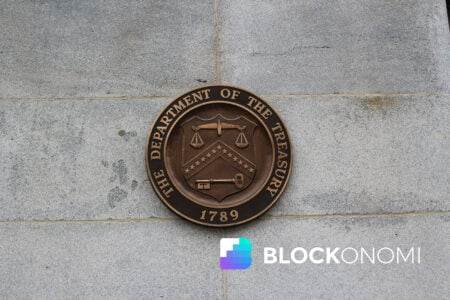
Next week, the Fed is expected to buy as much as $2.122 billion in treasury bonds. The operation was part of the Federal Reserve's reinvestment plan that totaled approximately $17 billion on September 14. The New York Federal Reserve did not list any reserve management purchases between August 14 and September 14, indicating the plan was not related to new stimulus measures.
Market commentator Jordan Kerridge pointed out that the transaction is a regular portfolio maintenance designed to replace maturing assets, rather than a new expansion of the Fed's balance sheet. This structural difference is crucial to judging how risky assets such as Bitcoin respond to liquidity.
Why changes in US dollar liquidity attract the attention of Bitcoin traders
Previously, the Bitcoin price fell below US$77,000, triggering a long liquidation of approximately US$150 million in the derivatives market. Subsequently, the price of Bitcoin recovered to a level close to $80,000. This volatility has renewed market attention to liquidity and treasury bond operations.
Bitcoin generally shows stronger demand when US dollar liquidity expands and financing conditions relax. More funds available could increase investors 'affordability of risky assets, while lower short-term yields could also reduce the appeal of cash-like instruments. However, these results are not automatically determined by the Fed's Treasury-buying behavior.
Analysis of Reinvestment Mechanism and Market Impact
The Fed's reinvestment operations use principal payments from its institutional securities holdings to buy treasury bonds. This changes the composition of the portfolio while replacing assets that are being repaid. In practice, this does not amount to an additional $17 billion in expansion. The Federal Open Market Committee (FOMC) directs the Federal Reserve Bank of New York's trading desk to conduct these transactions, mainly through primary dealers on the secondary market, with settlement usually occurring one business day after each operation.
The trading desk allocates treasury bond purchases into two maturity segments: notes ranging from one to four months account for approximately 75% of the total purchases, and notes ranging from four to twelve months account for 25%. Notes with a maturity of four weeks or less are excluded.
It is worth noting that there is an essential difference between the Federal Reserve's treasury bond purchases and reserve management purchases. Reserve management activities are designed to increase securities holdings to maintain sufficient bank reserves; while reinvestment purchases are to replace principal received from agency debt and mortgage-backed securities. This plan only includes the latter. This detail downplays the idea of a "surge in liquidity." While these transactions help maintain orderly reserve conditions and balance sheet composition, they do not confirm widespread monetary easing. Factors such as interest rate policy, reserve levels, Treasury cash flow and credit demand also affect financial conditions.
A Multi-dimensional Perspective on Bitcoin Liquidity Assessment
Keric linked the planned operation to a potential positive Bitcoin market reaction. Recent price movements explain this focus: BTC prices partially regained ground after falling below $77,000. This trend forced the liquidation of leveraged long positions, exposing the fragile position structure of the derivatives market.
Liquidation amplifies losses because exchanges automatically sell collateral when margins fall below required levels. A rebound after such an event may reflect short covering, increased spot demand or reduced selling pressure, but this does not prove to be directly caused by reinvestment of treasury bonds.
Traders should evaluate Bitcoin liquidity through multiple indicators rather than a single purchase plan. Changes in bank reserves, stablecoin supply, exchange inflows, funding rates, open interest contracts, and the Treasury General Account (TGA) provide a broader context. In addition, bond yields and the trend of the US dollar can also shape demand for cryptocurrencies.
The Federal Reserve's Treasury purchases may affect short-term market expectations before settlement, but their direct impact depends on counterparties, reserve movements, and other concurrent balance sheet flows. For example, an increase in Treasury cash may draw reserves, while federal spending returns cash to banks.
As a result, the $2.122 billion figure is only an input to a plan, rather than a stand-alone Bitcoin signal. Market participants will continue to watch whether Bitcoin can hold the US$80,000 mark after a rebound and track the rebuilding of leverage after previous waves of liquidations. The result of the next operation will display the purchase amount accepted, the dealer's submission status, and the specific bill type obtained.