Exchange Ranking
 Top Exchanges
 24h Volume Ranking
 Popularity Ranking
 Exchange BTC Balance
 Proof of Reserves
 Decentralized Exchanges
 Funding Rate
 Funding Heatmap
 Liquidation Data
 Max Pain
 Long/Short Ratio
 Whale L/S Ratio
 Binance/Okex/Huobi L/S
 Bitfinex Margin L/S
 ETF Tracker
 Solana ETF
 XRP ETF
 Hong Kong ETF
 Bitcoin Treasuries
 Crypto Reversal
 Ethereum Reserves
 HyperLiquid Wallet Analysis
 Hyperliquid Whale Watch
 Large Transactions
 On-chain Movement
 Bitcoin ROI
 Stablecoin Market Cap
 Options Analysis
 News
News Articles
 Economic Calendar
 Features
 Wallet
 Contract Calculator


 Security
 Collections
 Watchlist
 Following
 BTC
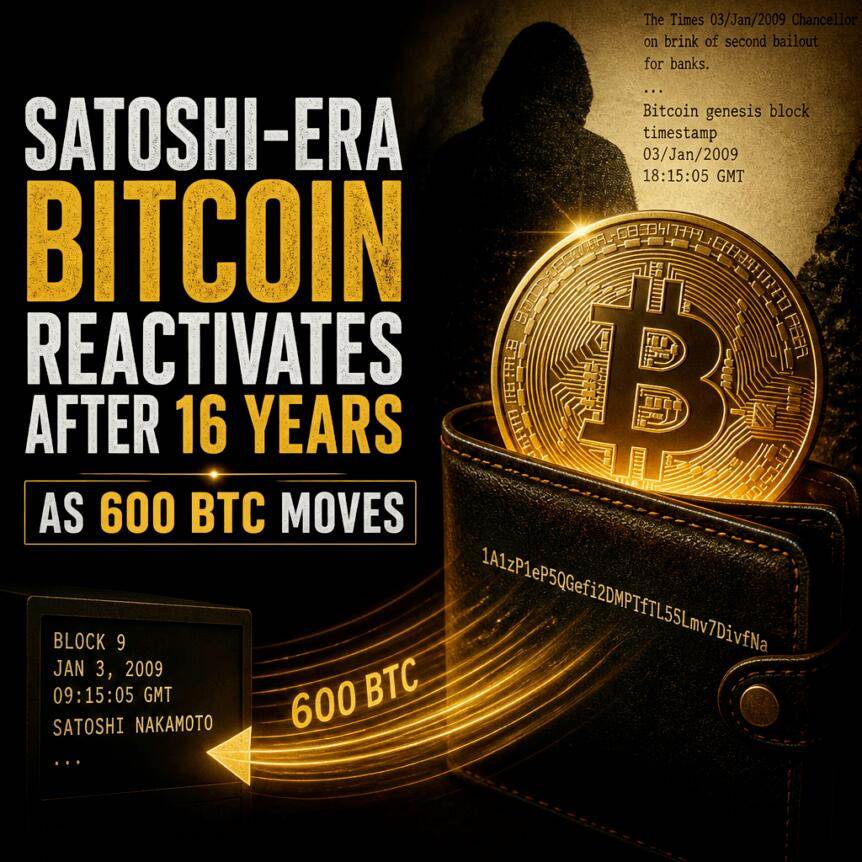
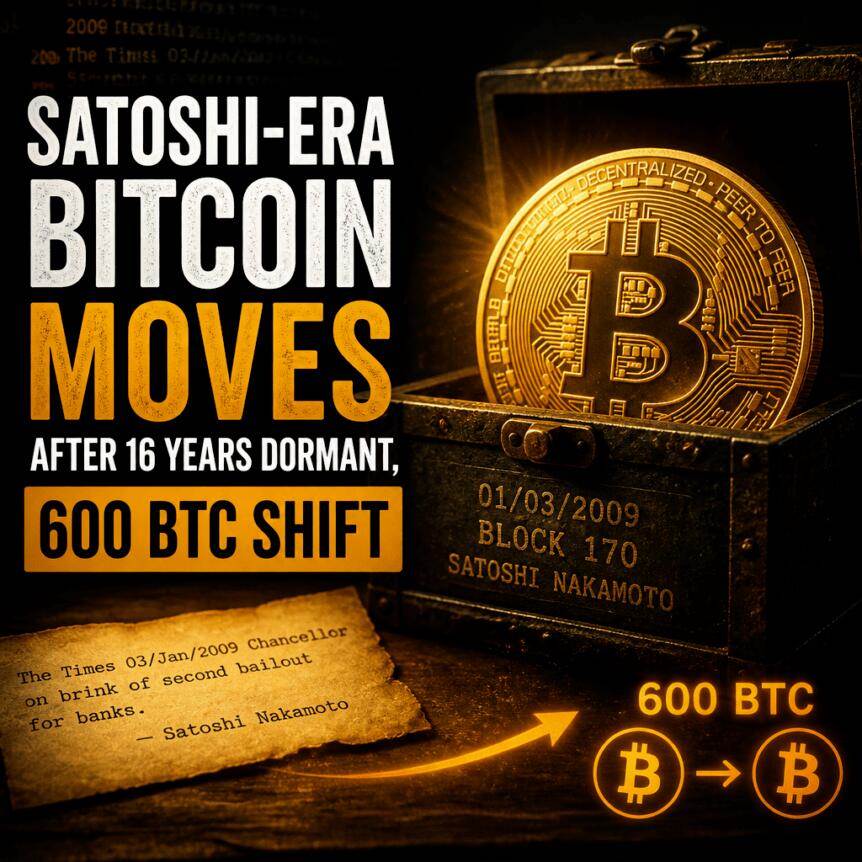
BTC The original Bitcoin mining coin, which had been dormant for 16 years, finally awakened, triggering new speculation related to Satoshi Nakamoto.
After more than 16 years of silence, the earliest coins mined in Bitcoin finally showed activity again. The move sparked new speculation that the funds may be related to Satoshi Nakamoto. According to on-chain analysis data highlighted by Cointelegraph, 12 long-dormant Bitcoin addresses jointly transferred 600 BTC on Saturday, or approximately $48 million based on current market value.
Although this timing has exacerbated narrative rumors about the "Satoshi era," Whale Alert's research claims to find no evidence of a direct connection between the transaction and Satoshi Nakamoto. The platform said that the transferred funds can be traced back to the block awards received in March 2010, when Satoshi Nakamoto was still actively involved in the early development and communication of the project, and then gradually withdrew from the front line.
Core Points
- On-chain data reviewed by Cointelegraph showed that after more than 16 years of hibernation, a total of 600 BTC were transferred from 12 Bitcoin addresses.
- Whale Alert traces the 600 BTC to mining rewards paid in 12 Bitcoin blocks in March 2010, with an initial subsidy of 50 BTC issued for each block.
- Whale Alert said that based on its analysis, none of these blocks could be connected to Satoshi Nakamoto.
- Previous Whale Alert work only covered seven of the rewards, while Lookonchain had earlier identified seven miners 'wallets that had transferred 350 BTC.
- The fact that the coins were mined while Satoshi Nakamoto was still involved attracted a lot of attention-but "same era" is not the same as "same owner."
Early blocks, long-term dormancy and sudden restarts
The focus of this revival is a set of extremely ancient wallets that have shown no sign of movement for 15 years. Cointelegraph reported that 12 addresses jointly transferred 600 BTC after being dormant for more than 16 years. Blockchain transaction tracking platform Whale Alert said the amount originated from rewards mined across 12 separate Bitcoin blocks.
For investors and chain observers, such "awakening" events are important because they can create short-lived narrative hotspots: the activation of dormant supply can be seen as potential future selling pressure, even if no direct impact on the market is currently recognized. In this case, the key question is not just whether the coins have been transferred, but also where they came from and who may have controlled them.
Whale Alert told Cointelegraph that its research found no connection between the dug block and Satoshi Nakamoto. This is crucial: When activities occur during periods related to Satoshi Nakamoto's involvement, speculation tends to increase, but claims of ownership require more evidence than the timeline.
Whale Alert expands tracking range from seven to twelve rewards
Whale Alert's updated work reportedly traces all 12 block rewards back to Bitcoin blocks mined in March 2010. At that time, it was agreed to pay a block subsidy of 50 BTC per block. Since then, subsidies have been reduced by halving multiple times; the most recent reduction cited in the report occurred in April 2024, when block subsidies dropped from 6.25 BTC per block to 3.125 BTC.
This analysis also builds on Whale Alert's previous efforts. Cointelegraph noted that Whale Alert had previously reviewed seven rewards and said it had determined that these blocks were not mined by Satoshi Nakamoto. In updated accounting, Whale Alert now expands its tracking to the remaining five rewards.
An independent on-chain analyst agency has revealed part of the story. Cointelegraph said Lookonchain initially identified seven miners 'wallets that transferred 350 BTC after 16.5 years of inactivity and attributed the funds to mining activity in March 2010. Combining different levels of analysis highlights a consistent theme: these are mining rewards from early blocks, rather than subsequent token exchanges or unrelated transfers.
Why the "Satoshi Era" is a tempting narrative-but weak evidence
This transfer attracted attention largely because March 2010 coincided with a period when Satoshi Nakamoto was still actively engaged in Bitcoin development and communications. Cointelegraph pointed out that Satoshi Nakamoto's involvement lasted until 2010, and the last known communication record was April 2011.
However, the editorial distinction here is crucial: "Mining during the time period when Satoshi Nakamoto is present" does not automatically mean "controlled by Satoshi Nakamoto." Representatives for Whale Alert emphasized that based on their research, no block associated with these 12 rewards could be linked to Satoshi Nakamoto.
Cointelegraph also reported on a behavioral detail that further complicates simple attribution. Whale Alert said the transfer of one of the rewards occurred several blocks earlier than most other rewards, indicating that the early transfer pattern may be consistent with test transactions that preceded the rest of the transfers. In other words, even if multiple rewards originated in the same month and subsidy era, the way coins are processed over time may reflect operational behavior rather than a single, easily identifiable owner.
Focus on follow-up observations after long-term dormant transfers
When the ancient Bitcoin moves, the instant on-chain fact is clear-the coin moves from an address that has been silent for years to another address. What remains uncertain is the economic intent behind the transfers: Do these transfers represent consolidation, internal consolidation, or may later involve preparations for liquidation?
The most practical next step for readers monitoring these developments is to track the final flow of the 600 BTC after the initial move, and whether some returned to a new dormant address or flowed to an exchange. Satoshi Nakamoto's problem may remain speculative in the absence of stronger evidence, but the real signal for market participants will be the downflow path of the coin and how quickly, if at all, the recovering supply has entered liquidity.