Exchange Ranking
 Top Exchanges
 24h Volume Ranking
 Popularity Ranking
 Exchange BTC Balance
 Proof of Reserves
 Decentralized Exchanges
 Funding Rate
 Funding Heatmap
 Liquidation Data
 Max Pain
 Long/Short Ratio
 Whale L/S Ratio
 Binance/Okex/Huobi L/S
 Bitfinex Margin L/S
 ETF Tracker
 Solana ETF
 XRP ETF
 Hong Kong ETF
 Bitcoin Treasuries
 Crypto Reversal
 Ethereum Reserves
 HyperLiquid Wallet Analysis
 Hyperliquid Whale Watch
 Large Transactions
 On-chain Movement
 Bitcoin ROI
 Stablecoin Market Cap
 Options Analysis
 News
 Articles
 Economic Calendar
 Features
 Wallet
 Contract Calculator


 Security
 Collections
 Watchlist
 Following
 BTC
 ETH
 SOL
Bitcoin's return to above US$80,000 has driven a linkage between crypto stocks and digital asset infrastructure to rise.
Bitcoin has once again reached the US$80,000 mark, injecting strong impetus into crypto stocks and the "digital asset pipeline" that connects token demand and traditional finance. This round of gains coincides with rising market expectations for repurchase of long-term U.S. Treasury bonds and renewed political pressure for greater clarity on U.S. crypto regulations, which jointly pushed the share prices of mining companies, exchanges and stablecoin-related companies higher.
At the same time, the market focus is gradually narrowing to how access and payment channels to the US dollar capital market translate into real on-chain activities and the expansion of institutional balance sheets. From Circle's USDC growth logic to Strategy's debt repayment risk framework to Solana's record on-chain throughput, a series of developments this week revealed a common theme: The performance of crypto assets is increasingly tied to traditional liquidity conditions linked to regulated financial infrastructure.
Core Points
Bitcoin's breakthrough of US$80,000 led to a rally in crypto stocks, with mining companies and digital asset treasury companies recording double-digit gains due to improved risk appetite.
Analysts pointed out that Circle's USDC supply has returned to growth after a six-month slowdown, suggesting that the "next phase" driven by tokenized capital markets and payment applications may be coming.
Regime Intelligence attributed Strategy's main vulnerability to financing channels rather than the collapse of the Bitcoin price, emphasizing that its ability to repay annual debt is the key.
Solana set a new record of 4.2 billion on-chain transactions in July, with prices soaring 40% over the same period and real-world asset (RWA) tokenization activity accelerating.
Bitcoin's rebound drives crypto stocks higher
Bitcoin's return to above US$80,000, driving the overall rise in the open crypto market. According to market reports, this week's rally has benefited mining companies and digital asset treasury companies, while market sentiment has been boosted by expectations that the U.S. Treasury Department plans to double the size of certain long-term bond repurchases.
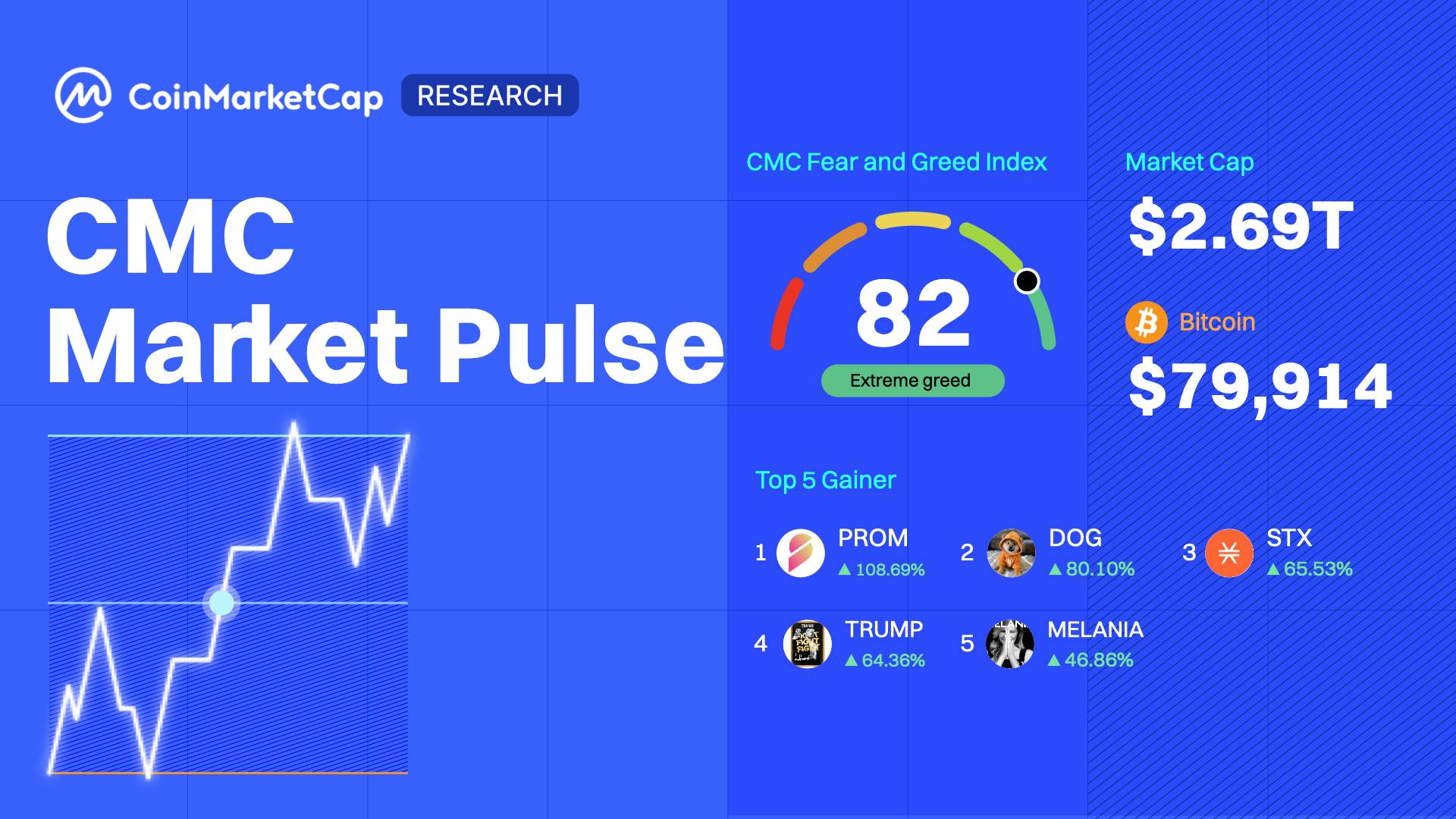
Canaan, MARA Holdings and Strive were listed as the biggest gainers in the past week. Coinbase and Robinhood also rallied. Data showed that Bitcoin rose more than 23% weekly, Ethereum rose nearly 30%, and the transaction price exceeded $2,500.
On the policy front, President Trump once again called on Congress to pass the CLARITY Act, but the bill failed to advance before its August recess and remained stagnant. The bill's potential impact-providing clearer rules for the U.S. crypto market-remains a key variable for long-term institutional engagement. Trump also revisited the idea of the government buying bitcoin, but there was no guarantee in either case.
For investors, the market's response suggests that timing is crucial: conditions for a warming of risk appetite can quickly reprice crypto-asset-related stocks before regulations are clear. The key is whether this rally can continue without further improvement in capital market liquidity.
Bernstein reiterates Circle's USDC growth cycle outlook
Circle has once again attracted analyst attention. Bernstein believes that as the supply of stablecoins rebounds again, USDC is expected to enter a new stage of growth in the next 12 months.
In a research note Monday, Bernstein noted that USDC supply increased by about $2 billion in seven days, ending a six-month period of stagnation or decline in growth. The agency maintains an "outperform" rating on Circle with a price target of $140-which represents about 60% upside based on its assumptions. The report also noted that Circle's share price has risen about 40% in the past month.
Bernstein's analysis links the next phase of USDC's growth to several interconnected catalysts: the return of momentum in the crypto market, the improvement of the U.S. regulatory environment, and the wider use of tokenized capital markets and payments. The agency also pointed to early signs of demand from AI agents, but did not provide specific data.
One specific indicator cited in the report-USDC's share of adjusted trading volume-helps understand its argument. Bernstein reports that USDC's share has increased from approximately 40% in 2025 to more than 60% in 2026 so far, surpassing Tether's USDt on this indicator. In the highly competitive stablecoin market, trading volume share is as important as total supply growth because it reflects which assets are used as settlement tiers in active capital flows.
In addition, Circle's share price movements since its initial public offering in June 2025 (offering price of $31) add to the complexity of the analysis. After an early post-IPO surge, the stock fell back to close to its offering price in November 2025 as the crypto market entered a downward trend-an incident that highlighted the vulnerability of even the "infrastructure" narrative to risk cycles.
Strategy's key risk: access to capital markets, not zeroing in Bitcoin prices
While most crypto reports focus on Bitcoin price movements, a report from Regime Intelligence points to different risk channels that Strategy faces: The threat is not that a Bitcoin collapse, but that companies may lose the capital market access needed to service their debt.
According to the report, Strategy's vulnerability mainly lies in its ability to meet its annual debt repayment obligations of US$1.76 billion without selling Bitcoin. This is structural because Strategy's balance sheet and financing model rely on ongoing financing conditions. The company holds 840,447 bitcoins, supporting $22 billion in debt and senior equity, and reports that it has no margin call requirements directly linked to the price of bitcoin.
The stress testing framework is also worthy of attention. The analysis said Bitcoin would need to fall 96% before Strategy's positions could not cover its convertible bonds, indicating that the company has a large cushion against a serious but non-"catastrophic "retracement. The report further noted that Strategy holds cash reserves that are 2.6 times its annual debt, and its Bitcoin holdings are worth US$66.7 billion against a cost base of US$63.36 billion.
Kadan Stadelmann, co-founder of Komodo Platform, said that even if the stock market crashes, Strategy's Bitcoin holdings will put it in a relatively strong position to handle most scenarios-because the company holds much more Bitcoin than its annual cash obligations.
However, the risk lies more in financing than mark-to-market. The logic of the report suggests that if financing conditions deteriorate-especially with Strategy's share price falling and mNAV falling-raising new capital could become more difficult. In this case, Strategy may have to tap into reserves or sell Bitcoin to maintain its operating structure.
Stadelmann emphasized that Strategy's weakness lies in the need to issue capital to maintain its structure, adding that if the stock market crashes, the company may have to deal with some bitcoins due to operational needs. The report also pointed out that Strategy has sold bitcoins four times since May, while CEO Phong Le said that the company purchased 25 times the amount of bitcoins sold during the same period and plans to resume purchases.
For readers, the practical significance is that the "viability" of institutional Bitcoin positions may be decoupled from short-term Bitcoin price fluctuations. Even if the downside math seems affordable, liquidity access may become a rigid constraint.
Solana sets record throughput, RWA tokenization grows
In terms of public chain, Solana's activity and price have soared simultaneously. The report said Solana processed a record 4.2 billion online transactions in July, before prices surged 40%, allowing SOL to exceed $100 for the first time since February.
Transaction data comes from on-chain indicators. Activity increased by 13.5% from June and 91% from December, with approximately 2 billion transactions added during this period. The record throughput suggests that demand is not limited to a single application category, but reflects broader usage, which can translate into ecosystem fees and more robust on-chain billing.
Tokenization is a key part of this broader narrative. Data shows that nearly $4 billion in real-world assets have been tokenized on Solana, an increase of 11.8% in the past month. Among all networks tracked, distributed RWA totals more than $38 billion.
The rise in SOL is also related to macro conditions. The report linked Solana's rise to the U.S. Treasury Department's announcement that it would double the size of certain long-term bond repurchases to at least $4 billion at a time, which helped drive down yields and improve risk appetite. However, the report warns that continued gains depend on the continuity of on-chain activity and further adoption of RWA, rather than just a temporary macro tailwind.
Investors following Solana may need to monitor whether trading growth can continue after the initial repricing of risky assets and whether RWA tokenization can expand to a deeper regular use base rather than staying in earlier categories.
Looking ahead
The market is likely to continue to swing between two drivers: traditional liquidity signals (such as treasury bond repurchase expectations) and crypto-specific infrastructure indicators (share of stablecoin usage, on-chain transaction throughput and institutional financing channels). The next question is whether this week's rally can turn into a lasting one or fade away when capital market conditions tighten again.