Exchange Ranking
 Top Exchanges
 24h Volume Ranking
 Popularity Ranking
 Exchange BTC Balance
 Proof of Reserves
 Decentralized Exchanges
 Funding Rate
 Funding Heatmap
 Liquidation Data
 Max Pain
 Long/Short Ratio
 Whale L/S Ratio
 Binance/Okex/Huobi L/S
 Bitfinex Margin L/S
 ETF Tracker
 Solana ETF
 XRP ETF
 Hong Kong ETF
 Bitcoin Treasuries
 Crypto Reversal
 Ethereum Reserves
 HyperLiquid Wallet Analysis
 Hyperliquid Whale Watch
 Large Transactions
 On-chain Movement
 Bitcoin ROI
 Stablecoin Market Cap
 Options Analysis
 News
News Articles
 Economic Calendar
 Features
 Wallet
 Contract Calculator


 Security
 Collections
 Watchlist
 Following
 LINK
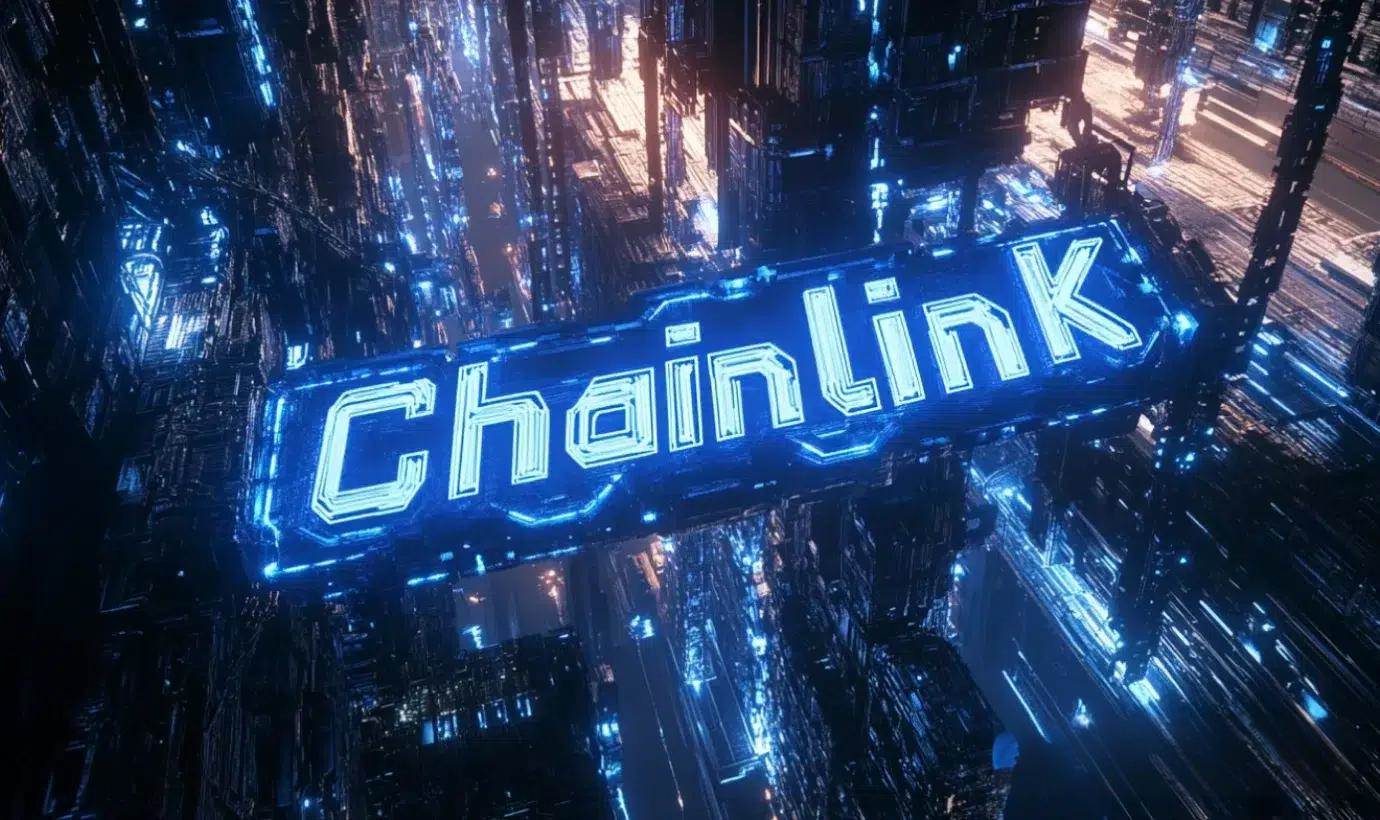
LINK Chainlink data feed was launched on Tempo, providing on-chain market data for the stablecoin payment blockchain.
On September 3, Chainlink data feed was officially launched on the Tempo blockchain. This integration provides Tempo, which focuses on payments, with on-chain market data for stablecoins and financial applications.
Core Highlights
- Direct supply of market prices: Chainlink data feeds are now available on Tempo, providing market price data directly to financial applications.
- Wide range of use scenarios: Developers can leverage supported data feeds for collateral valuation, exchange rate comparisons, treasury control, and reconciliation workflows.
- Decentralized verification mechanism: Independent Chainlink node operators aggregate multiple data sources before publishing reports to ensure that smart contracts can be verified on Tempo.
- Separation of execution and decision-making: Tempo is responsible for the transaction execution and settlement levels, while applications automatically decide how to control transactions based on incoming market information.
It is worth noting that the LINK token price has fluctuated around US$11.84 recently, with an increase of approximately 5.6%. However, there is currently no conclusive evidence that this price increase is directly related to this integrated news.
Lower infrastructure barriers and empower financial institutions and developers
This integration allows enterprises, organizations and developers to access supported price feeds without having to build a separate oracle infrastructure. Applications can use this data for collateral valuations, foreign exchange comparisons, treasury management, and automated risk control.
Blockchain technology itself cannot obtain market information directly from external exchanges and financial data providers. The oracle network is used to pass this information to smart contracts, allowing applications to respond to price changes and other off-chain events.
Companies and developers can leverage @chainlink's industry-standard infrastructure to evaluate collateral values, compare foreign exchange rates, and automate risk control, eliminating the need to build and maintain a custom oracle infrastructure.
How Chainlink data feeds support financial applications
Chainlink operates by aggregating observations from multiple data providers. Independent node operators collect this information and then publish reports that smart contracts can be verified on Tempo.
Tempo provides the execution and billing layers, while developers decide how applications use this information. For example, lending applications can reference data feeds when calculating collateral values, borrowing limits, and the health of open positions.
Developers can view available data feeds and contract addresses through Chainlink's documentation. However, the companies did not disclose how many applications are currently using these data feeds.
Tempo: Infrastructure for stablecoin payments
Tempo is a Layer-1 blockchain specifically designed for stablecoin payments and financial settlements. The project was incubated by Stripe and cryptocurrency investment company Paradigm and will be officially launched on the main network in March 2026.
The network is designed to support commercial payments, payroll, remittances, and machine-generated transactions. Previous reports pointed out that Tempo has launched its mainnet and machine payment protocols to process stablecoin transfers from enterprises and artificial intelligence agents.
The introduction of market data expands the capabilities of applications built around these payment functions. For example, companies can compare foreign exchange quotes to external reference rates before approving currency conversions. Treasury software can also rebalance positions when asset prices exceed predetermined ranges.
Tempo said apps can use stablecoin balances as collateral for working capital and other liquidity products. But this is still a potential application scenario rather than evidence that a specific product has been launched.
Eric Kang of Tempo said: "Financial applications built around these payments require reliable market data for collateral valuations, exchange rate comparisons and risk management."
Automated collateral control and risk management
Data feeds allow lending applications to monitor collateral without relying on a single exchange or data provider. Developers can program borrowing limits, clearing thresholds and additional collateral requirements based on the incoming reference price.
The Tempo app can also leverage these data feeds to value different assets in one reporting currency. This can support accounting, position reconciliation, and risk exposure monitoring between stablecoins or tokenized assets.
This integration is Tempo's expansion beyond basic payment functions. In May this year, the network integrated Morpho's lending infrastructure, adding a decentralized credit market to the chain. The launch brings fixed and variable lending instruments to Tempo while maintaining its payment-centered design philosophy.
Chainlink continues to expand tokenized market services
At the same time, Chainlink has also expanded its data services to other tokenized markets. In August, it launched a price feed of four tokenized U.S. stocks issued by Coinbase on the Base Network, allowing supported applications to evaluate tokenized stocks for lending and collateral.
It needs to be clear that Chainlink data feeds only provide reference prices and do not execute the transaction itself. The Tempo app remains responsible for selecting data feeds, setting risk limits, and determining how to respond when prices change. Developers must also consider update frequency, deviation thresholds, and periods of unavailability of market data.
LINK prices rise, Chainlink integrated territory expands
According to inspections, the trading price of Chainlink (LINK) is close to US$11.84, up about 5.6% from the previous trading day. The intraday high hit around $12, and the lowest fell to $11.13.
There is currently no verified evidence directly attributing the price increase to Tempo's announcement. LINK's trading performance is in the midst of an upward trend in the broader crypto market, so it attributes this to the lower reliability of a single integration.
In recent years, Chainlink has obtained integrated collaborations from multiple institutions and the public sector. Wyoming recently adopted its Proof of Reserves System to publish near-real-time endorsement data for FRNT stability tokens issued by the state. The system adds on-chain reserve verification to Wyoming's daily confirmations.
The next metric to measure the effectiveness of this Tempo integration will be developer adoption rates. Tempo has not announced a deadline for additional data feeds or named applications to use the data. Contracts that support integration are open to developers.