Exchange Ranking
 Top Exchanges
 24h Volume Ranking
 Popularity Ranking
 Exchange BTC Balance
 Proof of Reserves
 Decentralized Exchanges
 Funding Rate
 Funding Heatmap
 Liquidation Data
 Max Pain
 Long/Short Ratio
 Whale L/S Ratio
 Binance/Okex/Huobi L/S
 Bitfinex Margin L/S
 ETF Tracker
 Solana ETF
 XRP ETF
 Hong Kong ETF
 Bitcoin Treasuries
 Crypto Reversal
 Ethereum Reserves
 HyperLiquid Wallet Analysis
 Hyperliquid Whale Watch
 Large Transactions
 On-chain Movement
 Bitcoin ROI
 Stablecoin Market Cap
 Options Analysis
 News
 Articles
 Economic Calendar
 Features
 Wallet
 Contract Calculator


 Security
 Collections
 Watchlist
 Following
 SAFE
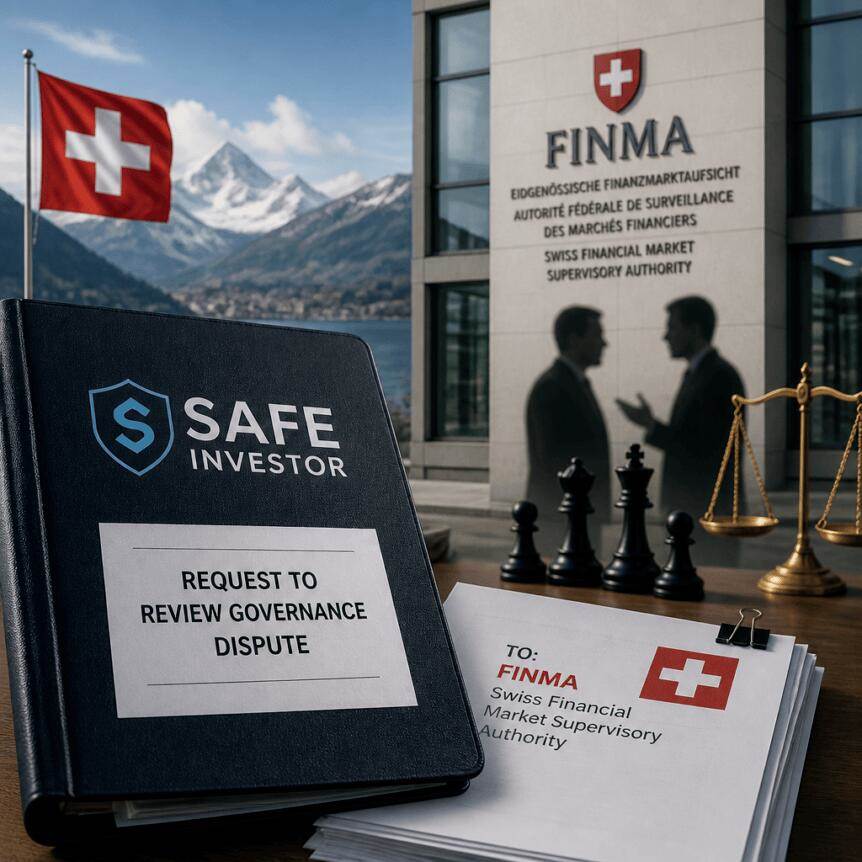
Greenfield Capital files a complaint with Swiss regulators over governance dispute
Greenfield Capital, an investor in the Safe project, said it has filed a regulatory complaint with the Swiss foundation watchdog, the Federal Agency for the Supervision of Foundations (ESA), escalating its governance dispute with the Safe Ecosystem Foundation. The move came after what the company said had been months of communication failed to address its concerns.
In an open letter released to the Safe community on Sunday, Greenfield founding partner Jascha Samadi said his team has become increasingly concerned about Safe's trajectory since early 2025. The complaint was aimed at prompting a reorganization of the foundation's board of directors, and Greenfield believed that the current board lacked sufficient independence to effectively guide the organization's operations. The complaint comes as Safe's project leadership continues to advance revenue and growth goals for 2026 and beyond.
Key Points
- Greenfield Capital has filed a regulatory complaint with the Swiss ESA regarding governance issues related to the Safe Ecosystem Foundation's board of directors.
- Greenfield claimed Safe's governance lacked an independent voice and accused specific board members of conflicts of interest.
- The controversy is unfolding as Safe plans to break even and double revenue in 2026 after announcing total annual project revenue of more than US$10 million at the end of 2025.
- Greenfield cited data on Safe account value and stablecoin share, arguing that Safe has lost its edge relative to the broader DeFi market.
- 基金会领导层着眼于长期增长,但 Greenfield 希望 ESA 审查是否需要采取纠正性的治理措施。
将治理争议升级至瑞士监管机构
Greenfield 表示,在向 ESA 提交投诉之前,Samadi 描述这一年多来经历了研究、对话和耐心等待。在公开信中,Samadi 表示,公司现在认为 Safe “在当前治理结构下将无法发挥其潜力”。
虽然 Greenfield 将投诉主要定性为治理问题,但它将董事会的组成与项目执行商业和生态目标的能力联系起来。该公司的核心主张是,Safe 基金会需要更强的独立监督,并减少可能损害决策的内部激励措施。
这份文件也反映了加密基金会中的一种更广泛模式:当投资者或生态系统参与者感到战略方向停滞时,他们越来越多地诉诸正式治理程序——特别是在基金会受特定监管框架约束的情况下。
收入目标与执行质疑
Safe 的融资和运营目标仍然是这场争议的核心背景。根据此前的项目更新,Safe 的目标是在 2026 年实现收支平衡并将收入翻倍。今年 2 月,Safe 报告称,截至 2025 年底,其项目总年化收入已超过 1000 万美元,并制定了到 2030 年实现 1 亿美元年度经常性收入的长期雄心。
Greenfield believes the numbers it points to are inconsistent with those ambitions. The company cited second-quarter revenue of $1.98 million-an annualized operating rate of about $8 million-and said it was well below the $20 million expected for 2026. Greenfield's perspective is not just about individual quarters, but about momentum: It claims Safe is lagging behind at a time when it needs to move in sync most.
Investors often pay close attention to the alignment of revenue performance rates for crypto infrastructure companies, as delays in monetization can ripple into recruitment, product development, and ecosystem incentives. Greenfield's complaint effectively combines financial review with governance oversight, suggesting that board-level decisions may be limiting performance.
DeFi's growth "loss of power"
In addition to revenue, Greenfield's letter also focuses on ecosystem share and usage. Samadi said that from January 2024 to August 2026, the total value held in Safe accounts dropped from $66 billion to $30 billion-a drop of more than 50%, while the total lock-in value across the DeFi space increased by 40%.
Greenfield also used stablecoin data to demonstrate Safe's failure to capture demand in the self-managed category. According to the letter, during this period, the total supply of stablecoins increased by approximately 135%. However, Safe's stablecoins held on Ethereum only increased by 11%, and Safe's share of USDC in circulation dropped from 12.8% to 2.5%.
For Greenfield, the numbers prove Safe's growth rate has not kept pace with the markets it is designed to serve. As Samadi writes, Safe is "losing ground" in the fastest-growing market segment where its design benefits most, an area where self-managed infrastructure is considered to be in the best position.
What Greenfield hopes the foundation and ESA will do next
Greenfield said it spent months pushing for a governance reorganization. The company claims it asked the foundation to replace Stefan George and expand the size of the board by recruiting independently to emphasize expertise in finance, risk management and business strategy.
Now, Greenfield wants the ESA to review the foundation's governance and determine whether corrective action is needed. The regulatory complaints framework here is important: it suggests that Greenfield believes the problem is not just an internal disagreement, but a governance structure that may require scrutiny by Swiss regulators.
The immediate question for Safe stakeholders is what action-if any-the ESA will take and what the timetable. Equally important is how Safe will respond to the allegations and whether the composition of the foundation's board changes during the oversight process.
As the governance review progresses, investors and builders should focus on two signals: any ESA feedback clarifying whether regulators see governance flaws, and any interim steps taken by the Safe Ecosystem Foundation to adjust board oversight while maintaining revenue and ecosystem goals.