Exchange Ranking
 Top Exchanges
 24h Volume Ranking
 Popularity Ranking
 Exchange BTC Balance
 Proof of Reserves
 Decentralized Exchanges
 Funding Rate
 Funding Heatmap
 Liquidation Data
 Max Pain
 Long/Short Ratio
 Whale L/S Ratio
 Binance/Okex/Huobi L/S
 Bitfinex Margin L/S
 ETF Tracker
 Solana ETF
 XRP ETF
 Hong Kong ETF
 Bitcoin Treasuries
 Crypto Reversal
 Ethereum Reserves
 HyperLiquid Wallet Analysis
 Hyperliquid Whale Watch
 Large Transactions
 On-chain Movement
 Bitcoin ROI
 Stablecoin Market Cap
 Options Analysis
 News
News Articles
 Economic Calendar
 Features
 Wallet
 Contract Calculator


 Security
 Collections
 Watchlist
 Following
 BTC
BTC  HYPE
HYPE Bitcoin rebound and bottom confirmation: Alice Liu's in-depth market interpretation
Bitcoin's strong rebound from mid-year lows has led to a rebound in overall market sentiment. However, Alice Liu, head of research at CoinMarketCap, warns investors not to blindly assume that the asset will return to the downward range it has traded for most of 2026. In an interview with Cointelegraph's Trade Secrets, Liu pointed out that Bitcoin may have "hit bottom" and cited data that fell to about $59,000 in June-a price that is down about 53% from the all-time high of $126,100 set in October.
Although Bitcoin has recently been pushed high to around $81,600, and the CoinMarketCrypto Fear and Greed Index has returned to the "greedy" range after experiencing a "fear" state for most of the year, Liu believes that the more revealing dynamics are actually taking place outside Bitcoin. She specifically highlighted tokenized real-world assets (RWAs) and perpetual contract markets-particularly platforms associated with the Hyperliquid ecosystem-as key areas for capital flows and activity transfers.
Summary of core views
- Bottom established: Alice Liu said that Bitcoin may have reached a bottom after falling to about $59,000 in June, and then regained the $81,600 mark in early September.
- Internet activity does not equal price: Liu emphasized that "Internet activity does not necessarily translate into price increases," which is a key perspective for evaluating the tokenized perpetual contract market.
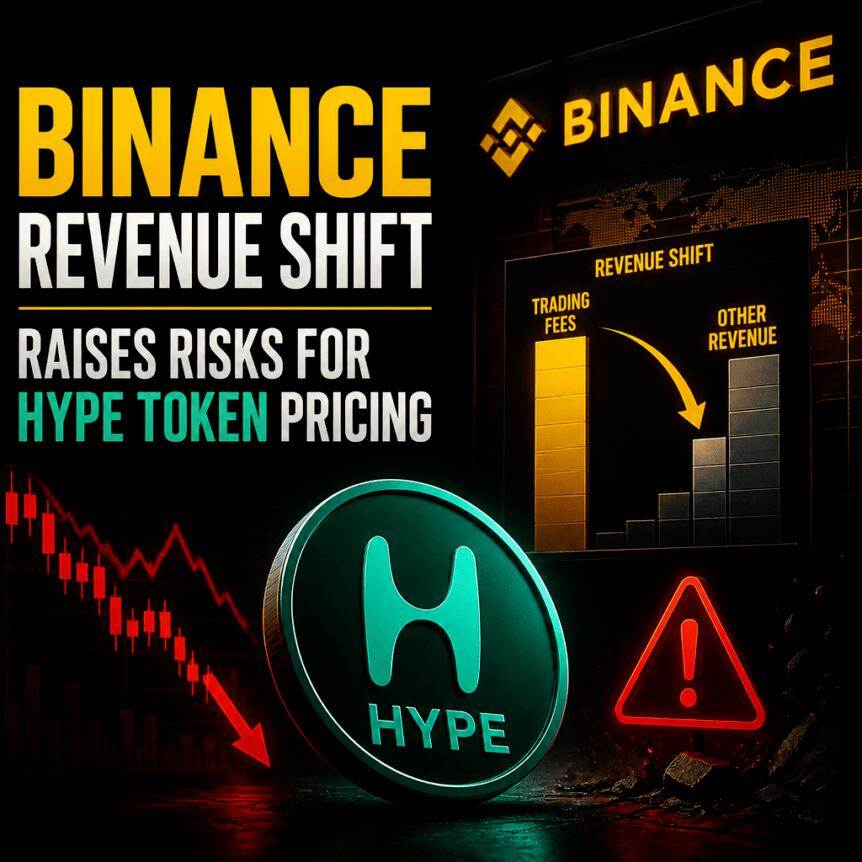
- Changes in RWA perpetual contract landscape: With Binance's launch of RWA perpetual contracts, its market share has tilted towards centralized platforms; however, Hyperliquid still maintains a leading position in the field of decentralized transactions.
- Source of HYPE token momentum: Liu attributed part of the rising momentum of Hyperliquid token to an aggressive repurchase program, which has invested more than US$400 million in token repurchase.
- AI token risk warning: She warned of the risks of "AI-cryptocurrency" tokens that lack practical use, pointing out that some memeized tokens may eventually fall significantly.
Bitcoin rebounds: Will it return to low levels?
Although Bitcoin failed to hold the resistance level above $80,000, Liu believes the market is unlikely to return to the low levels that have lingered for most of the year. Her judgment was based on two factors: the extent of BTC's retreat from previous highs and the rapid recovery rate since the medium term.
Liu pointed out that the fall to about US$59,000 in June was a major correction from the historical high in October (about US$126,100). And in early September, after a rebound of about 28% since mid-August, BTC hit about $81,600. The CoinMarketCap Fear and Greed Index, a measure of broader market sentiment, also improved, returning to the "greedy" range from a long-term "fear" reading at the beginning of the year.
However, Liu's core view does not mean that volatility is over. Instead, she believes the market may have priced the most pessimistic scenario investors tested at the beginning of the year. In other words, the worst may be over.
RWA Perpetual Contracts and Hyperliquid: The Dialectical Relationship between Activity Volume and Price
Liu's most detailed comments focus on the tokenized market linked to real-world assets (RWA), especially the perpetual contract market backed by asset exposures such as tokenized stocks, ETFs, and indices.
She said that looking back at the performance of RWA perpetual contracts over the past two months, Hyperliquid "still leads" in terms of aggregation capabilities and liquidity concentration, but also pointed out that this status may not be permanent. The reason is that centralized exchanges have entered the same product category. Liu noticed that when Binance started launching RWA perpetual contracts, trading volume quickly shifted towards Binance. She estimates Binance currently holds about 50% of the market, while insisting that Hyperliquid still ranks first among decentralized platforms. In her view, despite increased competitive pressures, Hyperliquid remains a place for liquidity aggregation and product scale formation.
Crucially, Liu highlighted a difference that traders often overlook: High networking or trading activity itself does not automatically create a strong token price. She advises investors to distinguish indicators that reflect user behavior and liquidity from mechanisms that affect token valuations.
Why HYPE's momentum may be related to repurchase
Regarding the price performance of Hyperliquid tokens, Liu pointed out a driving factor that is different from pure trading activity: repurchase. She pointed out that HYPE has recently reached a record high of about $86 and believes repo is a reasonable contributor to continued price momentum.
Liu said Hyperliquid has spent more than $400 million on token repurchases. She sees such buybacks as a means of purchasing HYPE in the market through income to support demand dynamics. She added that the number of tokens currently unlocked is small, which means there may be gradual unlocking in the future-something investors may need to monitor as it affects long-term supply.
"So, do we have enough online activity to generate the revenue needed to continue repurchase to support price levels? I think this is one of the key points that needs attention."
This condition is a core uncertainty in Liu's analysis: If repurchase funds come from revenue generated by network use, then continued token support may depend on maintaining the level of activity needed to support the repurchase. In other words, the bullish narrative here is about whether operational performance keeps the repo engine running, not just short-term trading volume.
AI-Cryptocurrency tokens face different tests
Liu also sent a cautious signal about part of the artificial intelligence cryptocurrency theme. While she is optimistic about the broad category of credible artificial intelligence infrastructure, she is skeptical about the popularity of "AI tokens with almost no use" at the end of 2023.
Her concerns focus mainly on competition. She believes the tokens are facing pressure from real AI companies and traditional "AI stocks", including memory-related names and broader AI industry participants. She hinted that meme-style AI tokens whose concepts are more important than infrastructure may be "zeroed".
At the same time, Liu distinguished between infrastructure projects that were truly practical. Even so, she believes that these tokens may see a "price discount" and that the applying market may more realistically reprice AI-related assets after an early wave of speculation.
This view is consistent with the fundamentals she has previously emphasized: tokens backed by revenue-generating systems and clear use cases may be in a better position than assets whose value depends largely on narrative needs.
Bitcoin parked assets as funds: cautious optimism
Liu also discussed the debate on Bitcoin's long-term upside potential in the context of the current economic environment. She said Bitcoin and the broader crypto market may be undervalued as parking places for money-although her stance is more conservative than some high-profile bullish forecasts.
She compared her stance with Coinbase CEO Brian Armstrong and ARK Invest CEO Cathie Wood, who predicted that Bitcoin could reach $1 million by 2030. Liu responded that she believed it was reasonable for Bitcoin to reach US$500,000 by 2030, and although it was "not impossible" to reach US$1 million, she would give a more conservative answer.
Her remarks reflect the art of balancing common among market participants: recognizing the sustainability possibilities of institutional and macro-driven demand while avoiding setting aggressive goals without supporting certainty.
For traders and investors, Liu's remarks pointed out three key points to focus on when entering the next phase: whether the liquidity of RWA perpetual contracts will continue to migrate between platforms as more centralized options are introduced; Can Hyperliquid's revenue sustainably fund buybacks in the context of token unlocking; and how quickly the market can distinguish practical AI infrastructure from AI tokens that only remain at the narrative level.