Exchange Ranking
 Top Exchanges
 24h Volume Ranking
 Popularity Ranking
 Exchange BTC Balance
 Proof of Reserves
 Decentralized Exchanges
 Funding Rate
 Funding Heatmap
 Liquidation Data
 Max Pain
 Long/Short Ratio
 Whale L/S Ratio
 Binance/Okex/Huobi L/S
 Bitfinex Margin L/S
 ETF Tracker
 Solana ETF
 XRP ETF
 Hong Kong ETF
 Bitcoin Treasuries
 Crypto Reversal
 Ethereum Reserves
 HyperLiquid Wallet Analysis
 Hyperliquid Whale Watch
 Large Transactions
 On-chain Movement
 Bitcoin ROI
 Stablecoin Market Cap
 Options Analysis
 News
 Articles
 Economic Calendar
 Features
 Wallet
 Contract Calculator


 Security
 Collections
 Watchlist
 Following
 USD1
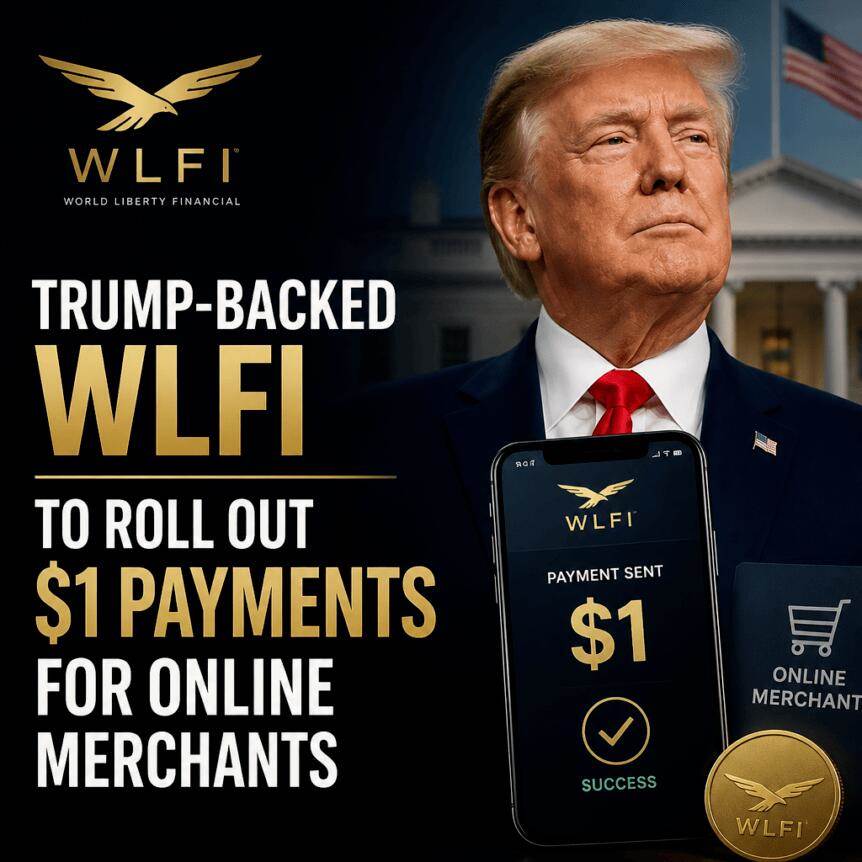
World Liberty Financial (WLFI) announced new plan for the USD1 stablecoin at the Token2049 conference
World Liberty Financial (WLFI) executives elaborated on their latest development plan for the USD1 stablecoin through group discussions at the Token2049 conference held in Singapore. They said the token is about to break through the limitations of WLFI applications and enter the payment space used by large online businesses.
During Wednesday's discussion, WLFI CEO Zach Witkoff and co-founder Zak Folkman highlighted a partnership with Mesh-inspired by Mesh's CEO and co-founder Bam Azizi. The partnership aims to allow USD1 holders to consume the stablecoin in Mesh's merchant payment infrastructure. WLFI said the promotion plan is scheduled to start this quarter.
Core Points
- Payment scope expands: WLFI said that the payment functionality of USD1 is expanding from the World Liberty app to Mesh's merchant network and is expected to be available during the quarter.
- Direct consumption scenario: This initiative is positioned as a direct way to enable USD1 holders to spend by using stablecoins pegged to the U.S. dollar in the existing online checkout process.
- Reserve structure: Under the terms released by WLFI, USD1 is currently issued through BitGo and is backed by cash and cash equivalents, including U.S. Treasury money market funds.
- Long-term release vision: 自今年8月获得美国货币监理署(OCC)有条件批准以来,WLFI 正寻求向国家信托银行模式转型,以实现对发行的控制权。
USD1 迈向更广泛的在线消费场景
在 Token2049 大会上,Folkman 将这一举措描述为扩展 USD1 效用、超越单一消费者应用程序的努力。他表示,WLFI 并不打算将其采用率限制在其自身的 World Liberty 软件上,而是致力于将相同的基础技术应用到市场上运营的一些“最大型 Web2 企业”中。
正如小组讨论中所述,该机制的核心在于 WLFI 与 Mesh 之间的合作伙伴关系。Azizi 指出,该协议将允许 USD1 持有者在连接到 Mesh 支付基础设施的商户网络中使用该稳定币,从而将挂钩美元的代币支付引入既定的在线商业轨道。
对于投资者和交易员而言,关键问题在于此类整合是否能转化为有意义的链上和链下使用量的增加。当支付成为常规结账行为的一部分而非小众用例时,商户网络可能会显著改变稳定币的需求。
USD1 的结构与储备来源
USD1 is designed to maintain the value of USD1. The terms released by WLFI describe BitGo as the current issuer of the stablecoin and outline the composition of reserves that include cash, U.S. government money market funds and other cash equivalents. The details of the issuance and support of stablecoins are critical because they influence how market participants assess redemption risks and the resilience of anchoring prices.
According to CoinGecko data quoted in the article, as of the time of writing, the market capital of USD1 was US$4.45 billion. As a reference, market value can often be used as a rough proxy for the supply of outstanding tokens, which usually grows as settlement and payment needs increase.
WLFI's issuance ambitions and OCC conditional approval
While the consumer integration of USD1 solves near-term utility issues, WLFI's long-term plans appear to focus on issuance control. In August this year, the U.S. Office of the Comptroller of the Currency (OCC) granted WLFI conditional approval to establish a national trust bank aimed at issuing stablecoins pegged to the U.S. dollar and hosting digital assets.
Witkoff said the charter would allow WLFI to assume its own issuing responsibilities-a shift from the current arrangement to a structure in which WLFI issues through its own trust banking framework. "Today we are offering through BitGo," he said during the panel discussion, and suggested that the trust charter would allow WLFI to assume this responsibility in the future.
This is important because issuance control affects operating schedules, redemption paths, and how the market expects regulatory compliance. It has also shaped stablecoin holders 'understanding of legal custody and supervision-especially in industries where regulatory clarity is of great concern.
Political censorship is still part of the story
The progress of WLFI is not without controversy. The OCC's conditional approval sparked criticism from Senator Elizabeth Warren, who accused it of conflicts of interest with the Trump family's connection to WLFI. The article also pointed out that Warren and other senators introduced legislation to do so-known as the Ending Presidential Corruption in the Banking Sector Act.
In response, the OCC stated that its leaders and employees have always complied with legal responsibilities and ethical obligations during the review of applications. During a panel discussion at Token2049, Witkoff described the conditional approval as an achievement of WLFI under "attack" from mainstream media and politicians.
The practical lesson for readers concerned about stablecoin adoption is that technology partnerships and payment rollouts are just one aspect of the problem. The regulatory path-particularly around issuing, custodian, and trust banking structures-can affect market confidence and the speed with which stablecoins are integrated into more mainstream financial workflows.
Next, the focus should turn to the execution level: whether WLFI and Mesh can complete their promotion plans for this quarter, and how the adoption of USD1 will behave once it is available in the merchant checkout process. At the same time, investors should pay close attention to the progress of WLFI trust banking work, as this may determine how issuance evolves and how regulators continue to shape the stablecoin landscape.