Exchange Ranking
 Top Exchanges
 24h Volume Ranking
 Popularity Ranking
 Exchange BTC Balance
 Proof of Reserves
 Decentralized Exchanges
 Funding Rate
 Funding Heatmap
 Liquidation Data
 Max Pain
 Long/Short Ratio
 Whale L/S Ratio
 Binance/Okex/Huobi L/S
 Bitfinex Margin L/S
 ETF Tracker
 Solana ETF
 XRP ETF
 Hong Kong ETF
 Bitcoin Treasuries
 Crypto Reversal
 Ethereum Reserves
 HyperLiquid Wallet Analysis
 Hyperliquid Whale Watch
 Large Transactions
 On-chain Movement
 Bitcoin ROI
 Stablecoin Market Cap
 Options Analysis
 News
News Articles
 Economic Calendar
 Features
 Wallet
 Contract Calculator


 Security
 Collections
 Watchlist
 Following
Dual narratives of the U.S. attitude towards cryptocurrency regulation: coexistence of legislative easing and tightening of law enforcement
Two cryptocurrency news released almost simultaneously depict the U.S. government's diametrically opposed directions in its treatment of this asset class. These two reports do not deny each other, but together reveal the complexity of the current regulatory environment.
Two completely different authoritative perspectives emerged on the same night
On September 4, according to the newsroom's recording timestamp, two reports on the relationship between cryptocurrencies and U.S. law enforcement agencies were released one after another in just seven minutes. The two reports point to different trends:
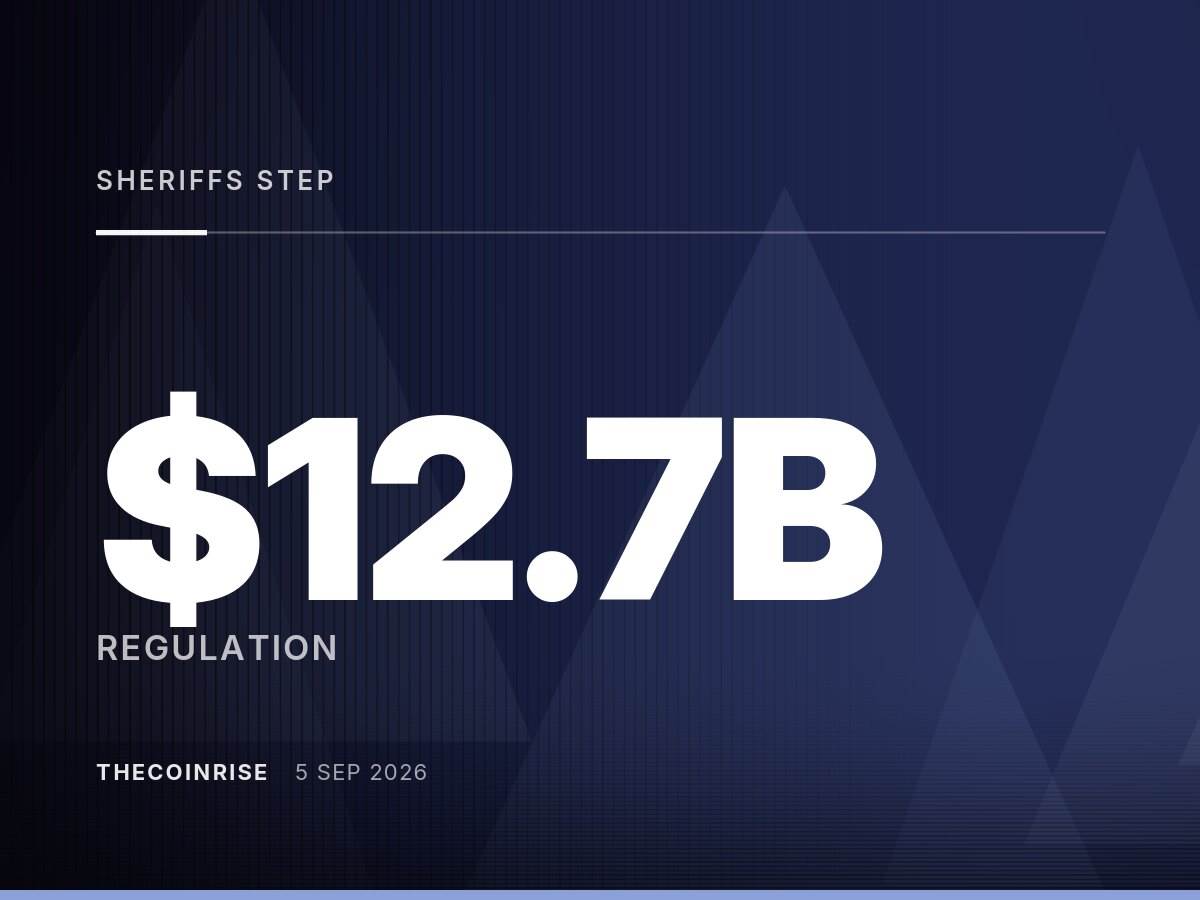
The first report points out that the National Sheriffs' Association has shifted from opposing the CLARITY Act to remaining neutral. Five media outlets including AMBCrypto, Bitcoin Magazine, and CoinDesk all reported on this shift. The report believes that as the voice of a law enforcement agency that had raised concerns about the bill disappears, the possibility of the bill passing the Senate vote has increased.
The second report, reproduced by multiple media outlets such as Cointelegraph, Cryptopolitan and crypto.news, showed that the Financial Crimes Enforcement Network (FinCEN) linked $12.7 billion in cryptocurrency transactions to Southeast Asia-based investment fraud networks, and pointed out that reports of suspicious activity related to such scams increased by 18%.
Taking these two reports as a whole, they do not address different versions of the same fact, and there is no controversy over dates, names or data. They are two separate records that were released separately and each purports to describe the current status of cryptocurrencies in the U.S. government, and have different views.
Limitations of a single narrative
On its own, both reports are correct. The same week that a sheriffs organization can remain neutral on federal legislative issues, and financial intelligence units can publish multi-billion dollar fraud statistics; these two incidents occur on different institutional tracks and do not constitute a contradiction on the factual level. However, what they contradict is the "clear and single" narrative conclusion that readers might draw when read alone is any single story.
Reports on the CLARITY Act read like stories of regulatory friction easing; reports on FinCEN read like stories of regulatory alerts intensifying. Neither of these fully represents the country's overall stance on cryptocurrencies this week, so this article will not unilaterally choose either side.
Asymmetry supported by evidence
There are significant differences in the way the evidence behind the two reports is constructed. The report on the neutrality of the CLARITY Act has six independent publishers and eleven sources. It is one of the more supported projects in this series, but it relies mainly on "multi-party reporting" rather than a single naming main document-the summary of the newsroom itself-is also attributed in this way and does not point to the official statement of the Magistrates Association or the Senate filing document.
In contrast, FinCEN's data involves fewer independent publishers (four versus six) and fewer information sources, but the data is directly derived from FinCEN's own analysis. This is the result of a federal agency publishing its own findings, not a statement that has been whitewashed by secondary reports. This asymmetry is important: extensive evidence is not the same as original sources, and in this case, the story with smaller coverage is built on a more solid foundation.
This asymmetry determines how much weight should be given to these two reports next week. The progress of a bill in the House can be interpreted by six publishers describing the same procedural facts, with little room for distortion; while the $12.7 billion fraud data and the 18% growth rate in suspicious activity reports, such figures are susceptible to restatement, rounding, or occasionally misattribution in subsequent reporting. At present, the newsroom only has the agency's official account, and no second media has independently deduced these figures from FinCEN's basic data.
Double reporting by Coin Edition and CoinTurk News EN
The overlap among publishers is itself noteworthy. The appearance of Coin Edition and CoinTurk News EN on both lists means that both media outlets reported on sheriffs 'groups easing opposition to the cryptocurrency bill and independently reported on federal agencies linking billions of dollars in capital flows to fraud, and none of the media reports attempted to reconcile the two claims.
This is not a failure of the publisher; it may simply reflect that the two stories arrived as two separate lines of news, lacking a common thread to connect them together. But this means that the tensions identified here have not been resolved in the report itself, and this article aims to point out this omission rather than resolve disputes that have been resolved by primary sources.
Since no facts in the two reports are disputed, there is no so-called "winner". The evidence establishes the fact that the regulatory story of cryptocurrencies that day diverged in two directions, and no media on the list has yet attempted to unify the two.
Details of this issue's report
The number of reports is counted as of release and remains dynamically updated; each story page displays the real-time number.
Sheriff's group turns neutral on CLARITY Act after ending opposition
Six independent publishers report : Reported a shift in the position of law enforcement groups, removing an established obstacle to passage of the bill in the Senate.
FinCEN links US$12.7 billion in cryptocurrency flows to investment fraud in Southeast Asia
Four independent publishers report : Reported an increase in fraudulent financial flow data and suspicious activity reports from federal agencies.