Exchange Ranking
 Top Exchanges
 24h Volume Ranking
 Popularity Ranking
 Exchange BTC Balance
 Proof of Reserves
 Decentralized Exchanges
 Funding Rate
 Funding Heatmap
 Liquidation Data
 Max Pain
 Long/Short Ratio
 Whale L/S Ratio
 Binance/Okex/Huobi L/S
 Bitfinex Margin L/S
 ETF Tracker
 Solana ETF
 XRP ETF
 Hong Kong ETF
 Bitcoin Treasuries
 Crypto Reversal
 Ethereum Reserves
 HyperLiquid Wallet Analysis
 Hyperliquid Whale Watch
 Large Transactions
 On-chain Movement
 Bitcoin ROI
 Stablecoin Market Cap
 Options Analysis
 News
News Articles
 Economic Calendar
 Features
 Wallet
 Contract Calculator


 Security
 Collections
 Watchlist
 Following
 BTC
BTC How did Bitcoin become inaccessible?
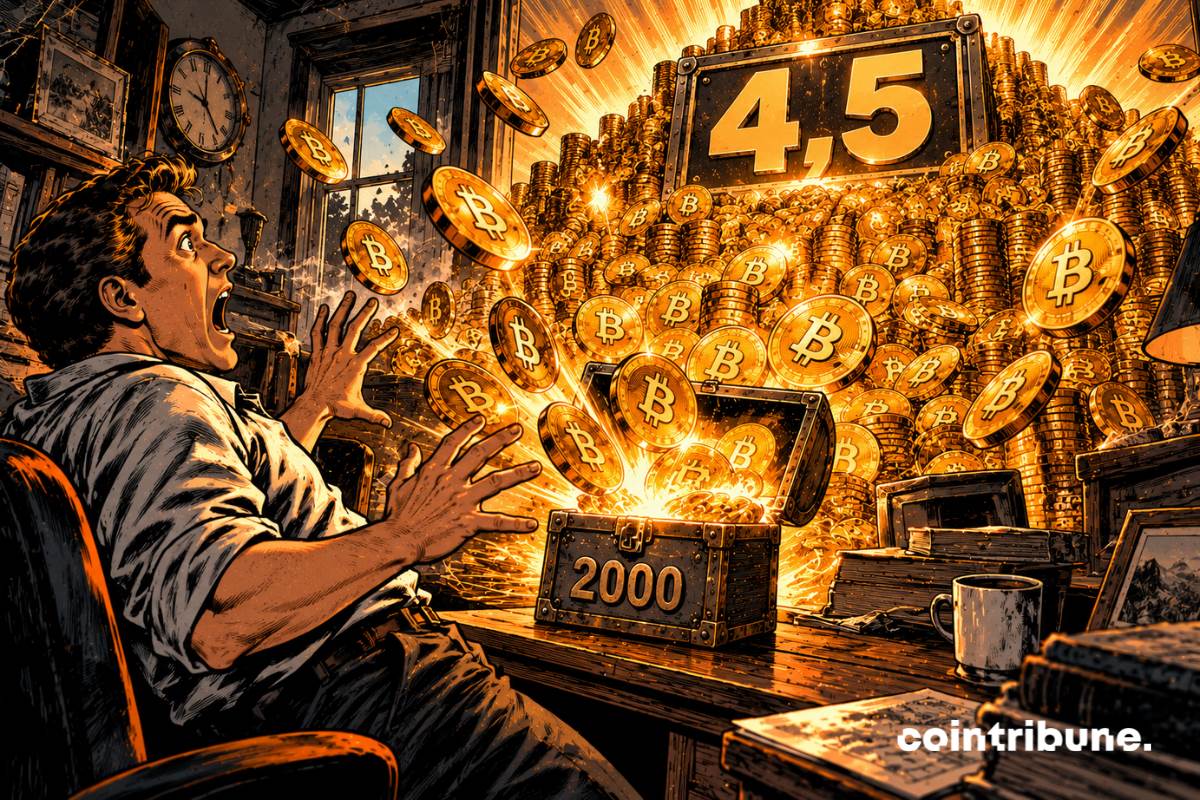
A British man who firmly believes his early Bitcoin investment he lost more than a decade ago has regained access. The money is currently worth about $4.5 million, turning a small investment he made in 2011 into a potentially life-changing fortune.
The investor is only known under the pseudonym "Chris". He purchased his first bitcoin in December 2011 through the British cryptocurrency exchange Britcoin, which was later renamed Intersango. Bitcoin was trading for less than $4 at the time, and Chris invested about £ 1,500 (about $2,000 at current exchange rates). His holdings initially rose to about $5,400, before he lost access to the assets.
Intersango stopped trading in late 2012 and disappeared from the Internet in early 2014, leaving Chris unable to access assets he believed were associated with his account. "The worst thing is watching Bitcoin increase in value and knowing how you could have used the money," Chris said.
This loss occurred during a period of financial difficulties. Chris said he had a young family and a new home at the time and couldn't afford the consequences of investment losses. "When you lose wallet access, it's a huge shock and quite frustrating because we're not in a good financial situation," he said.
How were missing bitcoins traced?
CEL law firm said it used cryptographic tracking technology through its affiliate The Crypto Tracing Experts to identify an address believed to contain wallets related to assets of former Intersango customers. The wallet holds more than 5,500 bitcoins, valued at approximately US$421 million when the bitcoin price is approximately US$76,500.
The law firm said records related to Chris showed that his initial investment had increased to approximately $4.5 million. However, asset recovery is not just as simple as identifying blockchain transactions. Ryan Sweetnam, CEL's director of financial litigation, pointed out that the process also relies on documentary evidence proving the customer's original purchase of Bitcoin. This includes bank records dating back nearly 15 years, creating a unique intersection between blockchain tracking and traditional financial documents.
The case illustrates one of the challenges surrounding early cryptocurrency platforms. Blockchain records can remain visible indefinitely, but proving legal ownership of assets associated with a failed exchange may require old bank documents, account records and transaction history that investors no longer have.
Investor inspiration
This recall shows that crypto assets believed to have been lost due to exchange failures are not always unrecoverable. Blockchain tracking can identify where funds are flowing, but investors still need to provide evidence that the assets belong to them.
What does Chris intend to do with the money?
The recovered money could dramatically change the family's financial situation. Chris said he plans to use some of the money to help his family buy a larger home and reduce existing debt. He also plans to help his son repay loans related to his new home. "I can help my son pay off some of his loans for his new house," Chris said.
Although he withdrew his investment after years of uncertainty, Chris does not plan to sell all of his bitcoins. He said he intended to retain some exposure if the cryptocurrency appreciated further. This decision was accompanied by continued caution. Chris said that although part of the cryptocurrency market is more regulated than when he first invested in 2011, the volatility and risk of theft of Bitcoin still make him uneasy.
His experience also shows how dramatically the economic situation of early Bitcoin owners changed. An investment made when an asset was trading for less than $4, even if it was practically inaccessible to its owners for more than a decade, has grown into millions of dollars.
Can other Intersango users recover their funds?
The impact of the case may not be limited to just one investor. CEL said other former Intersango customers may also seek to recover funds if they can prove they purchased Bitcoin through the exchange and provide sufficient evidence of ownership. If there are still large balances associated with customers from previously failed platforms, the wallets identified by investigators could be important to a broader group of former users.
Any recycling still depends on personal records and the ability to link historical purchases to identifiable blockchain assets. Investors who use exchanges more than a decade ago may have difficulty generating the necessary evidence, especially if emails, bank statements or account records are lost.
Still, the case shows that the disappearance of the exchange does not mean that the underlying crypto assets have disappeared. Bitcoin transactions are still recorded on the blockchain, allowing investigators to trace funds long after the companies that handled them have ceased operations. For former customers of early cryptocurrency exchanges, this means assets written off years ago may still be worth investigating, especially when original positions have increased significantly since the early days of Bitcoin trading.