Exchange Ranking
 Top Exchanges
 24h Volume Ranking
 Popularity Ranking
 Exchange BTC Balance
 Proof of Reserves
 Decentralized Exchanges
 Funding Rate
 Funding Heatmap
 Liquidation Data
 Max Pain
 Long/Short Ratio
 Whale L/S Ratio
 Binance/Okex/Huobi L/S
 Bitfinex Margin L/S
 ETF Tracker
 Solana ETF
 XRP ETF
 Hong Kong ETF
 Bitcoin Treasuries
 Crypto Reversal
 Ethereum Reserves
 HyperLiquid Wallet Analysis
 Hyperliquid Whale Watch
 Large Transactions
 On-chain Movement
 Bitcoin ROI
 Stablecoin Market Cap
 Options Analysis
 News
News Articles
 Economic Calendar
 Features
 Wallet
 Contract Calculator


 Security
 Collections
 Watchlist
 Following
USDT usage grows during the dollar shortage
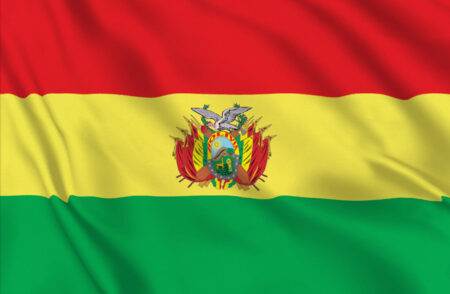
Capital controls face new pressure. Bolivia's Ministry of Economy has committed to establishing a regulatory framework for cryptocurrencies as part of a plan with the International Monetary Fund (IMF). The plan aims to reduce illicit capital outflows through digital asset markets, but has not yet set a specific deadline.
In response to the US dollar shortage, Bolivia's use of USDT (Teda) has increased significantly. Currently, officials are weighing an option to allow USBT to run within the national payment system. At the same time, Bolivia remains on the Financial Action Task Force (FATF)"grey list" and is working to strengthen anti-money laundering controls.
Build regulatory framework to curb illicit financial outflows
As part of a broader economic plan with the IMF, Bolivia has agreed to establish a new regulatory framework for cryptocurrencies. The government wants to limit illegal capital outflows through digital asset markets. This commitment is reflected in a memorandum issued by the Bolivian Ministry of Economy and Public Finance on September 10. The memorandum juxtaposes cryptocurrency regulation with reforms in monetary policy, foreign exchange markets, pensions and anti-money laundering controls.
Thedocument calls for the establishment of a strong framework to regulate and supervise virtual assets, with the goal of reducing the risk of undue capital outflows and maintaining financial stability. However, a specific deadline for the new rules has not yet been set, and the memorandum does not specify a single agency responsible for overseeing the cryptocurrency field.
The plan is part of a 36-month economic plan agreed between the two sides. IMF staff and Bolivian officials reached an agreement in July to extend the financing arrangement, but the agreement still needs to be approved by the IMF's executive board. The broader plan covers fiscal policy, foreign exchange reform, international reserves and financial supervision. The Bolivian government values the three-year financing package at close to US$1.9 billion.
Dollar shortage drives USDT popularization
Crypto activity in Bolivia is increasing as the country faces a shortage of dollars. Businesses and residents are turning to dollar-backed alternatives to deal with shortages, and USDT has become one of the most visible options. Tether CEO Paolo Ardoino said in August that the use of stablecoins is rising in economies facing currency instability, including Bolivia.
The Central Bank of Bolivia currently publishes the USDT reference exchange rate based on point-to-point transaction data on Binance. Chainalysis data shows that between July 2022 and June 2025, there was an estimated $14.8 billion in crypto activity in the country. Officials are also considering giving the USDT a more formal role. A proposal reported in July suggested allowing stablecoins to be juxtaposed with the Boliviano and the U.S. dollar as payment options. Union Bank and FIE Bank already provide services related to this token.
The use of cryptocurrencies by national agencies is not new. In March 2025, state-owned energy company YPFB was allowed to use cryptocurrency for fuel imports because a shortage of U.S. dollars made regular payments more difficult.
Capital controls face new challenges
全球研究人员一直在研究稳定币如何与新兴市场的资本管制相互作用。国际清算银行(BIS)于7月发布的一项研究考察了130多个经济体的资金流动情况。研究发现,稳定币流入对标准资本管制的反应较小。在高通胀或货币疲软的国家,美元支持型代币的使用率更高。
IMF在8月提出了类似观点。它警告称,如果人们可以在区块链上兑换代币,本地稳定币可能会使获取数字美元的途径更加便捷。基金组织指出,近99%的稳定币都与美元挂钩。
此外,玻利维亚仍处于金融行动特别工作组(FATF)的加强监测之下,即所谓的“灰名单”。该国在2025年6月做出政治承诺,以修复其反洗钱系统中的弱点。FATF在2026年6月的审查中表示,玻利维亚已取得进展,但仍需完成若干步骤,包括加强对非金融部门的监督以及更严格地执行所有权规定。目前,政府尚未公布计划中加密货币规则的时间表、法律结构或牵头机构。