Exchange Ranking
 Top Exchanges
 24h Volume Ranking
 Popularity Ranking
 Exchange BTC Balance
 Proof of Reserves
 Decentralized Exchanges
 Funding Rate
 Funding Heatmap
 Liquidation Data
 Max Pain
 Long/Short Ratio
 Whale L/S Ratio
 Binance/Okex/Huobi L/S
 Bitfinex Margin L/S
 ETF Tracker
 Solana ETF
 XRP ETF
 Hong Kong ETF
 Bitcoin Treasuries
 Crypto Reversal
 Ethereum Reserves
 HyperLiquid Wallet Analysis
 Hyperliquid Whale Watch
 Large Transactions
 On-chain Movement
 Bitcoin ROI
 Stablecoin Market Cap
 Options Analysis
 News
 Articles
 Economic Calendar
 Features
 Wallet
 Contract Calculator


 Security
 Collections
 Watchlist
 Following
Video of a raccoon eating a sandwich: How Google showed off its latest AI Detection Tools
A raccoon sits at a table eating a sandwich. The video, shot with a grainy night-vision lens, is exactly what Google is using to showcase its latest tools. After all, such videos are highly viral on social media and are often shared without much thought. [TAG
Google asks a simple question: Is this real, camera-captured, or computer-generated virtual content? This question is becoming increasingly difficult to answer. Generative AI-software that generates new images, videos, audio, and text by typing prompts-can now produce convincing media content in seconds.
Nature warned in November 2024 that the technology "can easily produce persuasive scientific data."
Invisible digital signatures enter the public eye
The answer given by Google is SynthID, a system built by its AI research division, Google DeepMind. Since 2023, the system has embedded an invisible digital watermark in media made using Google AI tools, a hidden signature that is invisible to the naked eye or human ear.
On October 7, Google opened the SynthID detector to users around the world. Previously, the platform was limited to media professionals only. Anyone can now upload an image, video or audio file to check if it contains the digital signature.
The scale behind it is quite considerable. Google said that so far, more than 180 billion images and videos have been watermarked, as well as 240,000 years of audio content. The company said verification tools, which are built into search engines, Gemini apps and Chrome, process more than 1 million requests a day.
Clear boundaries for detectors
SynthID currently only identifies AI content generated by Google or its partners, including OpenAI, Nvidia and South Korean technology company Kakao. Apple is about to join the ranks. Media content from other generators may not be tagged.
In addition, the tool is currently only available in English, and Google has not released specific accuracy data. But its impact goes far beyond one company.
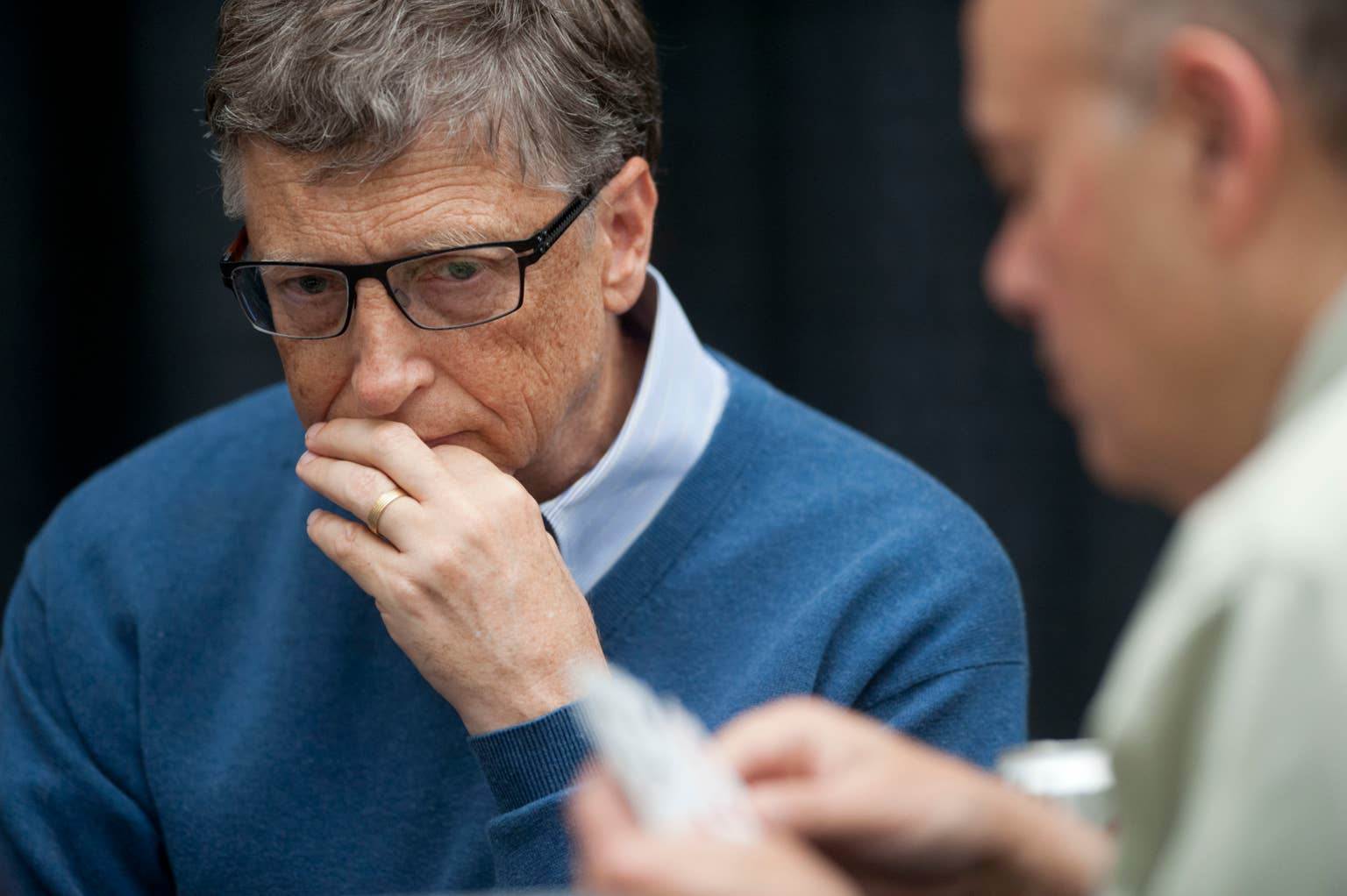
Bill Gates, co-founder of Microsoft and current chairman of the Gates Foundation, wrote in an August 26 article: "AI-driven fraud, disinformation, deep counterfeiting and surveillance are the main hazards that people will feel in their daily lives." He also warned that "AI will empower bad actors who currently have relatively little power with greater capabilities."
Sam Altman, CEO of ChatGPT maker OpenAI, a partner in SynthID, has a different view of the trade-off. "The world should accept something bad happens in exchange for the benefits of this technology," he said in an October 4 interview with Politico's Decoded column. He believes that people will do far more good than evil by using the technology.
尽管如此,此次发布标志着这一隐蔽的基础设施正式进入公众视野。辨别真实与合成内容,不再仅仅是新闻编辑室的专业技能,而正在成为一项日常必备技能。