Exchange Ranking
 Top Exchanges
 24h Volume Ranking
 Popularity Ranking
 Exchange BTC Balance
 Proof of Reserves
 Decentralized Exchanges
 Funding Rate
 Funding Heatmap
 Liquidation Data
 Max Pain
 Long/Short Ratio
 Whale L/S Ratio
 Binance/Okex/Huobi L/S
 Bitfinex Margin L/S
 ETF Tracker
 Solana ETF
 XRP ETF
 Hong Kong ETF
 Bitcoin Treasuries
 Crypto Reversal
 Ethereum Reserves
 HyperLiquid Wallet Analysis
 Hyperliquid Whale Watch
 Large Transactions
 On-chain Movement
 Bitcoin ROI
 Stablecoin Market Cap
 Options Analysis
 News
News Articles
 Economic Calendar
 Features
 Wallet
 Contract Calculator


 Security
 Collections
 Watchlist
 Following
 BTC
BTC Core CPI rose 0.3% month-on-month in August, exceeding economists 'expectations.
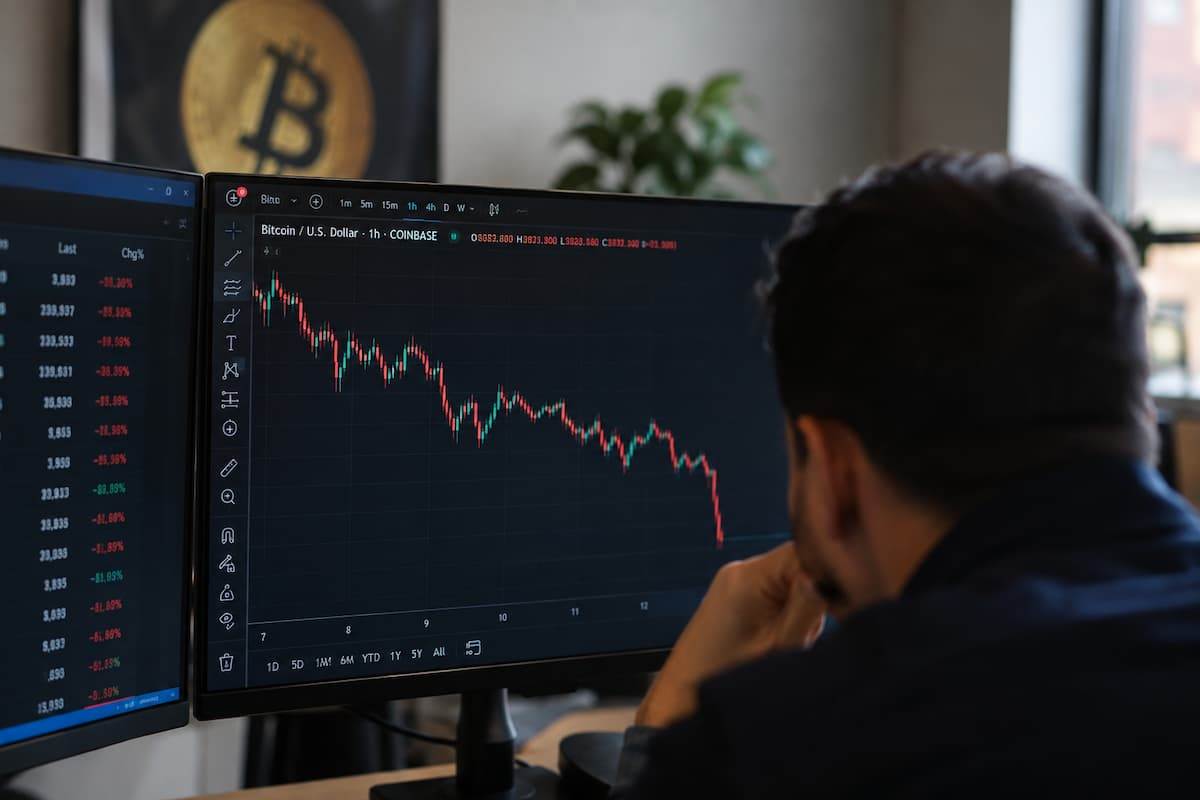
The implied probability of a rate hike in federal funds futures climbed to around 87% after the data was released. Bitcoin prices fell below $77,000 as the market logic of "high interest rates last longer" regained dominance.
After the U.S. Bureau of Labor Statistics released its August Consumer Price Index (CPI) report, core inflation excluding food and energy performed stronger than forecast, causing Bitcoin to fall below the $77,000 mark. This single data point accomplished what months of Fed rhetoric had failed to achieve: it prompted interest rate futures markets to clearly price the possibility of another rate hike, rather than suspending it.
Its transmission mechanism is simple and clear, and it is the same logic that has repeatedly hit Bitcoin prices this year. Traders use the interest rate futures market to price Fed policies, and relevant data can be tracked in real time through tools such as the CME FedWatch Tool. When inflation data is higher than expected, the implied probability of tightening increases rapidly within minutes. A tight policy environment means higher yields on cash and short-term bonds, making non-yielding assets such as Bitcoin less attractive. This correlation is not perfect or constant, but it can often be quickly reflected in the price trend of cryptocurrencies on days when CPI data unexpectedly rises.
Why is the impact of this CPI data so significant?
Inflation data does not always have such a sharp impact on markets. The key to the difference this time is timing: the data is released very close to the next Fed interest-rate meeting, leaving traders little room for maneuver, making it difficult to view it as noise that will be diluted before policymakers meet. The core reading of 0.3% is not a surprising deviation in itself, but given the Fed's emphasis on data-based decision-making throughout the year, it is enough to shift the market's operating assumption from "holding back" to "raising interest rates." It was this re-pricing process that drove Bitcoin down, not the inflation numbers themselves that directly caused price changes.
It is necessary to clarify what drives the market and what does not. The CPI report measures the past, a snapshot of consumer payments in August. Bitcoin's decline reflects the market's forward-looking bets on the Fed's next move and is filtered through futures pricing. Conflating the two and treating inflation data as a direct cause of price changes rather than the probability repricing of interest rates it triggers is a shortcut to simplifying the story and obscuring the actual mechanism.
How to verify the authenticity of the logic of raising interest rates
The key indicator that needs to be paid attention to after that is not the price of Bitcoin, but the probability of raising interest rates itself shown by the FedWatch tool, because this is the market's direct interpretation based on changes in CPI data. If the probability of raising interest rates continues to rise during the Fed meeting, it means that the market believes that this data is not accidental. If the probability falls back as the meeting approaches, it suggests that traders ultimately regard it as noise, and Bitcoin's decline looks more like an overreaction than a rational revaluation. In any case, the next real catalyst will be the Fed's own statement, not another inflation report.