Exchange Ranking
 Top Exchanges
 24h Volume Ranking
 Popularity Ranking
 Exchange BTC Balance
 Proof of Reserves
 Decentralized Exchanges
 Funding Rate
 Funding Heatmap
 Liquidation Data
 Max Pain
 Long/Short Ratio
 Whale L/S Ratio
 Binance/Okex/Huobi L/S
 Bitfinex Margin L/S
 ETF Tracker
 Solana ETF
 XRP ETF
 Hong Kong ETF
 Bitcoin Treasuries
 Crypto Reversal
 Ethereum Reserves
 HyperLiquid Wallet Analysis
 Hyperliquid Whale Watch
 Large Transactions
 On-chain Movement
 Bitcoin ROI
 Stablecoin Market Cap
 Options Analysis
 News
 Articles
 Economic Calendar
 Features
 Wallet
 Contract Calculator


 Security
 Collections
 Watchlist
 Following
 BTC
 ETH
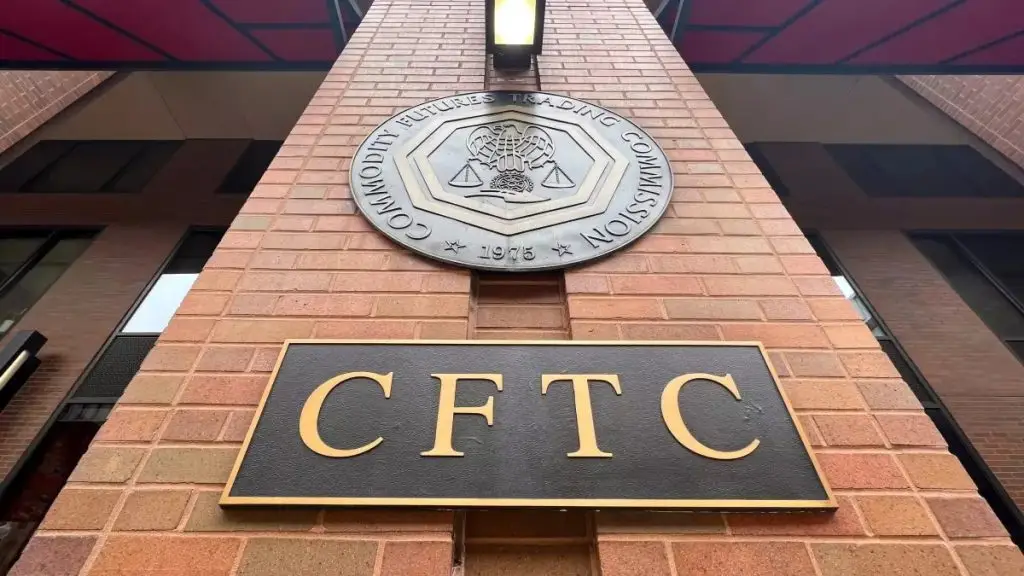
The U.S. CFTC plans to launch its first formal regulatory framework for cryptocurrencies, bidding farewell to the "regulation through sanctions" model.
The U.S. Commodity Futures Trading Commission (CFTC) is preparing for its first formal regulatory plan for the cryptocurrency market, marking its policy focus from the popular "regulation through sanctions" model in the past to establishing a clear system of rules. Under the newly proposed Crypto Asset Trading Regulations (CTX) and Crypto Asset Markets Regulations (CAM), the agency aims to develop clear federal-level regulations for crypto asset trading platforms.
The CFTC pointed out in a statement that the U.S. cryptocurrency industry has developed in an environment of regulatory uncertainty for many years. Although Congress has failed to enact comprehensive cryptocurrency market legislation, the CFTC and the U.S. Securities and Exchange Commission (SEC) can still establish rules for the market within existing legal authority.
From law enforcement to institutional building
According to the agency, during the previous administration, the CFTC and the SEC focused mainly on enforcing regulatory measures on cryptocurrency exchanges, custody service providers and software developers, citing the fact that new regulations that are consistent with the characteristics of the industry have not yet been introduced. This strategy has led many cryptocurrency companies to relocate outside the United States.
The CFTC cited the bankrupt FTX exchange as an example of the founder of the Bahamas registered company abusing approximately US$8 billion in client funds. As the company collapsed, the CFTC and the SEC immediately launched legal proceedings.
In addition, the agency noted that platforms including FTX, BlockFi and Voyager Digital rely mainly on state money transmission licenses to operate in the United States. However, these licenses are mainly designed for payment services, not financial market regulation, and regulations vary between states.
Core Standards for Federal Regulation
The CFTC emphasizes that federal market regulation includes broader standards designed to prevent market manipulation and abuse, ensure transparency and order of transactions, avoid conflicts of interest, and protect the safety of customer assets.
The agency said that although several of FTX's offshore companies and state-regulated companies have gone bankrupt, customer assets held by its CFTC registered subsidiaries remain isolated and safe.
This new regulatory move comes after the Senate failed this month to advance a cryptocurrency market regulation bill known as the Clarity Act. The CFTC plans to use existing powers, in conjunction with the CTX and CAM regulations, to establish a federal-level cryptocurrency market framework without waiting for Congress to pass new legislation.
It is reported that this is also a continuation of the joint statement by the CFTC and the SEC earlier this year. At that time, both parties pointed out that a large number of crypto assets, including Bitcoin and Ethereum, did not fall into the category of securities and should be included in the regulatory vision of the CFTC. Under the CTX and CAM regulations, exchanges registered with the CFTC must comply with new standards for listing such crypto assets.
Single federal regulatory option available
Unlike the Clarity Act, these regulations will not mandate that crypto assets be traded only on CFTC registered platforms. The CFTC acknowledges that it cannot impose such requirements unless it obtains new authority from Congress.
In contrast, the new system will want cryptocurrency exchanges operating in the United States to provide one option: operate under a single federal regulatory framework. Unlike spot exchanges that only hold state licenses, platforms registered with the CFTC will be allowed to provide margin, leverage or financing backed crypto assets trading to individual investors.
The CFTC also criticized former SEC Chairman Gary Gensler's "come and register" call to cryptocurrency companies during his tenure. The agency believes that in order to enable companies to register with the SEC and comply with outdated regulations designed for a very different market infrastructure, companies are forced to treat crypto assets on their platforms as securities.
The CFTC stated that the new approach aims to create a unique regulatory system that fully considers differences between crypto assets and other commodities. The agency also pointed out that the CTX and CAM regulations are only the beginning of a broader process of regulation of the cryptocurrency market, and acknowledged that unilaterally implemented regulations cannot permanently replace comprehensive cryptocurrency market laws enacted by Congress.