Exchange Ranking
 Top Exchanges
 24h Volume Ranking
 Popularity Ranking
 Exchange BTC Balance
 Proof of Reserves
 Decentralized Exchanges
 Funding Rate
 Funding Heatmap
 Liquidation Data
 Max Pain
 Long/Short Ratio
 Whale L/S Ratio
 Binance/Okex/Huobi L/S
 Bitfinex Margin L/S
 ETF Tracker
 Solana ETF
 XRP ETF
 Hong Kong ETF
 Bitcoin Treasuries
 Crypto Reversal
 Ethereum Reserves
 HyperLiquid Wallet Analysis
 Hyperliquid Whale Watch
 Large Transactions
 On-chain Movement
 Bitcoin ROI
 Stablecoin Market Cap
 Options Analysis
 News
 Articles
 Economic Calendar
 Features
 Wallet
 Contract Calculator


 Security
 Collections
 Watchlist
 Following
 XRP
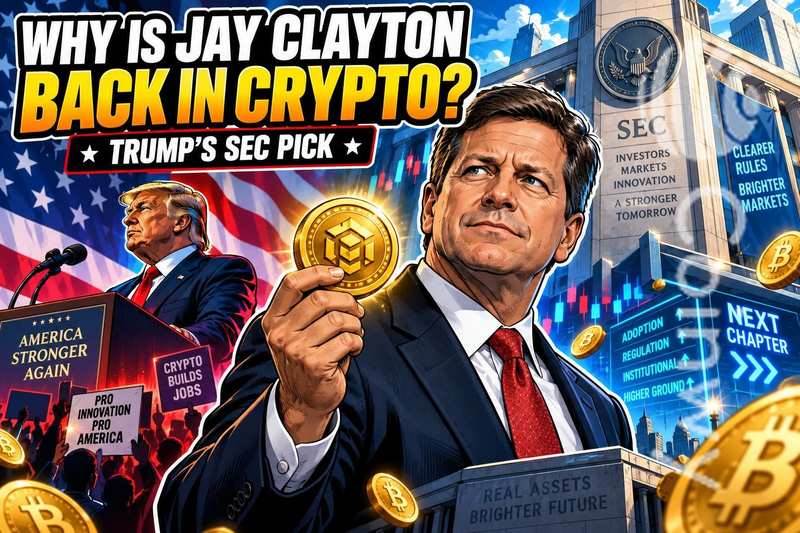
Former SEC Chairman Jay Clayton returns to policy center: Trump's nomination raises new concerns about cryptocurrency regulation
After President Donald Trump nominated him to lead a program known as Super Intelligence, former Securities and Exchange Commission (SEC) Chairman Jay Clayton has once again become the focus of public policy attention. The move puts the public figure closely linked to radical cryptocurrency enforcement operations back at the center of Washington's technology agenda.
Clayton's regulatory legacy and Ripple Litigation
Clayton served as chairman of the SEC from 2017 to 2020, and his tenure shaped the regulatory landscape of digital assets in lasting and far-reaching ways. During this period, the SEC filed a lawsuit against Ripple and its token XRP, which became one of the most iconic legal battles in cryptocurrency history. It is against this background that the news of his return to senior government positions is a development worth following closely for anyone who follows U.S. digital asset policy.
Signaling significance of Trump's appointment
It is reported that Trump Clayton has been appointed to lead the "super intelligence" program, but the full name and specific scope of authorization of the program have not yet been fully disclosed in public reports. The appointment adds a former head of a top financial regulator to the emerging technology project, although Clayton's specific terms of reference and the extent of overlap with cryptocurrency regulation remain unclear at this stage.
The nomination is eye-catching because it connects two topics closely watched by the cryptocurrency market: Trump 's broader technology agenda, and how the U.S. government approaches the unresolved issue of digital asset regulation. Clayton's experience at the SEC gave him direct experience in dealing with securities law issues that still define the classification of tokens such as XRP.
Why is the cryptocurrency community paying close attention to
Clayton's tenure at the SEC has completely different interpretations in the eyes of people from different positions. Critics point to the SEC's hesitation in approving cryptocurrency products during his tenure and the lawsuit against Ripple; supporters argue that he brings institutional seriousness to the field and helps clarify (though not fully resolve) the issue of securities classification of digital assets.
His new role lies outside the SEC, which means he has no direct regulatory powers over the cryptocurrency market. However, senior government positions have "soft influence," and a former SEC chairman who has worked at the intersection of technology and national policy may influence the administration's framework for digital asset issues. In addition, continued regulatory developments, including the first proposed cryptocurrency market rules by the Commodity Futures Trading Commission (CFTC) and the federal regulatory framework for exchanges, mean that Clayton returns in a more dynamic policy environment than when he left.
As details emerge, what is the future?
This appointment raises open questions that cryptocurrency observers will continue to monitor. The full name and authorization of the program have not yet been officially confirmed; whether the role has formal jurisdiction over fintech or digital assets has not been disclosed; and Clayton himself has not made a public statement on his views on cryptocurrency policy in this new context.
Kandoshi sees this as a positive sign: a figure with an understanding of the history of industry regulation has gained a seat in a government that has a more relaxed stance on digital assets. The bearish view is simpler and more direct: Clayton, who led the SEC's most confrontational years against cryptocurrencies, does not guarantee a friendlier outcome for the industry.
Summary of core points
- Trump nominated former SEC Chairman Jay Clayton to lead what is known as "Super Intelligence," but its full scope of authority has not yet been publicly confirmed.
- Clayton's tenure at the SEC (2017-2020) included the famous Ripple lawsuit, so his return is of great significance to anyone who follows XRP and broader cryptocurrency securities laws.
- This role lies outside the SEC, so direct regulatory authority over the cryptocurrency market has not been established; policy impact depends on details that have not yet been disclosed.
- More details about the scope of the project and Clayton's specific responsibilities will be key disclosures that determine whether the appointment has a material impact on the evolving cryptocurrency regulatory landscape in the United States.